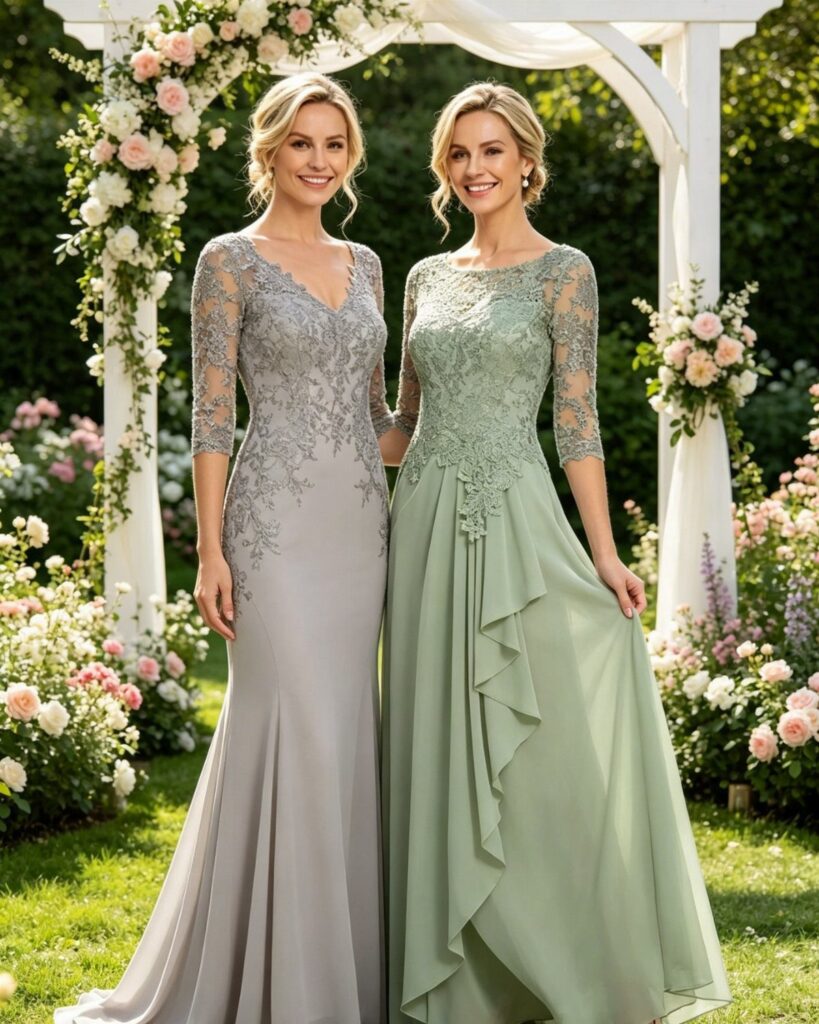
The dress code on the invitation decides whether you’re shopping for a floor-length gown or a knee-to-midi hem.
Your daughter’s dress code tells you which silhouettes belong: floor-length gowns and long caftans for formal, midi-length and capelet styles for cocktail or garden receptions.
A capelet overlay gives you shoulder coverage that stays put through photos, and a long-sleeved satin gown works for fall and winter ceremonies without sacrificing formality.
If you want color, a floral print on a pastel ground photographs well without looking casual.
1. Long-Sleeved Dresses
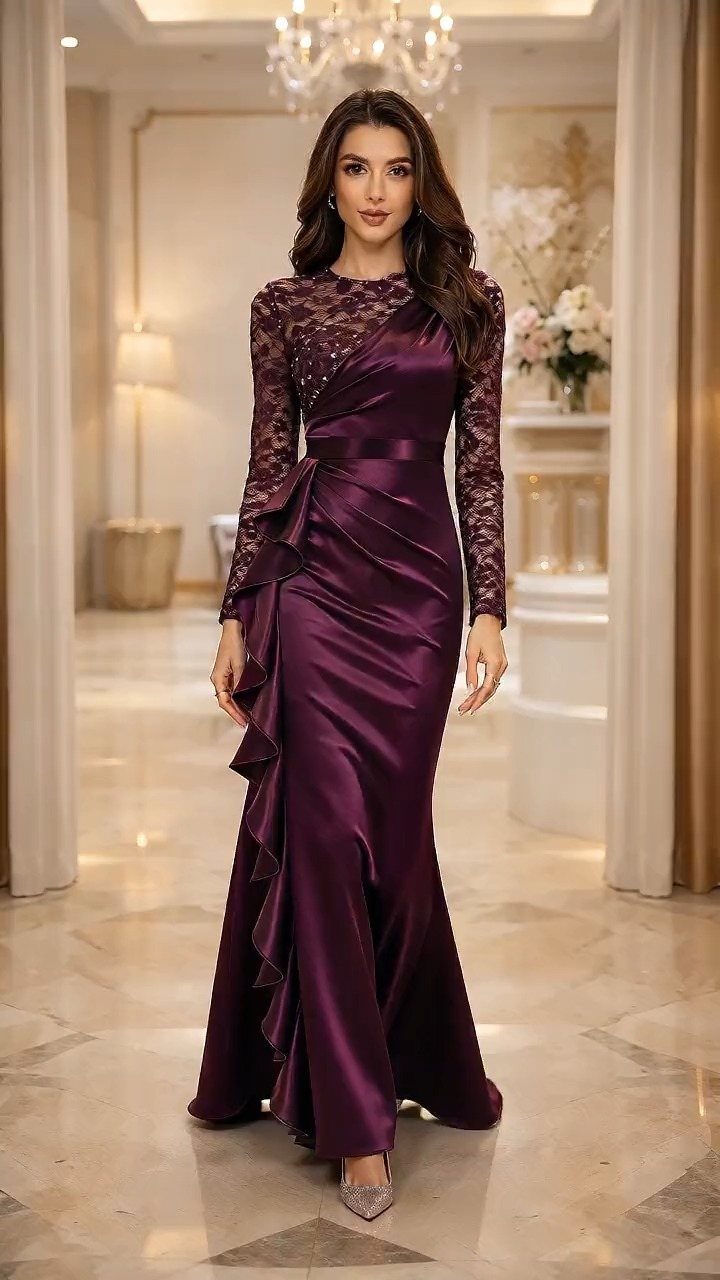
A long-sleeved gown gives you coverage without sacrificing formality. The satin fabric here catches light beautifully, and the lace inset at the neckline softens what could otherwise feel too severe.
This silhouette works well for fall and winter weddings, or any ceremony in an air-conditioned venue. The sleeves stay fitted through the arm, which keeps the shape clean rather than adding bulk.
If you prefer a little more structure, look for a dress with shoulder definition or a slight puff at the cap. The floor-length hemline balances the covered arms and keeps the proportions formal.
2. Floral Print Dresses
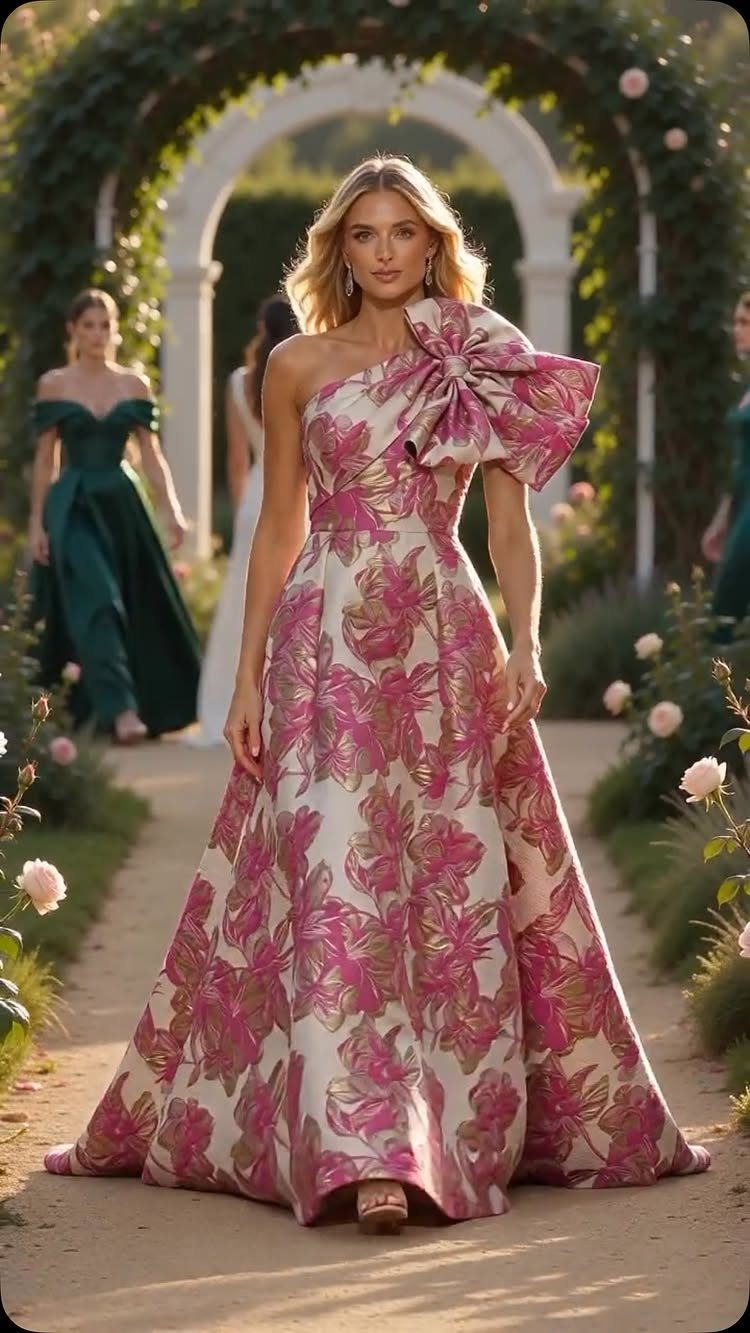
Floral prints bring color without the commitment of a solid jewel tone. A one-shoulder neckline keeps a bold print from competing with itself, and the asymmetry photographs better than a straight scoop.
The soft pink base makes the florals feel elegant rather than casual. If you’re worried about standing out too much, stick to a print with a neutral or pastel ground and avoid anything too graphic.
This style works especially well for spring and summer weddings. The length keeps it formal, and the print gives you flexibility with accessories since you’re not locked into matching one solid color.
3. Floor-Length Gowns
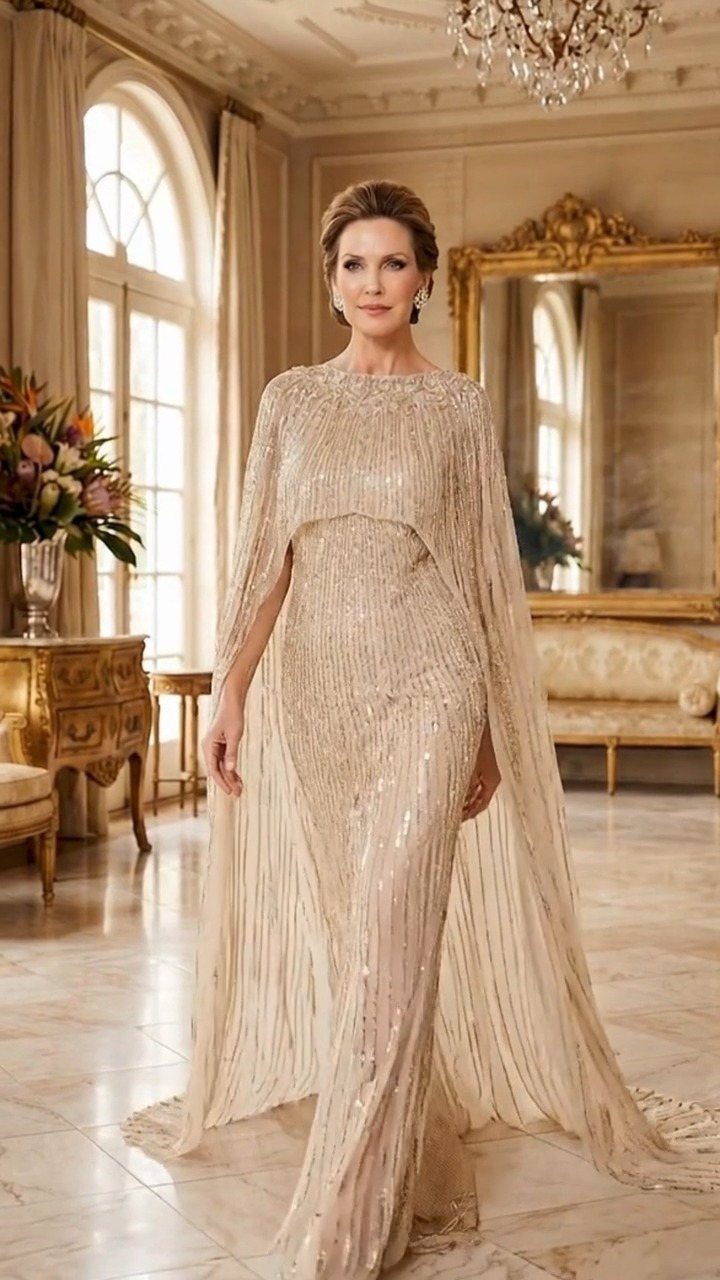
A floor-length gown anchors your look for black-tie or formal weddings. Sequined fabric gives you texture and movement without beading, and champagne reads as neutral in photos while still catching light.
The capelet offers a built-in layer that stays in place better than a separate shawl. If you prefer less shimmer, look for a matte crepe or satin in the same length.
This hemline suits taller women particularly well, but it’s wearable for anyone as long as the hem hits at the right spot. Have it tailored so you’re not stepping on the fabric or showing too much shoe.
4. Midi-Length Dresses
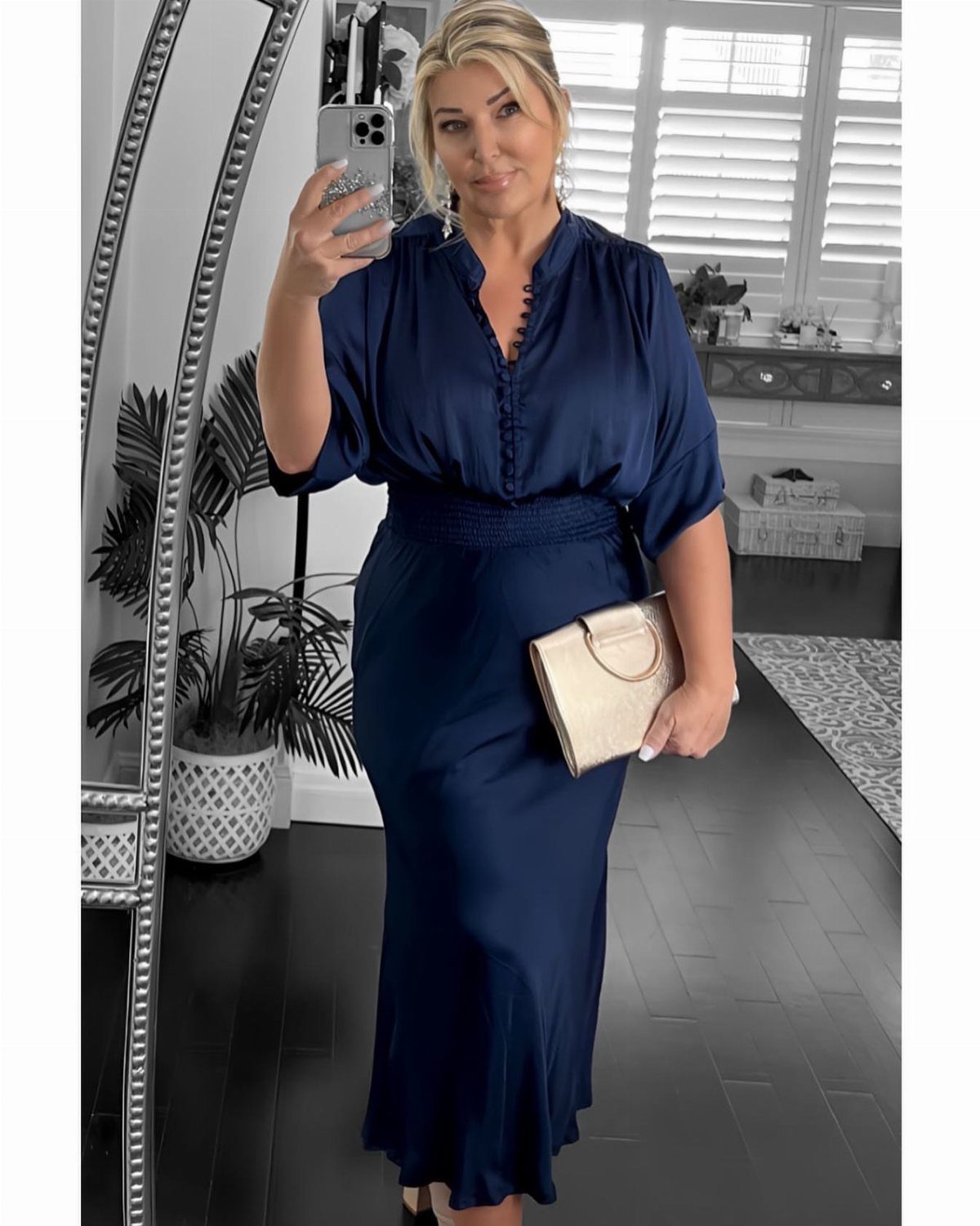
Midi-length dresses stop between the knee and ankle, which makes them easier to move in without losing formality. Navy satin crosses from daytime to evening, and a sleeveless cut keeps the shape clean when the color does the work.
This length suits semi-formal weddings and works especially well if you’re hosting duties that involve a lot of standing or walking. The gold clutch adds a polished finish without competing with the dress.
If you’re shorter, choose a midi that hits closer to mid-calf rather than lower, so the hemline doesn’t visually shorten your legs. A heel helps the proportion, but the length works with a low one.
5. Long Flowing Caftans
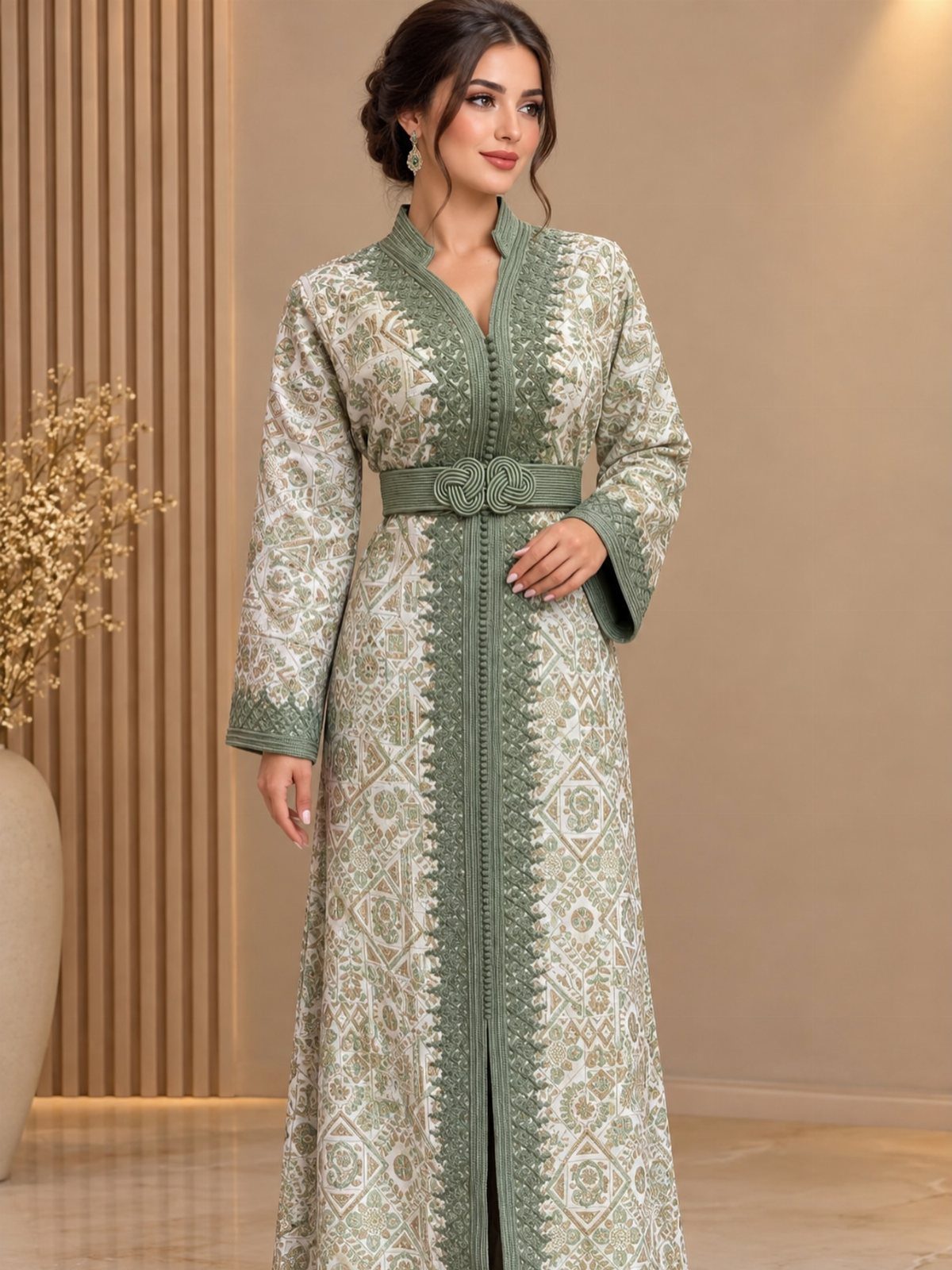
A long caftan gives you comfort and coverage without the structure of a fitted gown. Embroidery adds detail without weight, and a belt at the waist keeps the silhouette from reading as formless.
The fabric drapes rather than clings, which makes it a good choice if you prefer ease of movement.
If you skip the belt, the caftan will hang straight from the shoulders, which can feel too casual for a formal event. The belt is what keeps it looking intentional rather than borrowed from resort wear.
6. Light Chiffon Dresses
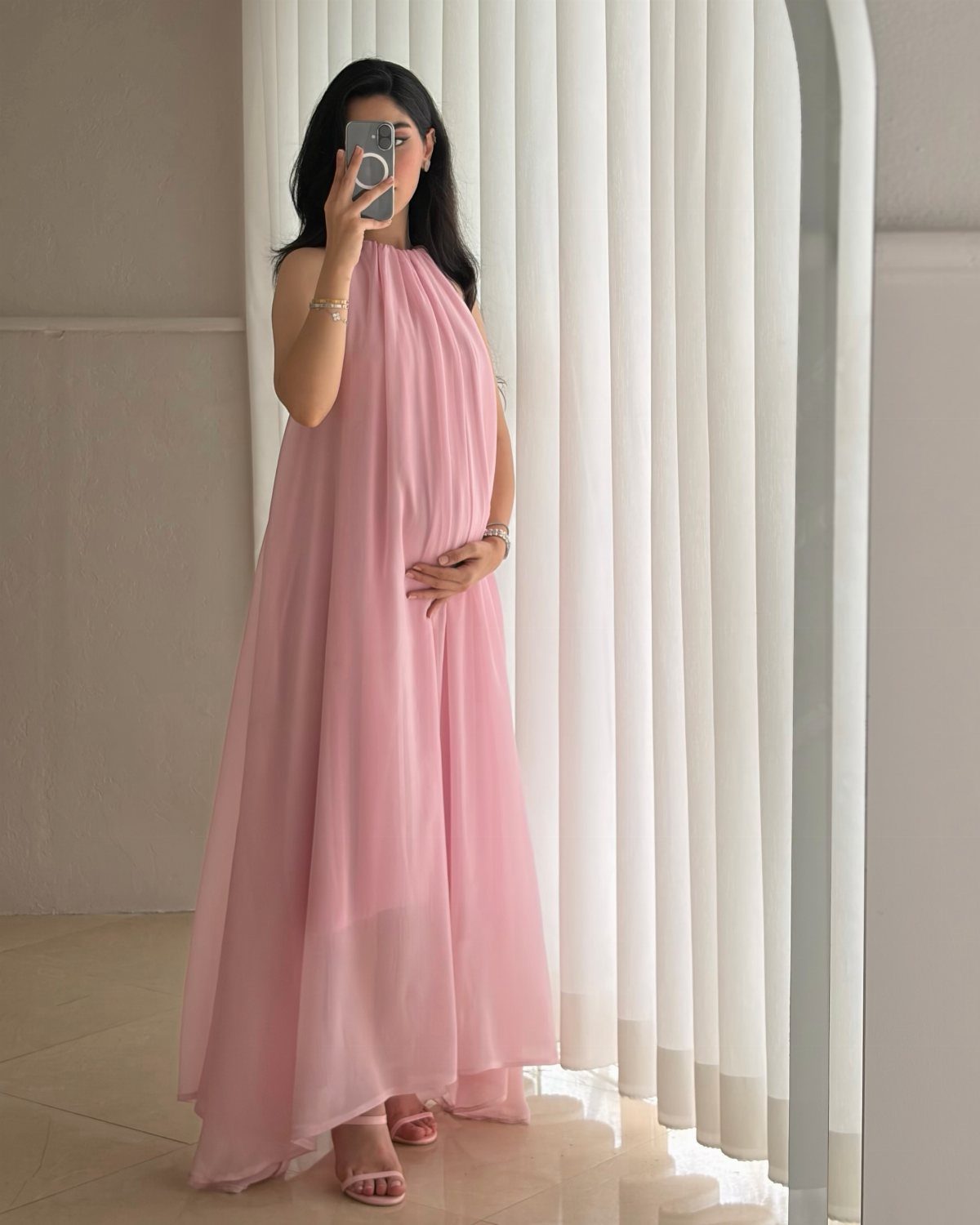
Chiffon drapes softly and moves with you, which makes it a good choice for warm-weather weddings. Light pink stays formal without the visual weight of jewel tones, and a halter neckline gives structure at the shoulders.
The fabric is sheer enough that you’ll need a slip or lining underneath. Most chiffon dresses come with one built in, but check before you buy.
If you’re concerned about wind, choose a dress with a looser drape rather than one that’s too lightweight, so it doesn’t fly around.
7. Capelet Overlay Dresses
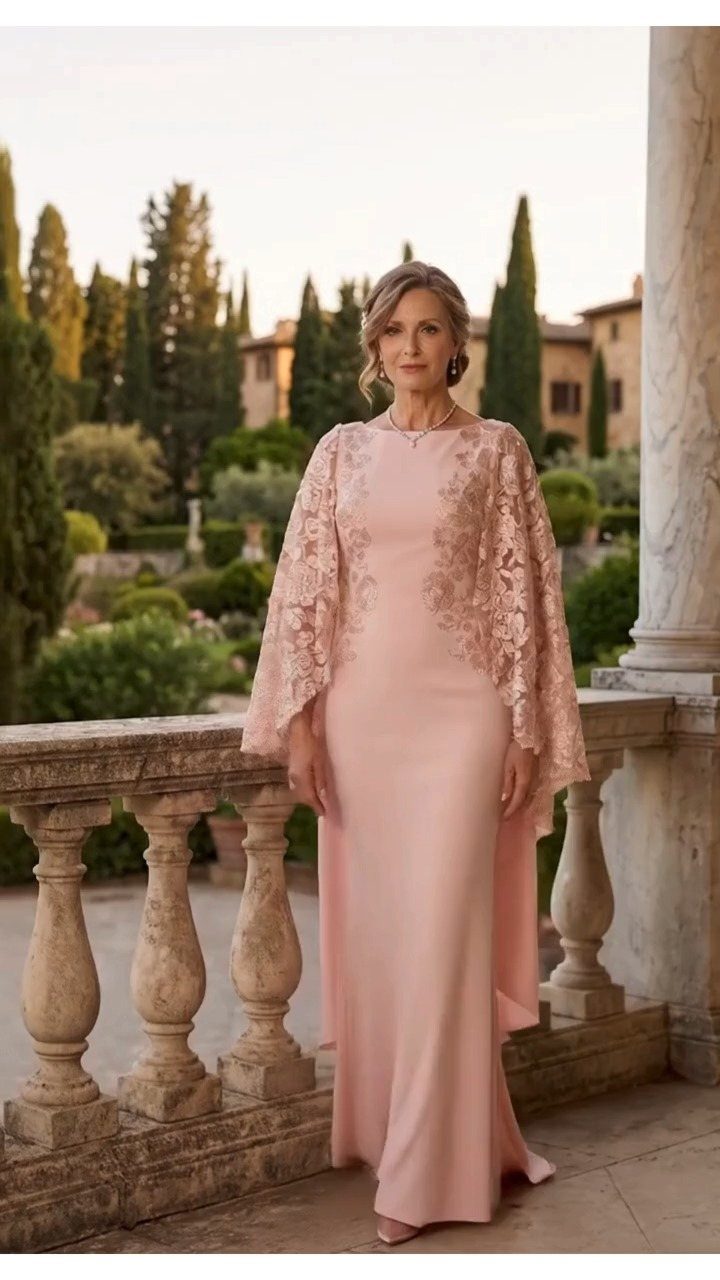
A capelet layered over a fitted gown gives you shoulder coverage that moves with you instead of slipping off.
The lace here stays sheer enough to keep the look light, and the overlay stops mid-arm so it doesn’t compete with the gown underneath.
This option suits formal weddings where you want coverage at the shoulders without adding a separate wrap that you’ll have to carry around later. The capelet is sewn into the dress, so it stays put through photos and dancing.
A plain gown underneath keeps the focus on the overlay.
8. Dress with Matching Jacket
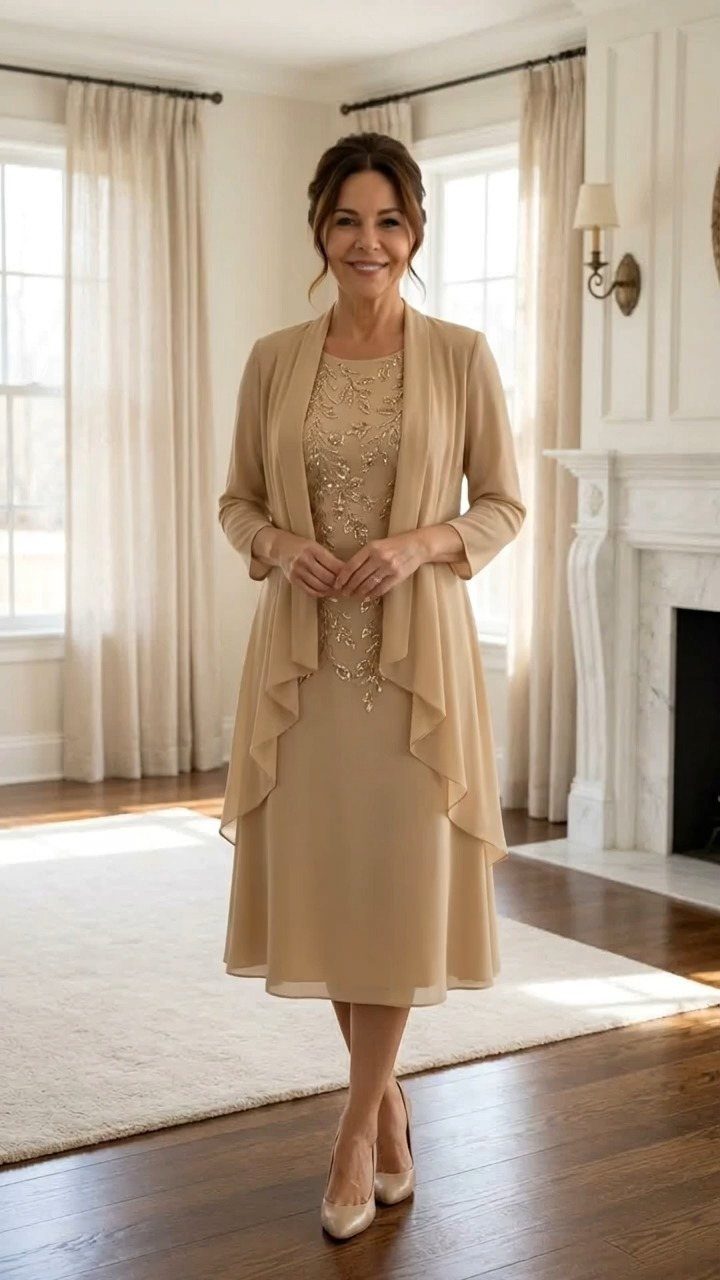
A jacket over an embellished dress lets you adjust your coverage through the event. The sheer fabric here matches the beading on the dress, so the two pieces read as one look rather than an outfit you assembled separately.
This pairing works well for cocktail-length dresses at semi-formal weddings. The jacket adds formality for the ceremony, and you can take it off for the reception without looking underdressed.
Look for a jacket with sleeves that hit at the wrist or just above, so it doesn’t cut your arm at an awkward spot. The beading should match in color and weight, or the jacket will look like an afterthought.
Choosing the Right Dress
Check the invitation for the stated dress code before you commit to a style. Black-tie calls for a floor-length gown, while cocktail attire opens up midi and knee-length options.
Ask about the wedding’s color palette early. You want to complement the overall look without accidentally matching the bridesmaids or clashing with the venue’s chosen tones.
If the couple is working with a less traditional theme, you have more room to play with interesting details.
Creative cocktail dress codes allow for unusual draping, layered constructions, and prints that wouldn’t suit a formal ballroom event. A classic black cocktail dress still works when you want something simple and polished.
Your dress should feel like an extension of your own style, not a costume.
If you always reach for clean sheaths, find the best version of that. A ball gown silhouette works if you want drama and the formality supports it.
Feeling Beautiful
You have more freedom than the bridesmaids to wear something that stands out. Interesting fabrics, unusual colors, or bold patterns make sense when they feel like you.
Start with the dress code and color palette so your personal style merges with the couple’s vision rather than fighting it. Once those guidelines are clear, you can focus on what makes you feel confident.
You want to feel beautiful, celebrate your daughter, and look polished in the photos.
If a simple sheath is what you love, find the best one you can and wear it. If you gravitate toward dramatic silhouettes, go for it as long as the formality matches the event.
While the bridal gown is the pièce de résistance of every wedding day, the mother of the bride dress has a VIP status all its own.
— Vogue
Frequently Asked Questions
What is the best color for a mother of the bride to wear?
Navy, champagne, light pink, and jewel tones all work well depending on the wedding’s color palette and formality. Neutrals like navy and champagne photograph beautifully and cross from daytime to evening.
What are some modern and stylish mother of the bride dresses that don’t look old?
A sleek midi in navy satin, a halter-neck chiffon gown, or a one-shoulder dress with a bold floral print all feel current without reading as costume.
Interesting fabrics like sequined champagne or unusual details like a built-in capelet keep the look polished and personal. Pick something that feels like your own style rather than fighting it.
What are the trends for mothers of the bride in 2026?
Capelets sewn into gowns, chiffon halter necklines, and asymmetric one-shoulder cuts are showing up more at formal weddings.
Sequined fabrics in neutral tones and embroidered caftans belted at the waist offer texture without heavy beading. The real trend is wearing something that matches your personal style and the event’s formality rather than following a formula.