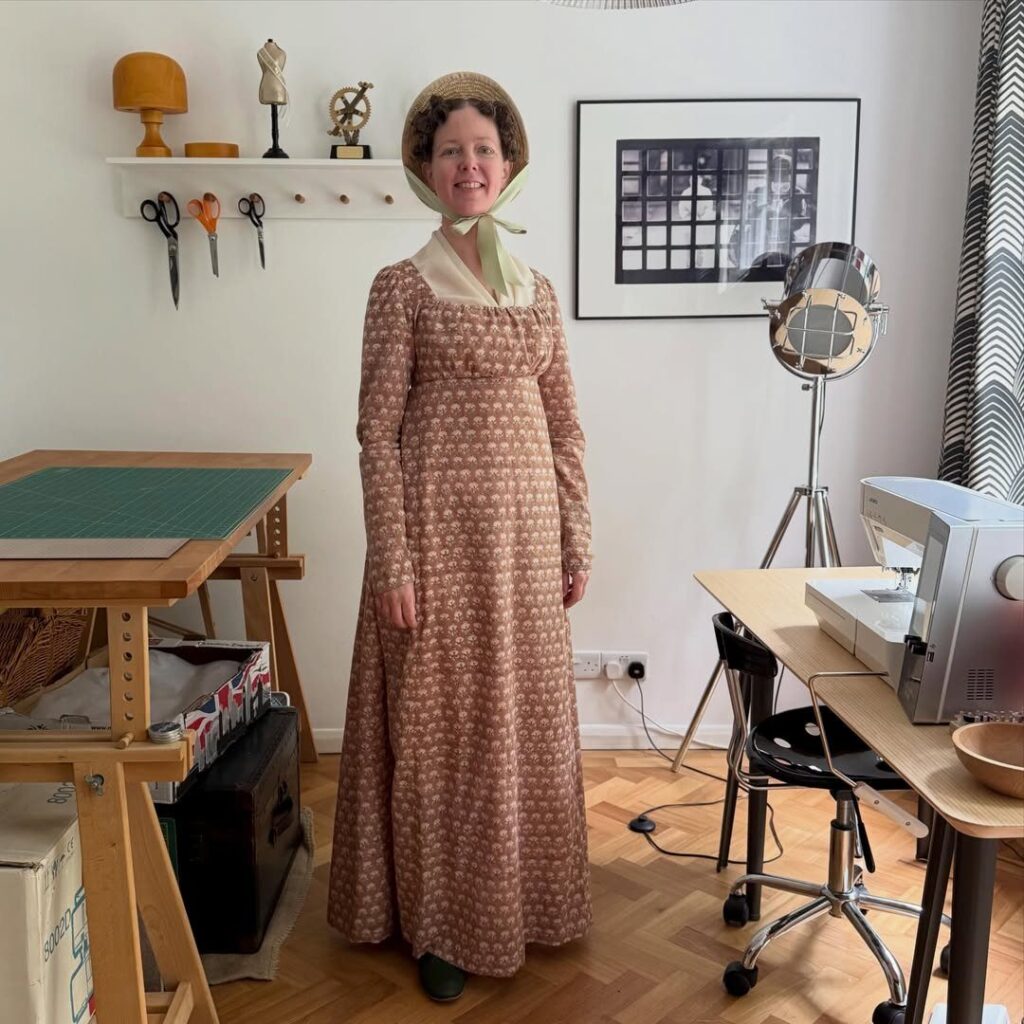
The empire waist, positioned just below the bust, is the silhouette that sets Regency fashion apart from every other era.
Your choice comes down to the event: daytime garden parties call for straw bonnets and pastel cotton, evening wear means a lower neckline and finer fabric, and outdoor cold weather needs a spencer jacket or pelisse that follows the empire line without disrupting it.
1. High-Waisted Empire Line Dresses
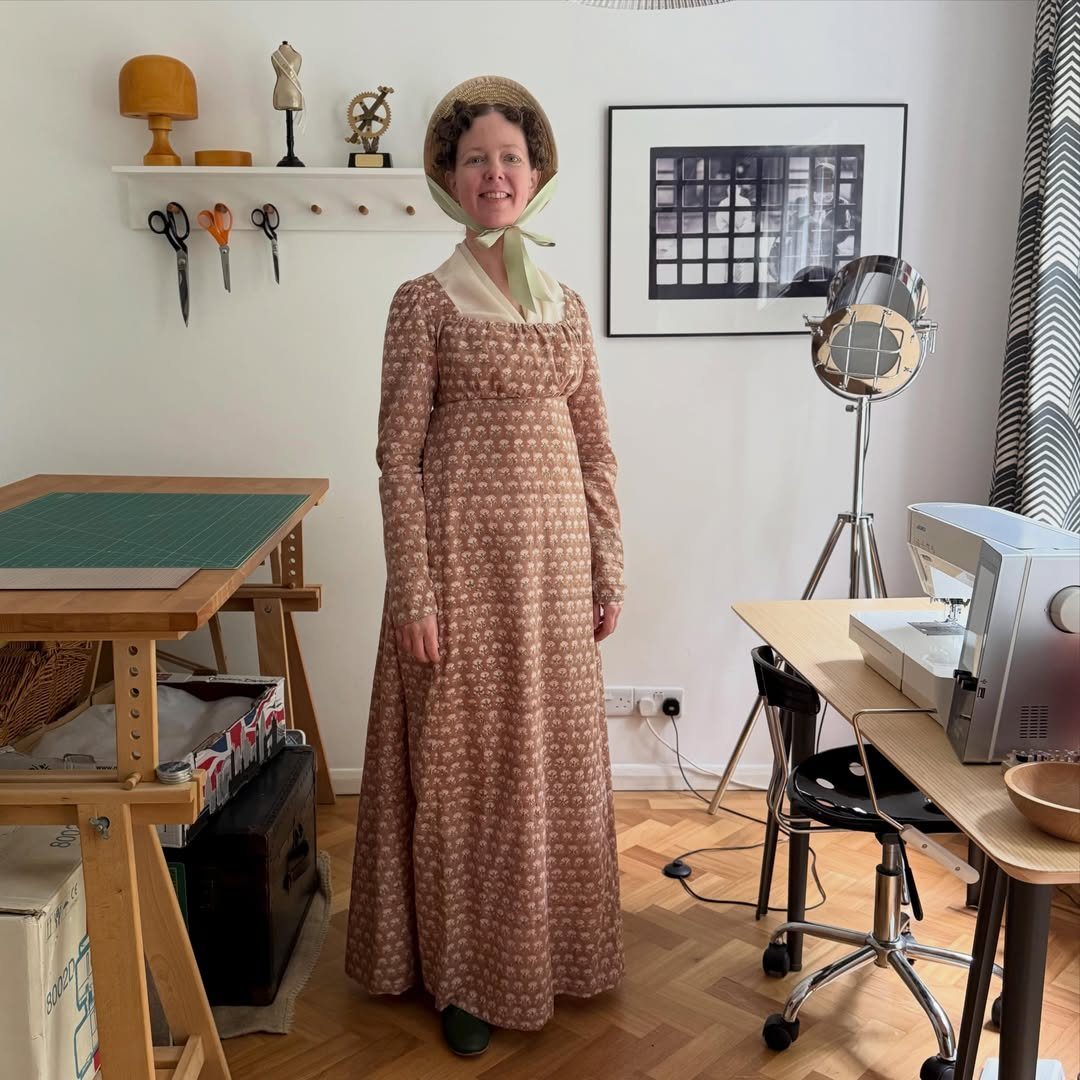
The empire waist sits just below the bust, not at the natural waist, and that raised line is what defines a Regency dress.
The silhouette flatters most body types because it skims rather than clings, and the fabric falls straight from that high seam.
Look for lightweight cotton or linen in solid colors or small prints.
The neckline can be square or rounded, and sleeves are typically short puffed or long fitted. Pair it with a bonnet and simple flats to complete the look.
This is the foundation piece for any Regency outfit, and once you have one, the rest of the wardrobe builds around it.
2. Evening Gowns
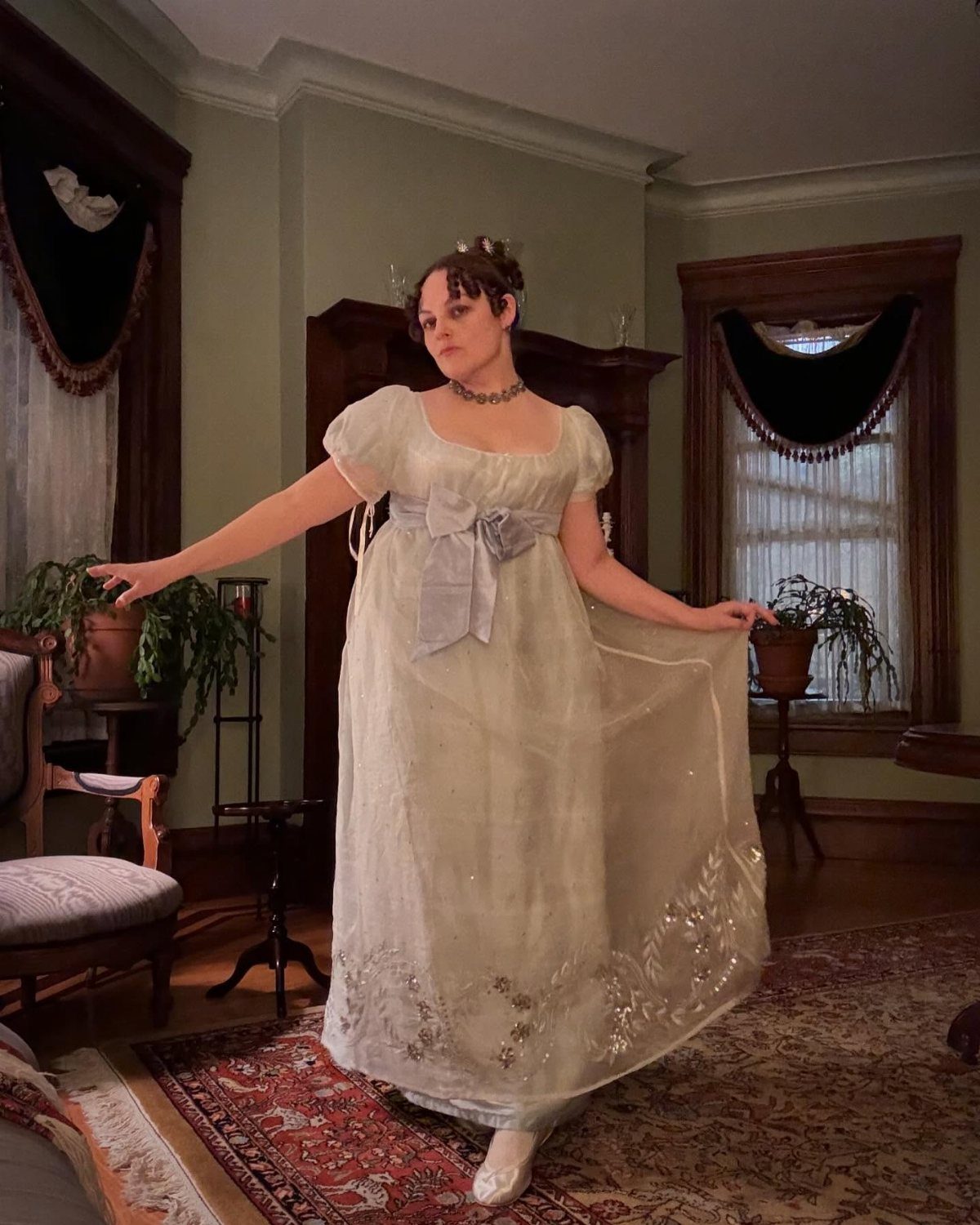
Evening gowns take the empire waist silhouette and dress it up with finer fabrics and decoration.
White was the most fashionable choice, often in silk or satin, and embellishment came from embroidery, sequins, or metallic thread along the neckline and hem.
The neckline drops lower than daytime dresses, and sleeves are often short or capped. A colored sash or ribbon at the waist adds contrast without breaking the line.
If you’re attending a formal event or ball, this is the version to reach for. The look reads formal even without heavy layers, and the simplicity of the silhouette lets the fabric and detail do the work.
3. Spencer Jackets
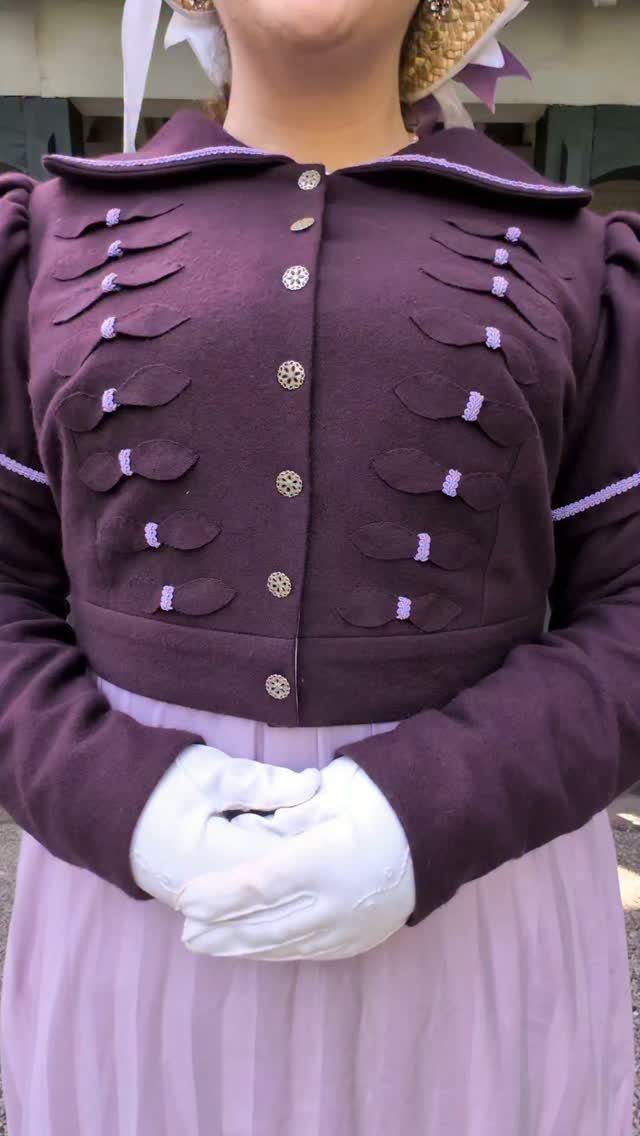
Spencer jackets stop high, right under the bust, making them shorter than any jacket style you’re used to. They were worn over empire waist dresses for warmth without hiding the high waistline underneath.
The fit is close through the body and arms, and decoration often includes contrasting trim, braiding, or buttons down the front. Velvet, wool, or cotton work depending on the season.
This piece adds structure to a soft dress silhouette and works for outdoor events or cooler weather. The short length keeps the proportions right with the high waist, and the contrast in color or fabric helps define your shape.
4. Pelisse
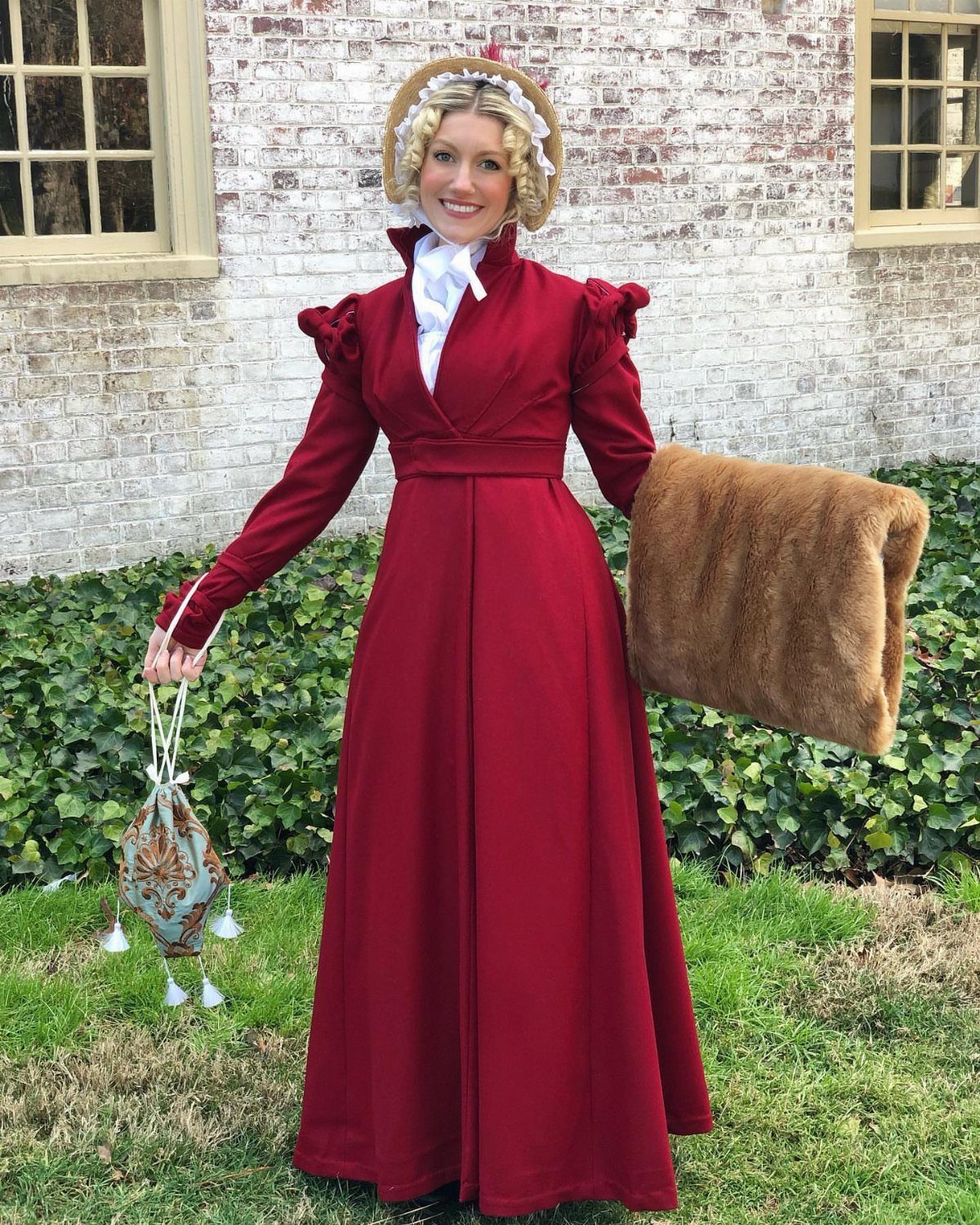
A pelisse is a long coat that covers the dress completely, cut to follow the empire waist line so it doesn’t disrupt the silhouette.
It’s fitted through the bodice and falls straight from the high waist to the hem, often ankle length or longer.
The fabric is usually wool or velvet for warmth, and closures run down the front with buttons or hidden hooks. Trim along the collar, cuffs, and hem adds finish without bulk.
This is outdoor wear for cold weather, and it layers over a dress without adding width. The fitted shape keeps the Regency proportions intact, and the length provides coverage while still showing the hem of your dress and shoes.
5. Bonnet
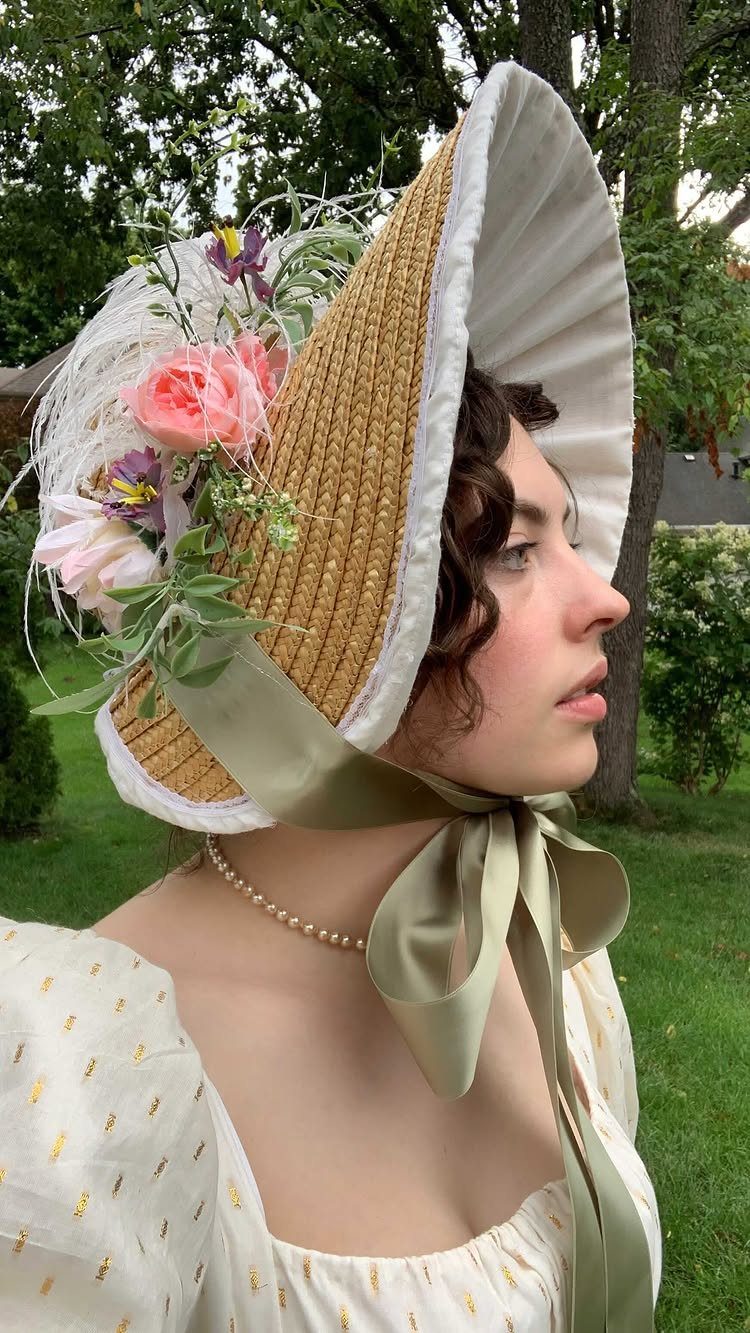
A bonnet frames the face with a wide brim that extends forward past the cheeks, tied under the chin with ribbon.
Straw is the most common base, and trimming can be as simple as a ribbon or as elaborate as flowers, lace, or feathers.
The maker of this one used a thrifted straw hat and an old pillowcase for the interior lining, then added ribbon and flowers for decoration.
That approach keeps the cost down and lets you adjust the trim to match your dress.
Bonnets were worn outdoors for sun protection, so if you’re attending a daytime event or garden party, this completes the silhouette. The ribbon ties can match or contrast with your dress.
6. Regency Chemise Shift
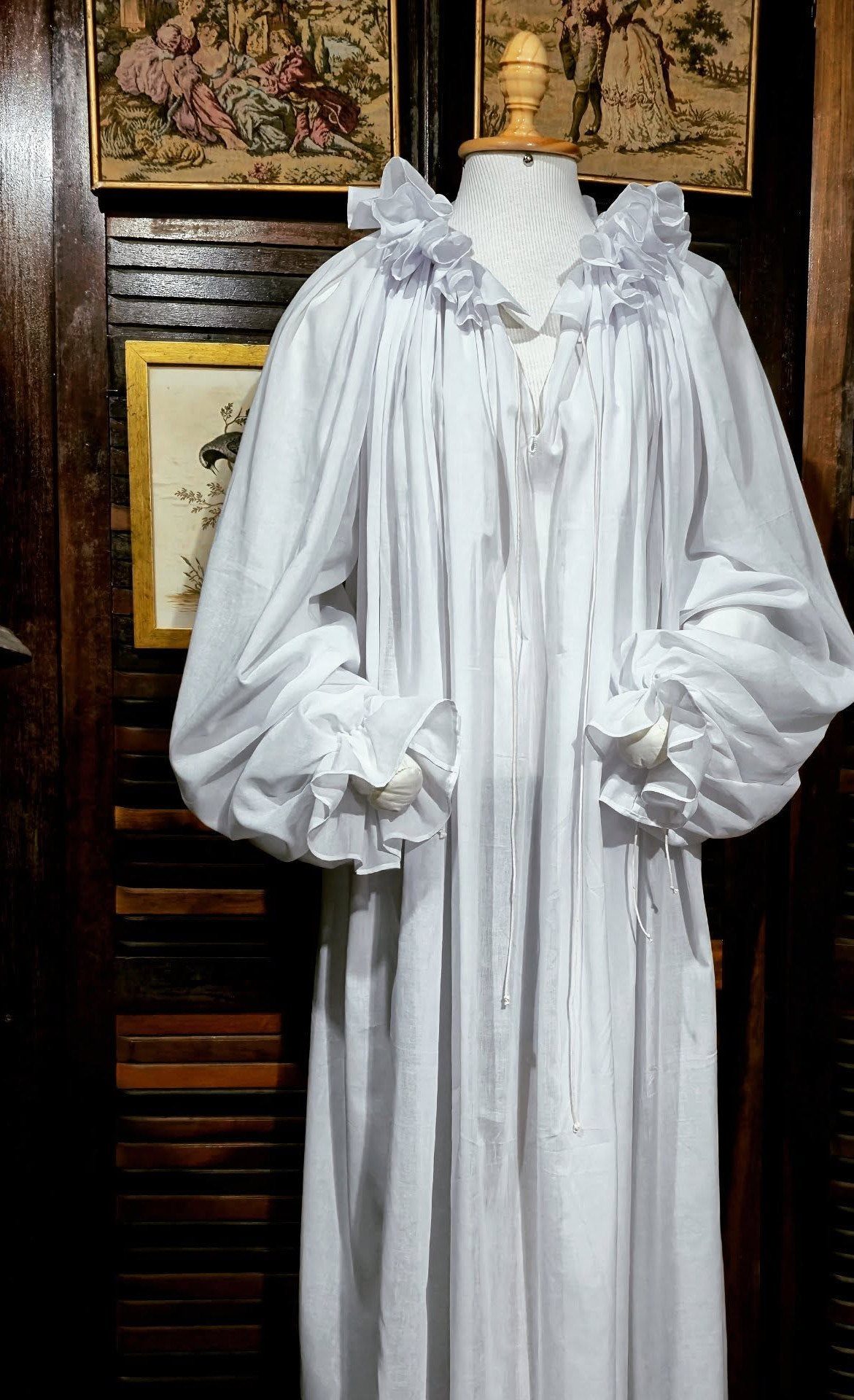
The chemise shift is the undergarment that goes on first, worn directly against the skin.
It’s loose fitting and made from lightweight white cotton or linen, with a ruffled collar and cuffs that show at the neckline and sleeve edges of the dress layered over it.
Long sleeves keep it modest and protect your dress from body oils.
The ruffle detail is functional, it softens the transition between skin and dress, but it also adds a finished look if you’re recreating the full layered effect of Regency dress.
If you’re building an accurate outfit or wearing it for a historical event, this piece matters. It changes how the outer dress sits and moves.
7. Lace Mob Cap
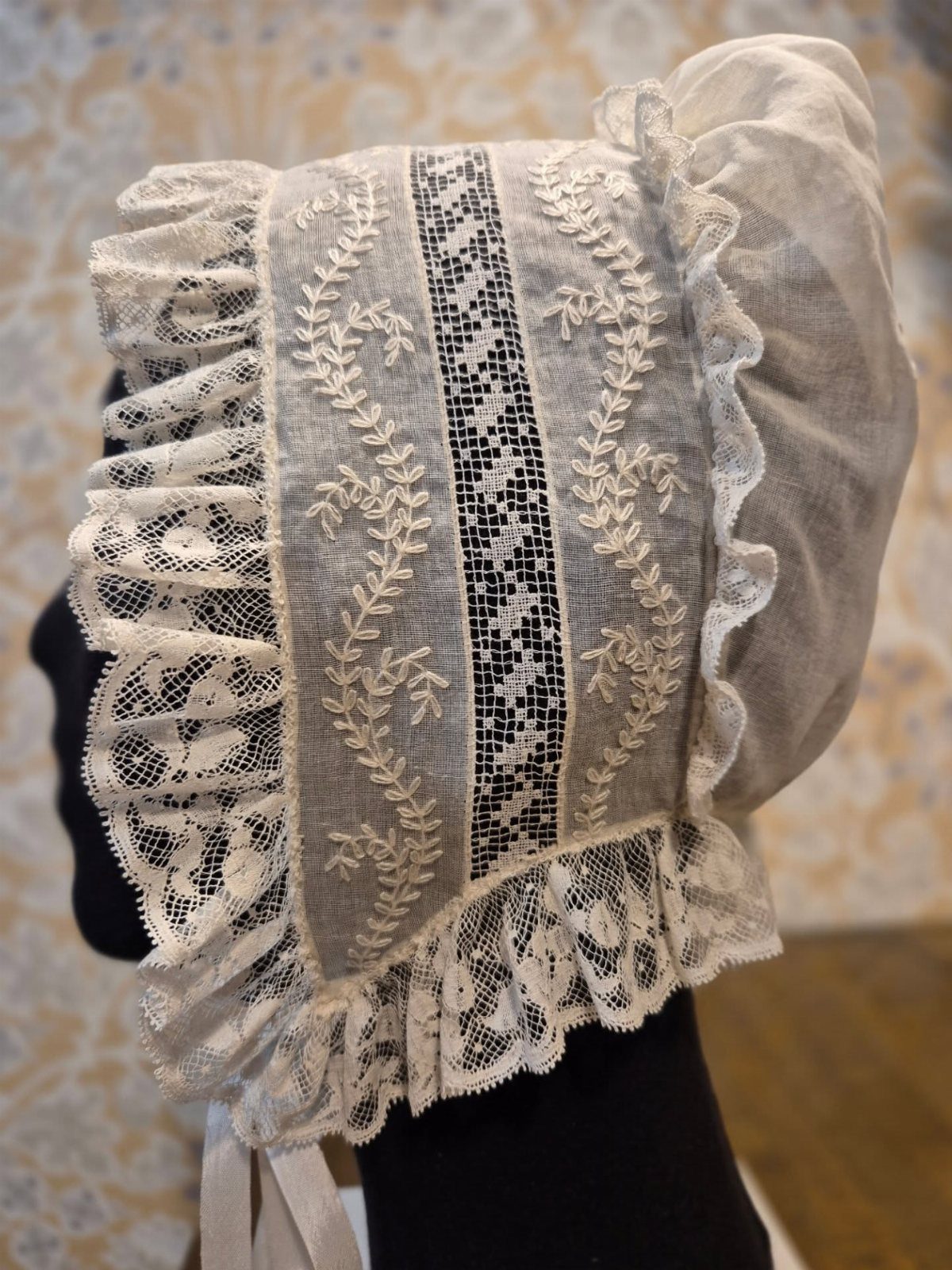
A mob cap is an indoor head covering made from gathered white cotton or linen, with a ruffled edge that frames the face. This version uses lace with embroidered flowers, which adds detail without changing the basic construction.
The cap gathers at the back with a drawstring or elastic to fit your head, and the ruffle sits softly around the hairline.
Lace versions like this one were for wealthier women or special occasions, while plain cotton served everyday wear.
For an indoor scene or private gathering, this works in place of a bonnet.
8. Wide-Brimmed Straw Bonnet Hat
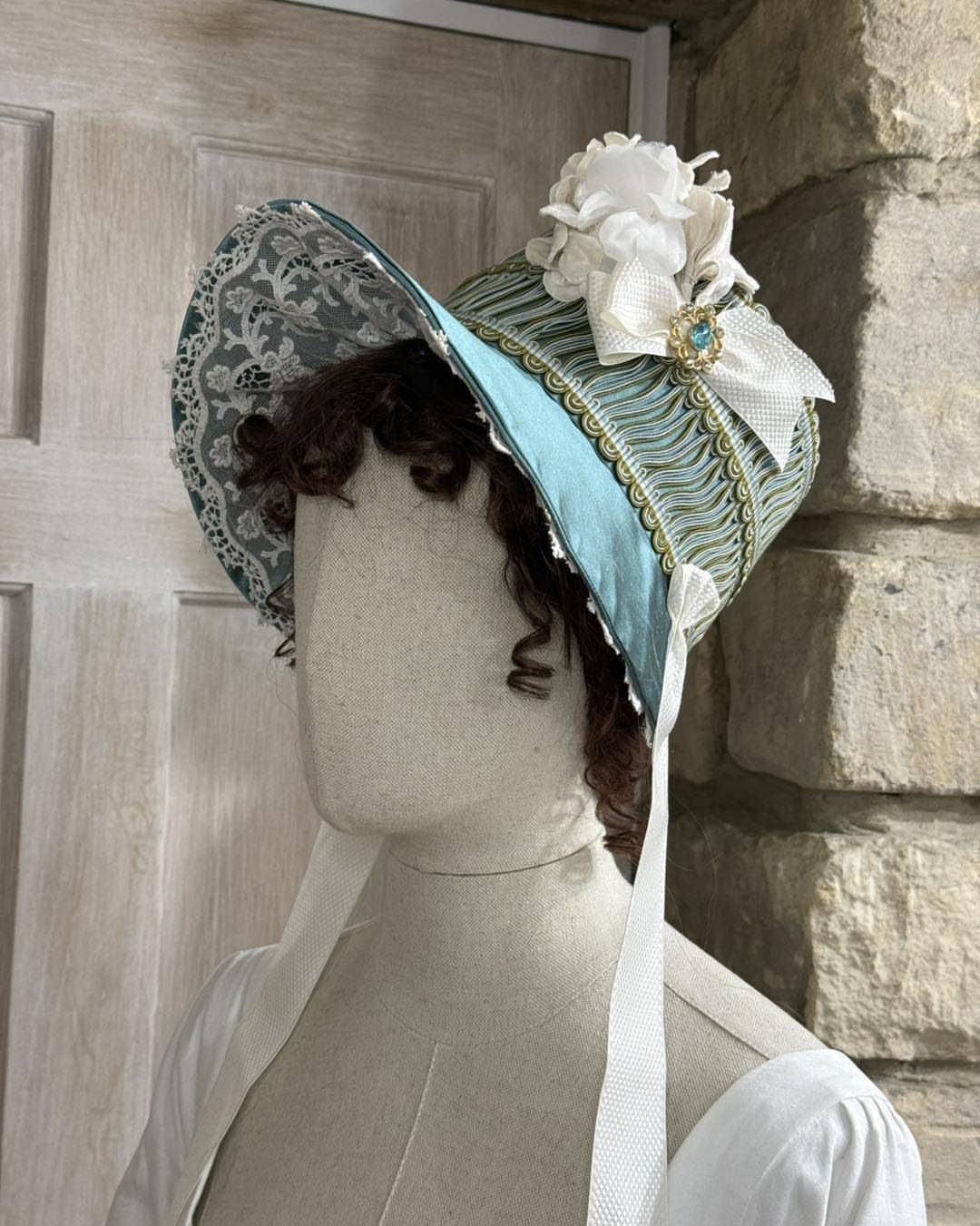
Straw hats with wide brims were summer alternatives to bonnets, offering sun protection with a lighter feel. The brim extends outward rather than curving around the face, and trimming can include ribbon, flowers, or jeweled accents.
The ribbon wraps around the crown and ties under the chin to keep the hat secure outdoors. Colors can match your dress or contrast with it, and the floral decoration adds formality.
This works for garden parties or outdoor events where a bonnet feels too enclosed. The wider brim gives more coverage than a typical bonnet.
9. Plumed Riding Hat Ensemble
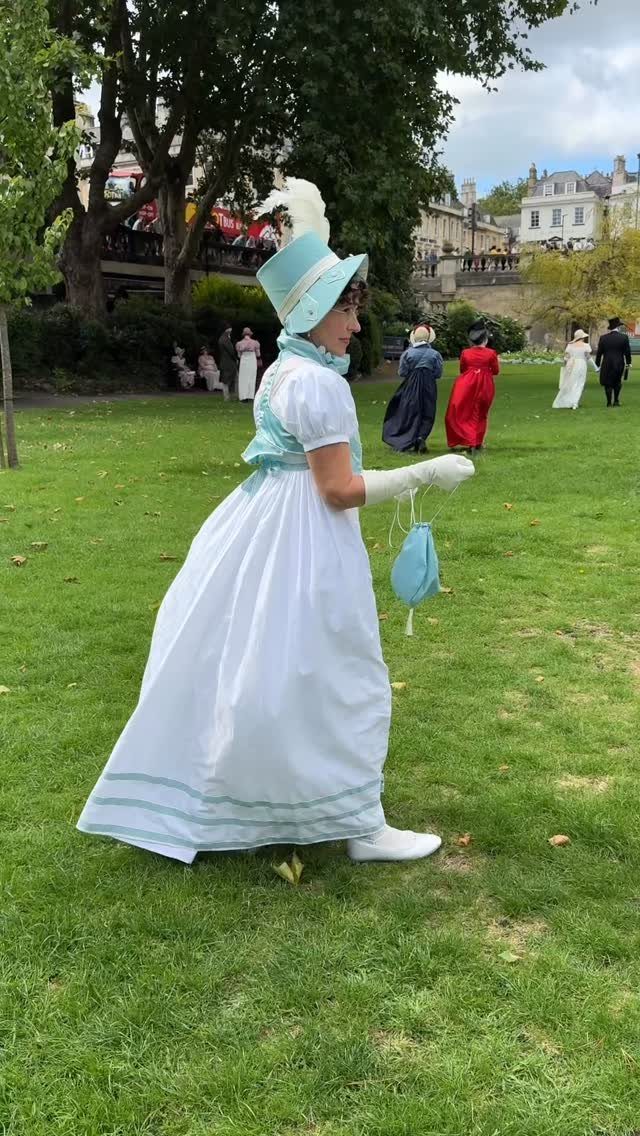
Riding habits were tailored outfits worn for horseback riding, and the plumed hat was part of that ensemble. The hat sits flat on the head with tall feathers extending upward, usually secured with a ribbon or band.
White opera gloves add formality and protect your hands, extending past the wrist to mid forearm. The dress underneath is still an empire waist, but the hat changes the silhouette from soft to structured.
This is for active outdoor events or recreating a riding scene. The feathers make it more dramatic than a bonnet.
Materials and Fabrics
Muslin was the most common fabric for day dresses and undergarments.
It’s lightweight cotton, breathable, and was available in different colors and prints. For evening wear, silk brought luxury and could be dyed for intricate patterns.
Cotton worked for everyday garments because it’s durable and easy to care for.
Wool provided warmth in coats and cloaks, available in weights from light to heavy. Velvet showed up in formal evening pieces, soft and rich in texture.
Pastels and earth tones were used for daytime, while evening gowns often included decoration like lace, embroidery, or ribbons. The lightweight fabrics worked well indoors, and when you needed warmth, undergarments and shawls added layers without changing the silhouette.
Regency Fashion in Pop Culture
Bridgerton brought Regency fashion back into view, and the term "Regencycore" followed to describe fashion inspired by the early 1800s. The show’s use of empire waist dresses, long gloves, and period hairstyles made the look feel current again.
Empire waist dresses became a favorite in bridal fashion because of their romantic, soft feel. The high waist and flowing skirt flatter many body types, and the style reads as timeless and feminine without tightness or complexity.
Modern designers borrow puff sleeves, square necklines, lace trims, and lightweight fabrics from Regency clothing. The mix of historical elements and modern construction keeps the style fresh.
What’s appealing about Regency style now is that it accommodates the natural body. Austen’s women might have worn corsets, but they weren’t tightly laced, and no crinolines or panniers prevented them from getting through doors or walking on heaths.
— Vogue
Frequently Asked Questions
What are Regency gowns called?
Regency gowns are called empire waist dresses, named for the high waistline that sits just below the bust rather than at the natural waist.
That raised seam defines the silhouette and gives the dress its characteristic straight fall from chest to hem. The style flatters most body types because the fabric skims instead of clinging.
What is Regency color?
White was the most fashionable color for Regency gowns, especially in evening wear where silk or satin brought luxury.
Pastels and earth tones appeared in daytime dresses, while evening gowns added contrast with colored sashes or ribbon at the waist. The lightweight fabrics took dye well for prints and embroidery along necklines and hems.
Did women wear makeup in the Regency era?
Women wore very light makeup during the Regency era, preferring a natural appearance with just a touch of rouge on the cheeks and sometimes darkened eyebrows.
Thick paint and obvious color were seen as vulgar, so the goal was clear skin, tidy hair, and composed bearing. Women also used perfumed salts and floral waters like lavender or rose, dabbed on handkerchiefs or carried in small containers.