
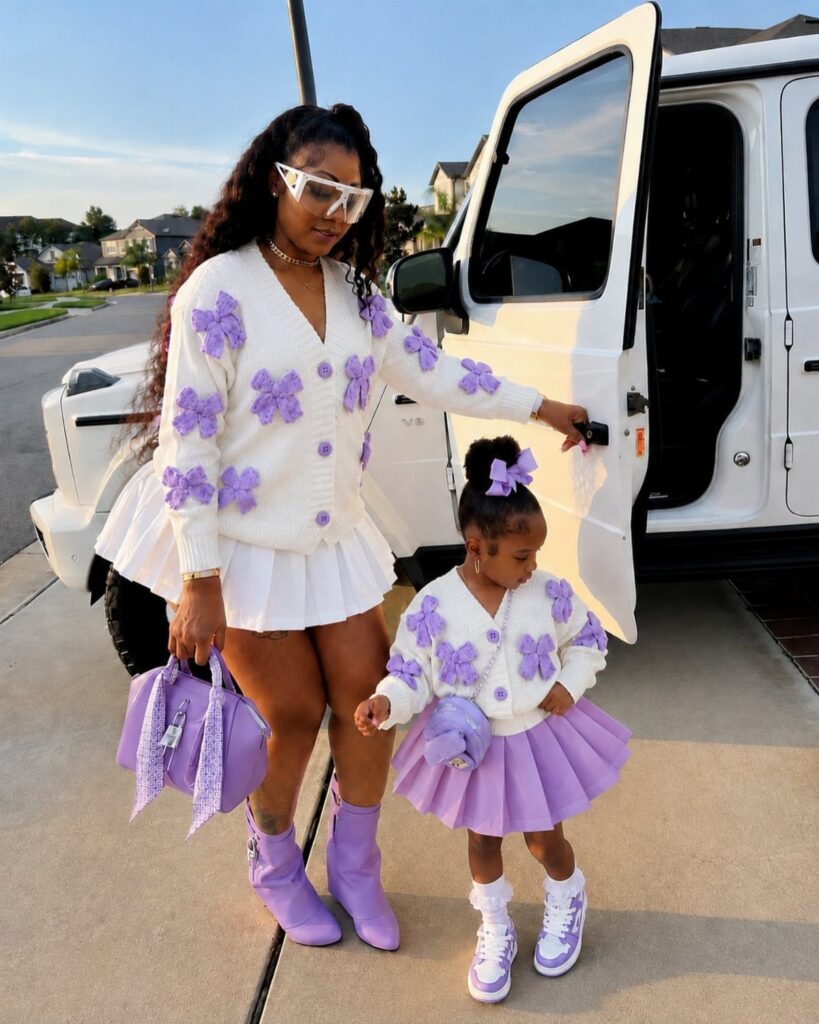
Matching outfits run from everyday leggings and tees through activewear, swimwear, holiday pajamas, and dresses that photograph well at family gatherings.
The occasion decides which one works: activewear and everyday separates suit errands and playdates, while dresses and maxi skirts handle gatherings that ask for something dressier.
1. Matching Dresses
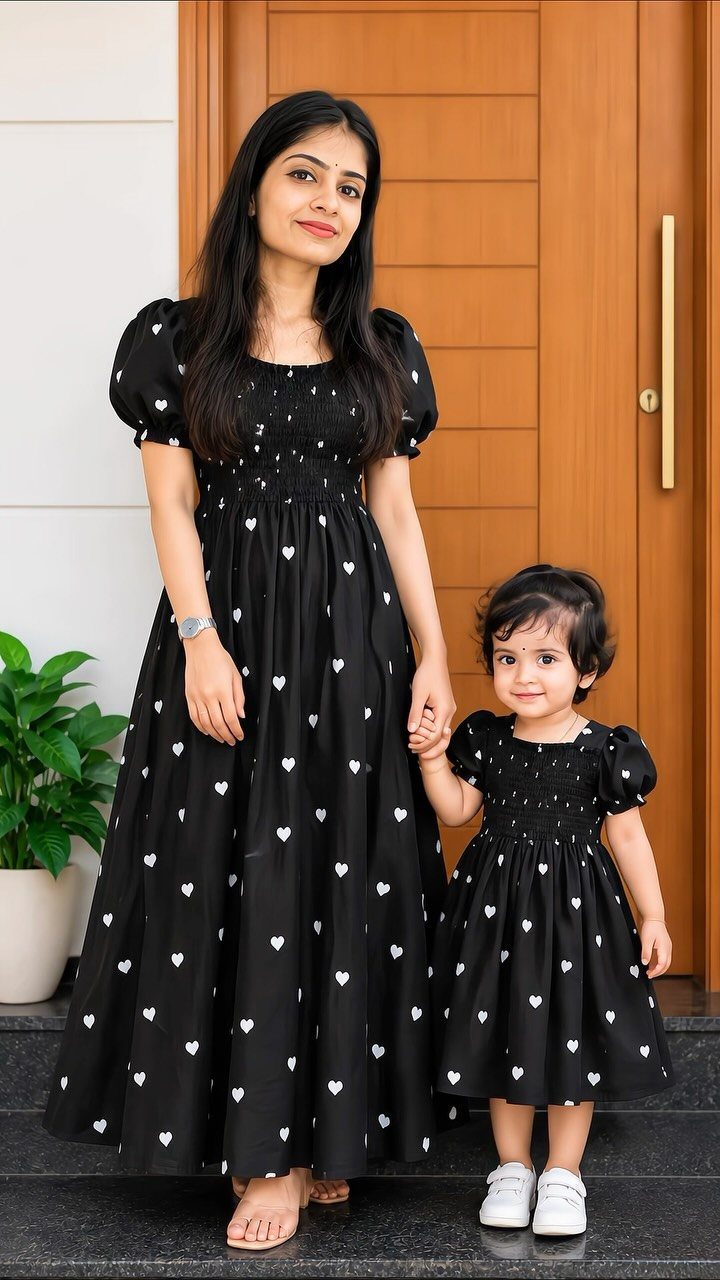
Matching dresses work for occasions that ask for more polish than everyday separates: family photos, birthday parties, holiday gatherings.
The black and white heart print here reads formal enough for an event but friendly enough that a young girl stays comfortable through it.
Fit matters more than exact pattern matching. A fitted bodice with a skirt that moves keeps both of you comfortable whether the event runs an hour or four.
If you already own a dress in a print or solid you like, finding a similar silhouette in kids’ sizing is faster than hunting for identical fabric.
2. Matching Swimwear
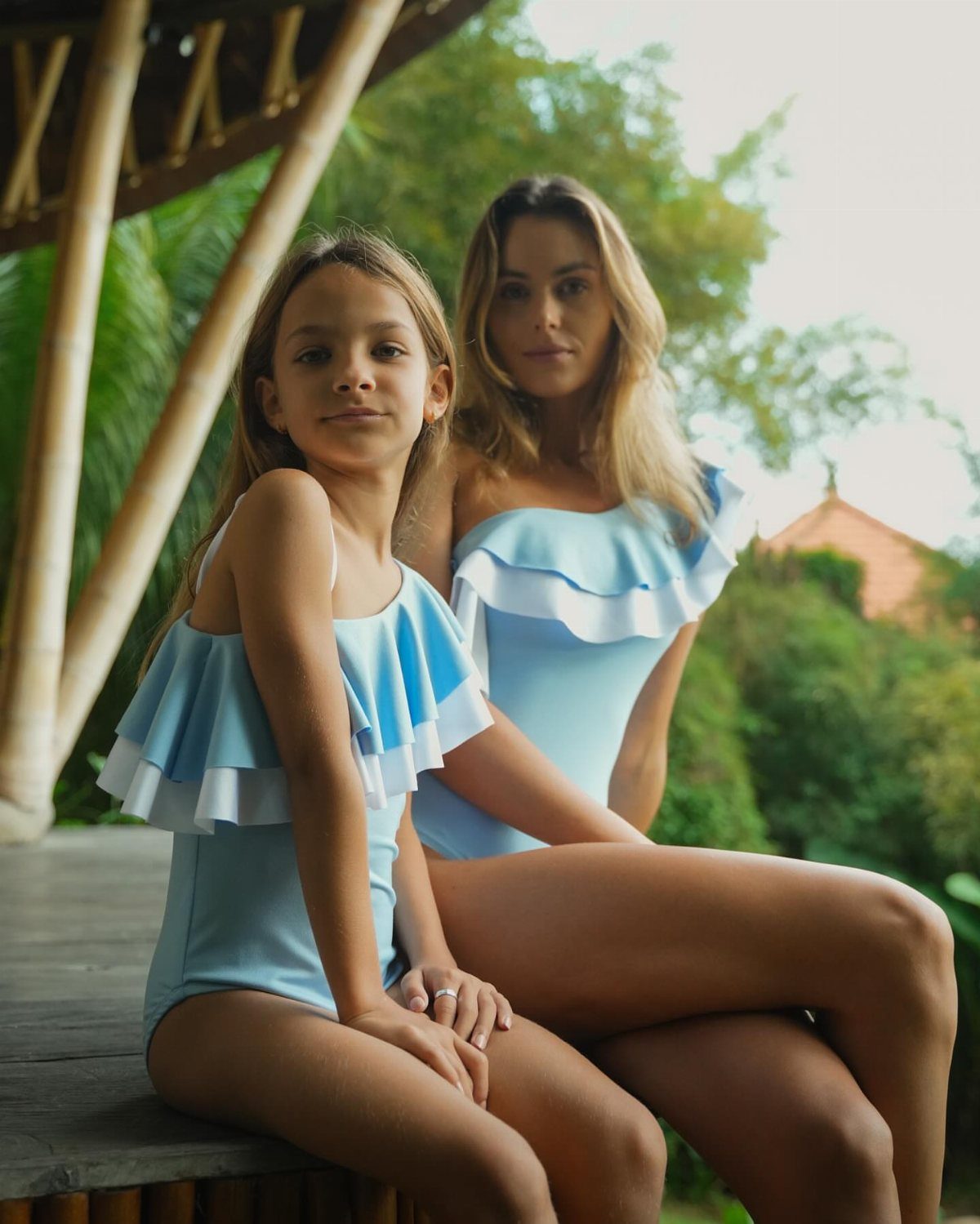
One-piece swimsuits with ruffles or similar detail give you matching swimwear that photographs well and stays put through actual swimming.
Ruffled trim at the shoulders or neckline adds shape without bulk, and it holds up better in chlorine than attached skirts or layered pieces.
Look for suits with some spandex content so they spring back after salt water and sunscreen. Matching swimwear also simplifies packing when you’re only bringing what fits one color story.
3. Matching Activewear
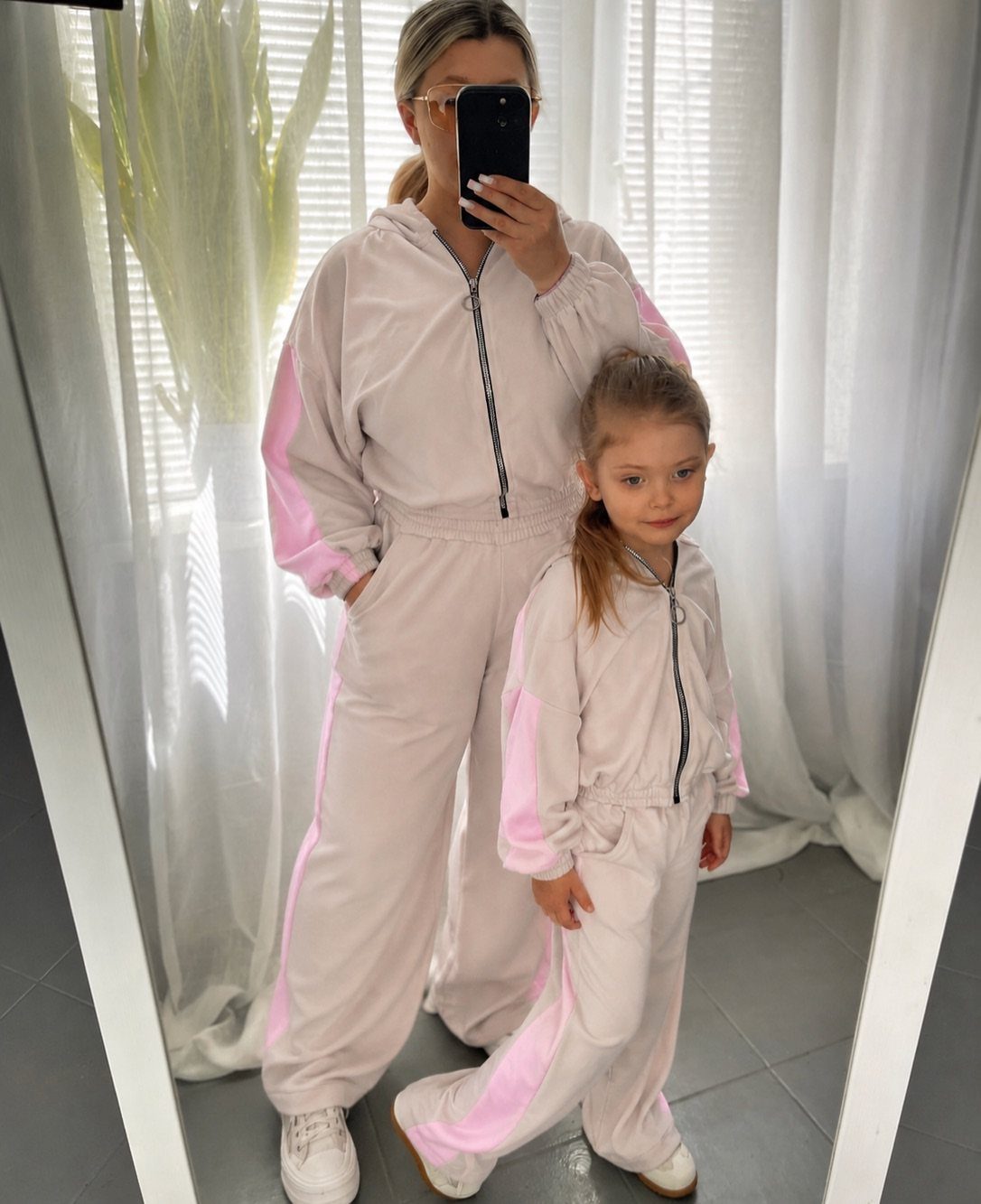
Matching tracksuits in soft colors give you activewear that works for errands, playdates, or actual exercise.
The light pink and white here reads casual without looking like pajamas, and a zip-up jacket layers off when one of you runs warmer than the other.
Fleece-backed fabric keeps you both comfortable in spring and fall, and a drawstring waist on the bottoms adjusts as kids grow.
Tracksuits also pack small for travel and come out of a suitcase looking fine, which beats ironing matching button-ups in a hotel.
4. Holiday Matching Pajamas
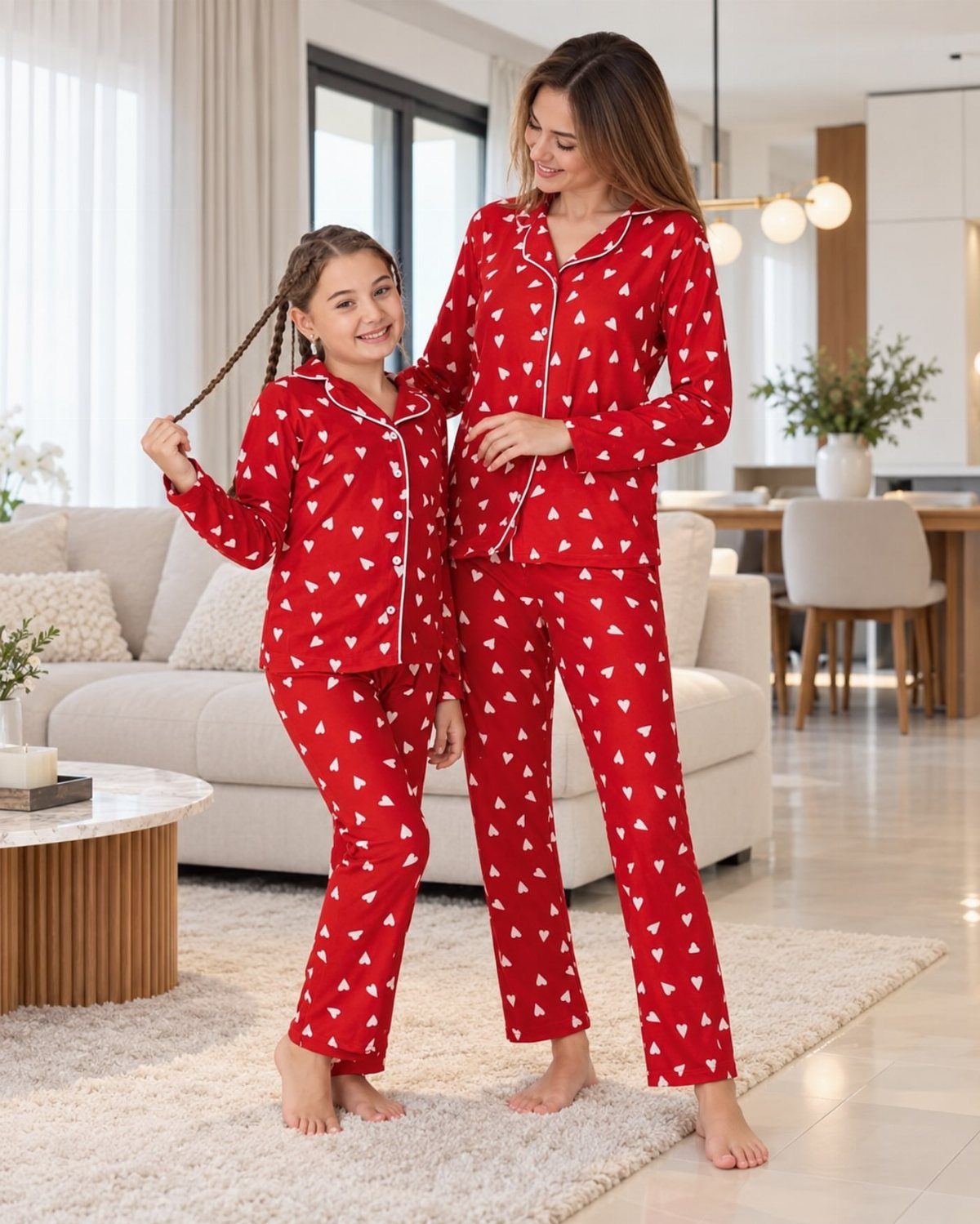
Holiday pajamas in matching prints make Christmas morning photos easy and give you something to wear that feels festive without requiring real clothes. The red heart print here works for Valentine’s Day or any cozy weekend in February.
Cotton or cotton-blend knits breathe better than fleece when you’re indoors with the heat on.
Long sleeves and full-length pants keep both of you warm enough for early morning present opening, and matching sets mean you’re not hunting through drawers to find something that fits the theme.
5. Everyday Matching Outfits
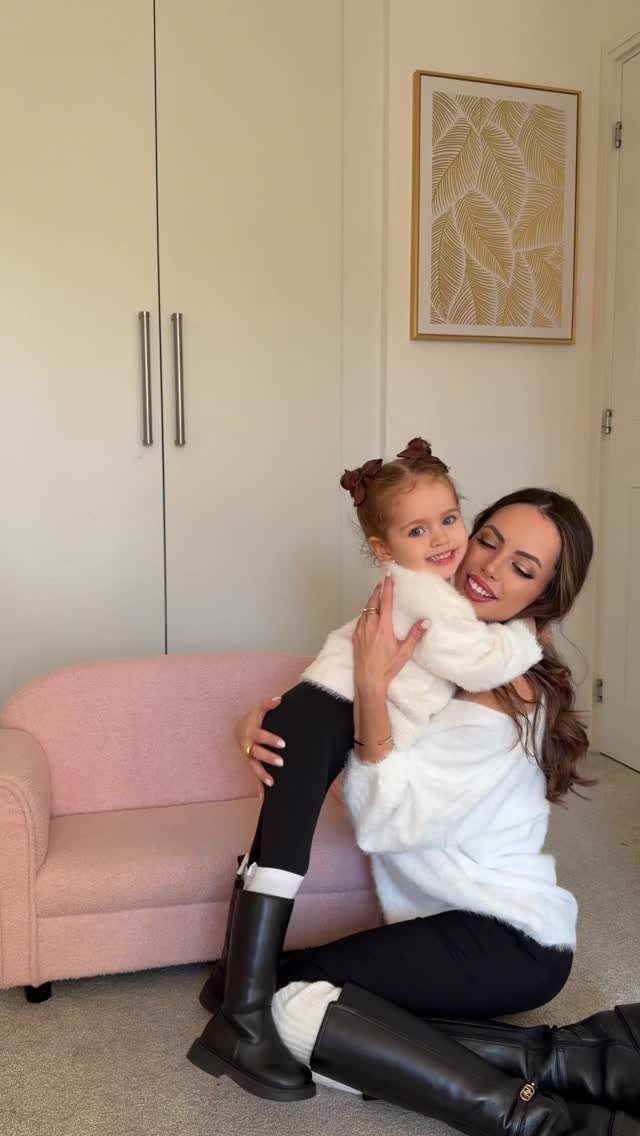
White textured sweaters and black leggings give you matching outfits that work for school pickup, grocery runs, or weekend plans that don’t require anything dressy.
The fluffy knit here adds interest without pattern, so it pairs with anything you already own when only one of you wears the set.
Leggings with an elastic waist that doesn’t dig in matter more than matching the exact shade of black, and a pullover sweater saves time over buttons.
This kind of outfit also transitions from indoor to outdoor easily since you can layer coats over it without the bulk of a structured top.
6. Floral Maxi Skirts and Tops
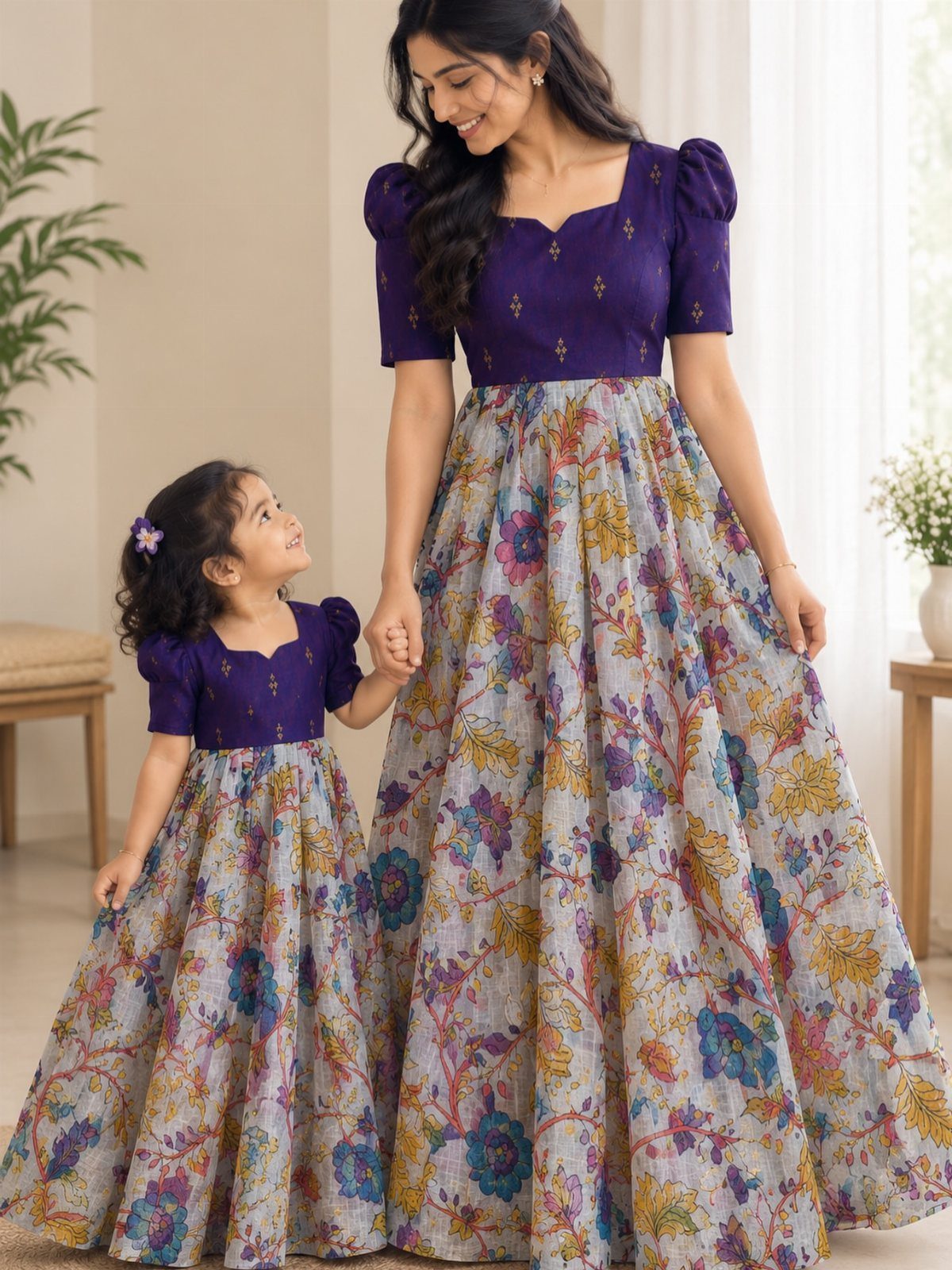
Purple tops with floral maxi skirts coordinate without looking too matched, since the skirts carry their own print and the solid tops anchor the look.
Maxi skirts on both of you work for spring and summer events that ask for something dressier than shorts but more comfortable than a full dress.
A knit or jersey top stays comfortable through hours of wear, and a floral skirt in lightweight fabric moves well whether you’re standing for photos or sitting through a picnic.
The solid top also repeats easily with other bottoms when you want the skirt to go further in your wardrobe.
Occasions for Matching Outfits
Family photos and holidays give you clear reasons to dress alike, but matching outfits work just as well for vacations and regular weekend plans.
A coordinated look photographs well at the beach or a theme park without requiring you to plan separate wardrobes for posed shots and actual activities.
Casual separates like leggings and sweaters or tracksuits travel better than dresses and transition from car to restaurant to playground without looking out of place.
Matching prints and complementary colors also extend to siblings and babies when you want the whole group to coordinate without everyone wearing identical cuts.
Whether you’re running errands, hanging out at the local playground, or snapping a precious family portrait for Mother’s Day, matching outfits can be fun while your kiddo is still amenable.
— Glamour
Choosing Sizes for Outfits
Women’s sizes in matching sets typically run from 00/XXS through 16/XL, with some styles extending to XXL.
Girls’ sizes start at 3–6M and continue through girls’ 14 in select pieces, so age ranges from infants to early teens can match depending on what the brand offers.
A dress that fits a toddler differently than an adult may still coordinate through print or color even if the cut changes between size categories.
Leave room for movement and layering when you choose sizes, especially in activewear or holiday pajamas that need to stay comfortable through hours of wear.
Fabric Choices for Outfits
Cotton and linen breathe well in warm weather and work for casual daytime outfits or beach vacations.
Polyester and rayon hold color and print clearly, which matters when you want a pattern to look sharp in photos, and they typically wrinkle less than natural fibers when you’re traveling.
Satin and silk dress up a matching look for formal family occasions, though they require more care than cotton blends.
Denim coordinates well when you want matching bottoms without the softness of knit fabrics, and it holds up through repeated wear better than lightweight wovens.
Breathable fabrics suit active days and play, while polished materials like satin work for dressier gatherings. Match the fabric to how long you’ll be wearing the outfit and what the day asks you to do in it.