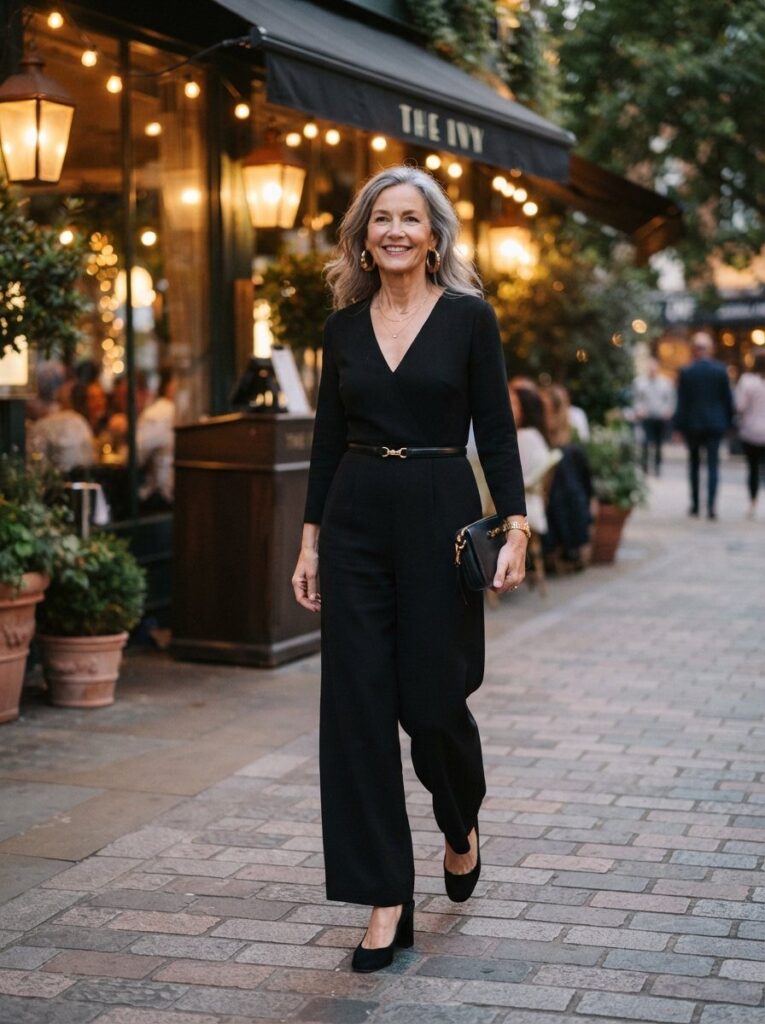
The range runs from a denim skirt and cashmere turtleneck to a monochrome jumpsuit with a cape, so there’s room for both quiet polish and statement pieces.
1. Denim Skirt with Cashmere
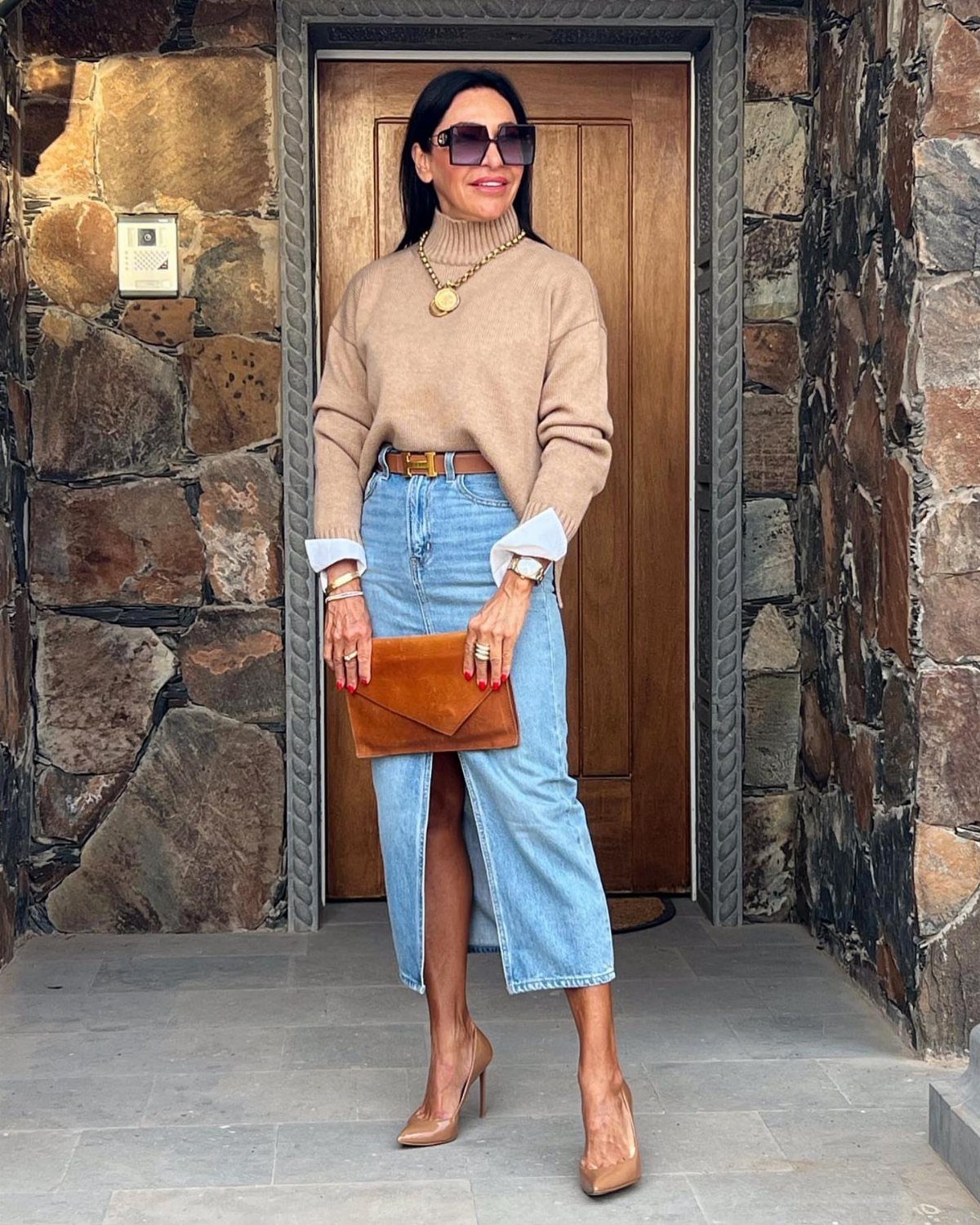
Pair it with cashmere instead. Pair it with a cashmere turtleneck and the whole outfit shifts from casual to polished without losing any comfort.
The long hemline here balances the fitted sweater and keeps proportions grounded. Tan on blue is a reliable combination that reads as put-together rather than matchy.
Heels and a leather clutch finish the look, but flat loafers would work just as well if the skirt hits at the right point on your ankle.
2. Sweater Vest Over a Classic Shirt
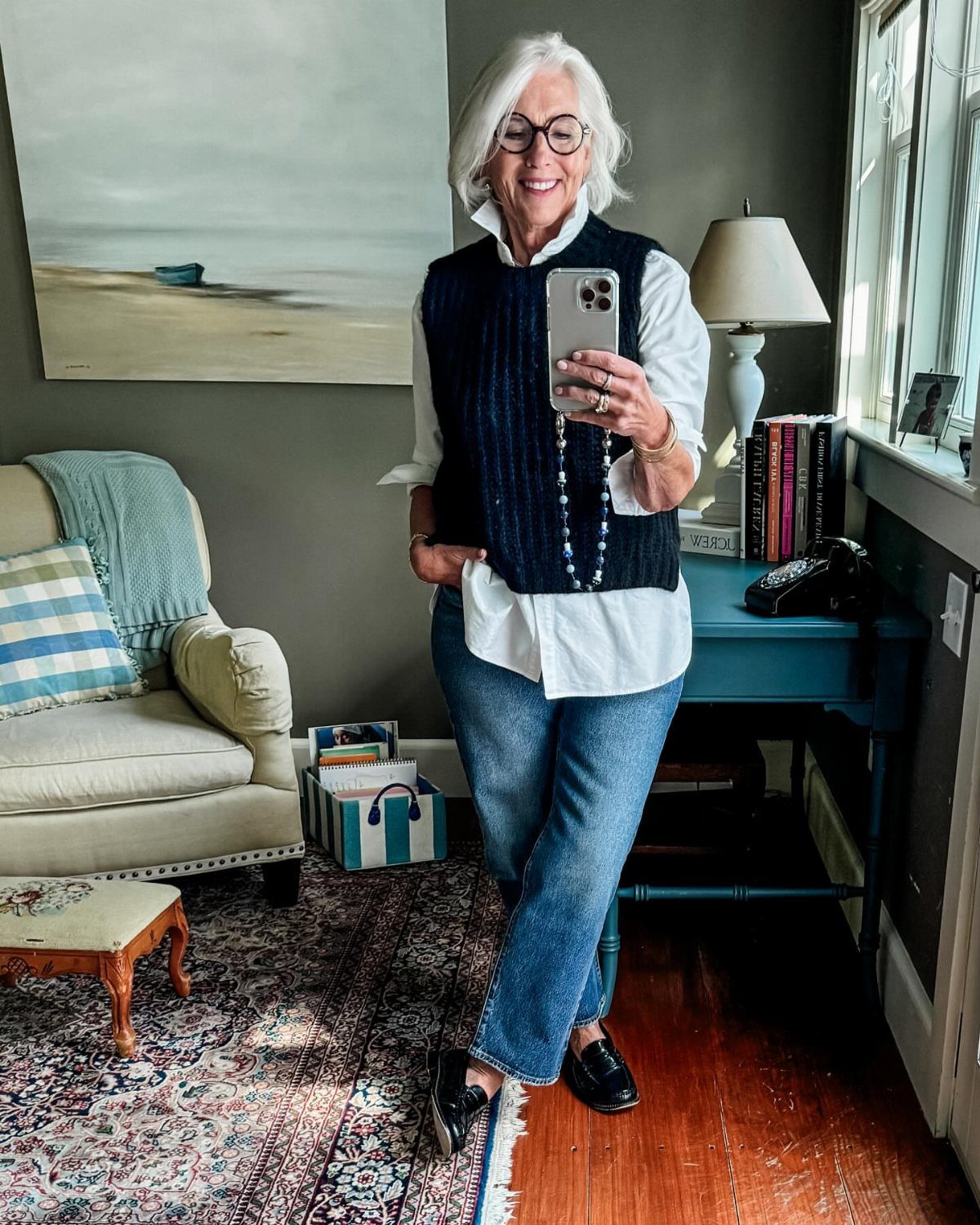
Layer a sweater vest over a classic shirt and you get the structure of a blazer without the stiffness. The vest brings in color and texture while the shirt underneath keeps things crisp.
Navy over white is sharp and unfussy. Jeans ground the look and keep it from reading too preppy.
The vest itself can be cable knit or ribbed, either works as long as the armholes sit high enough that the shirt cuffs show cleanly. Roll the sleeves if the proportions feel off.
3. Midi Skirt with a Fitted Sweater
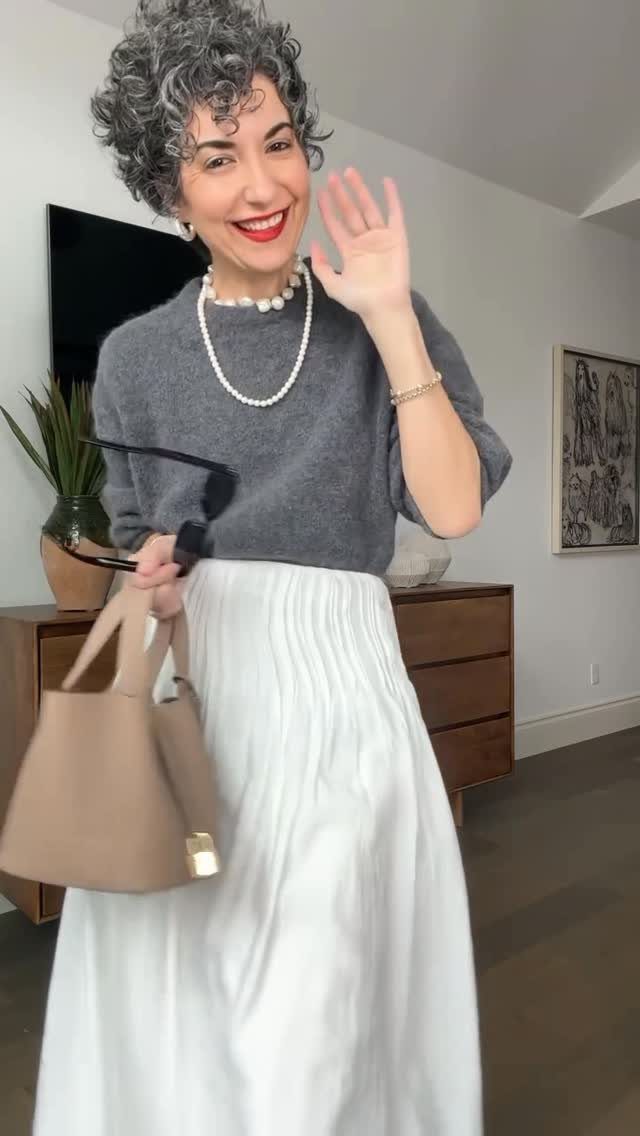
A fitted sweater tucked into a midi skirt gives you a clean waistline and lets the skirt’s silhouette do the work. A fitted knit over a crisp pleated skirt gives you softness without losing shape.
Pearls add formality, but the same combination works without them for a quieter look.
The skirt length matters: too long and it drags, too short and the proportions tip awkward. Aim for mid-calf and adjust from there based on your height.
4. Plaid Blazer
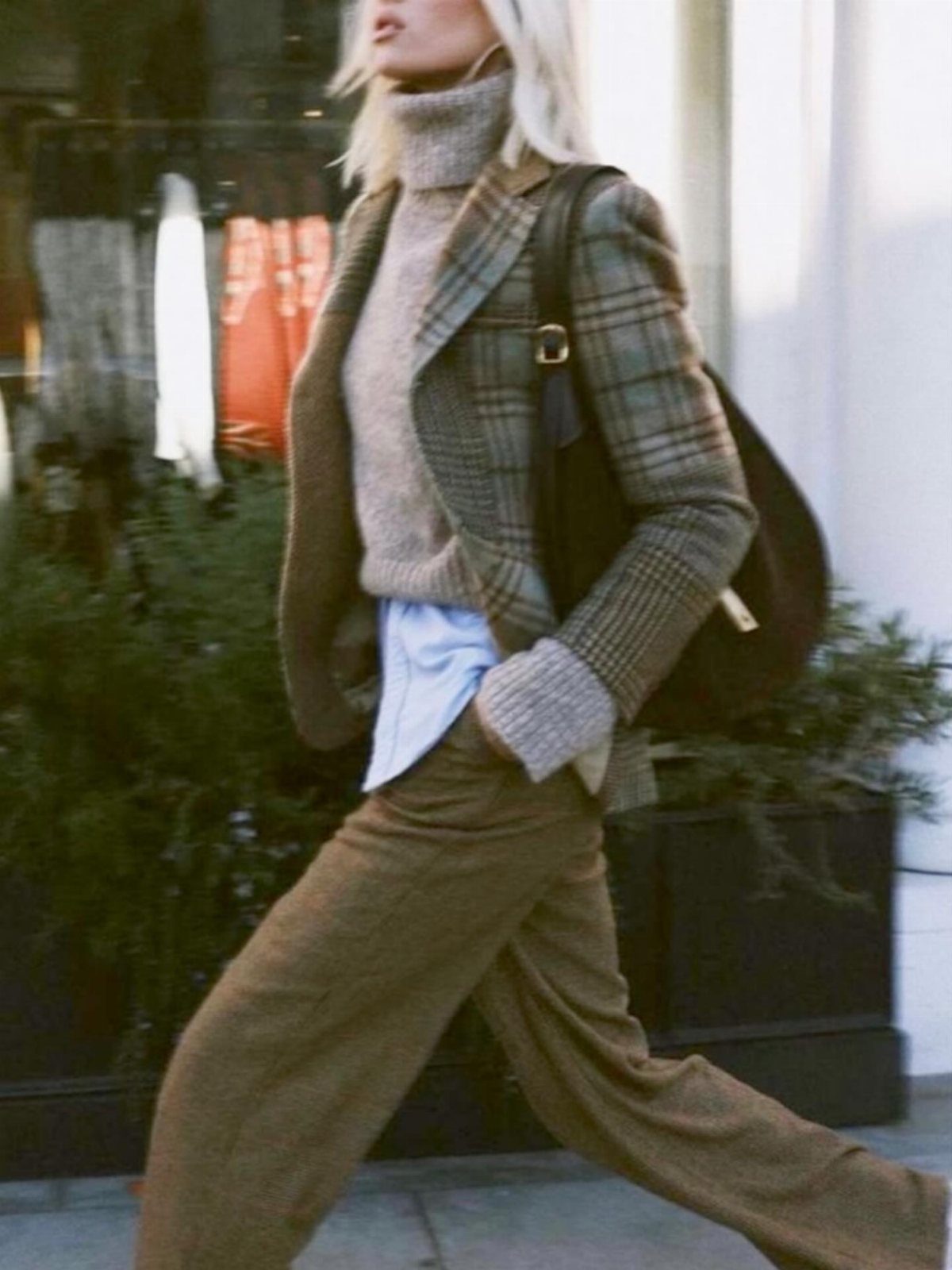
A plaid blazer is a versatile layering piece that adds pattern without overwhelming the rest of the outfit.
The structured shoulder of the blazer balances the relaxed fit of the trousers.
You can wear it buttoned or open depending on how much layering you want to show underneath. A blue shirt peeking out at the collar adds one more layer of detail without complicating the color palette.
5. Belted Shirt Dress
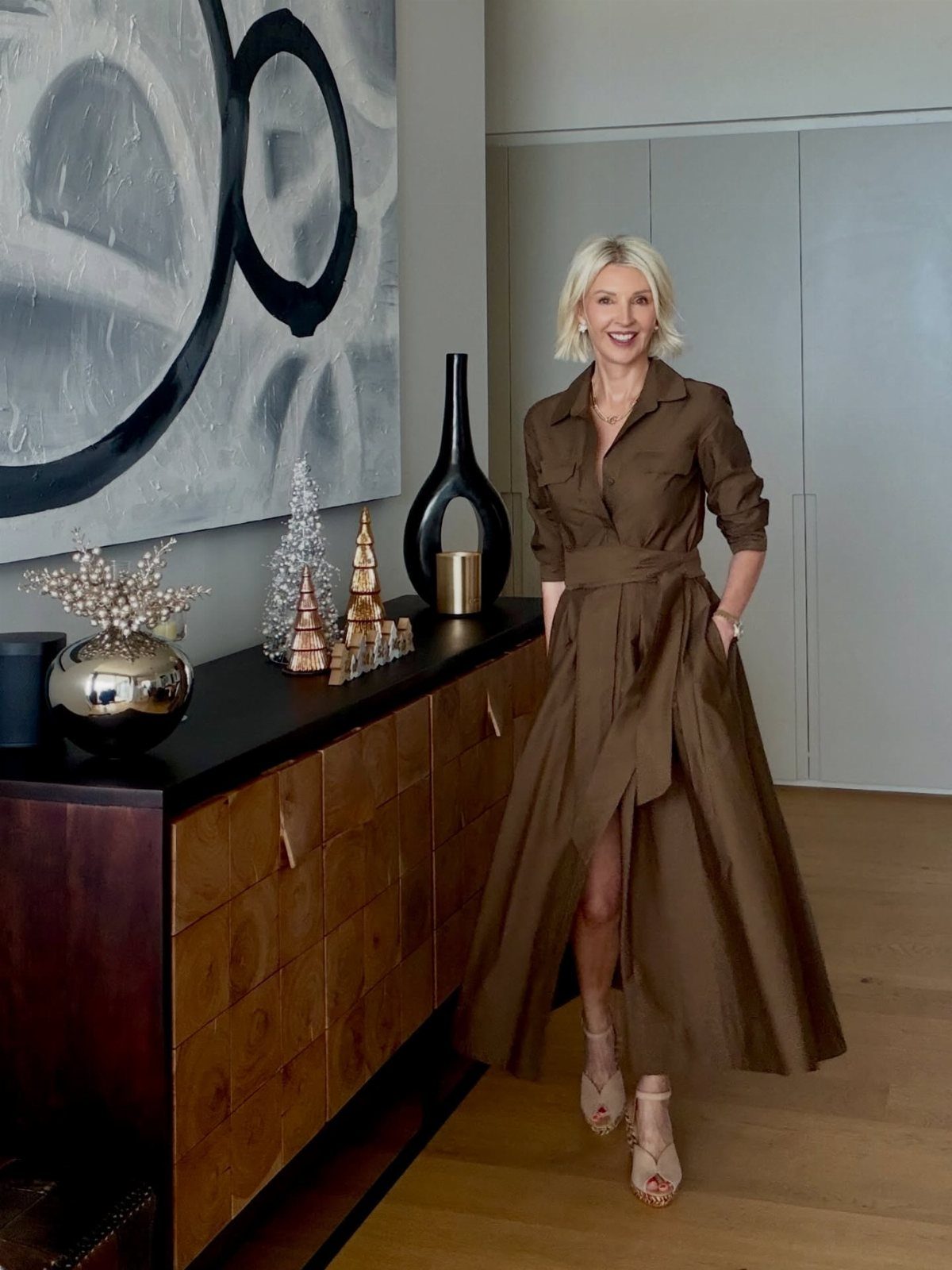
A belted shirt dress in a solid neutral color pulls together in 2 pieces what would otherwise take 4. The collar and buttons give it structure, and the belt defines the waist without adding bulk.
Brown reads as warm and grounded, easier to wear than black for daytime.
The midi length and long sleeves make it appropriate for cooler weather, and heels dress it up while keeping the silhouette streamlined. Swap in ankle boots if you need more traction or a lower heel.
6. Long Striped Shirt with Jeans
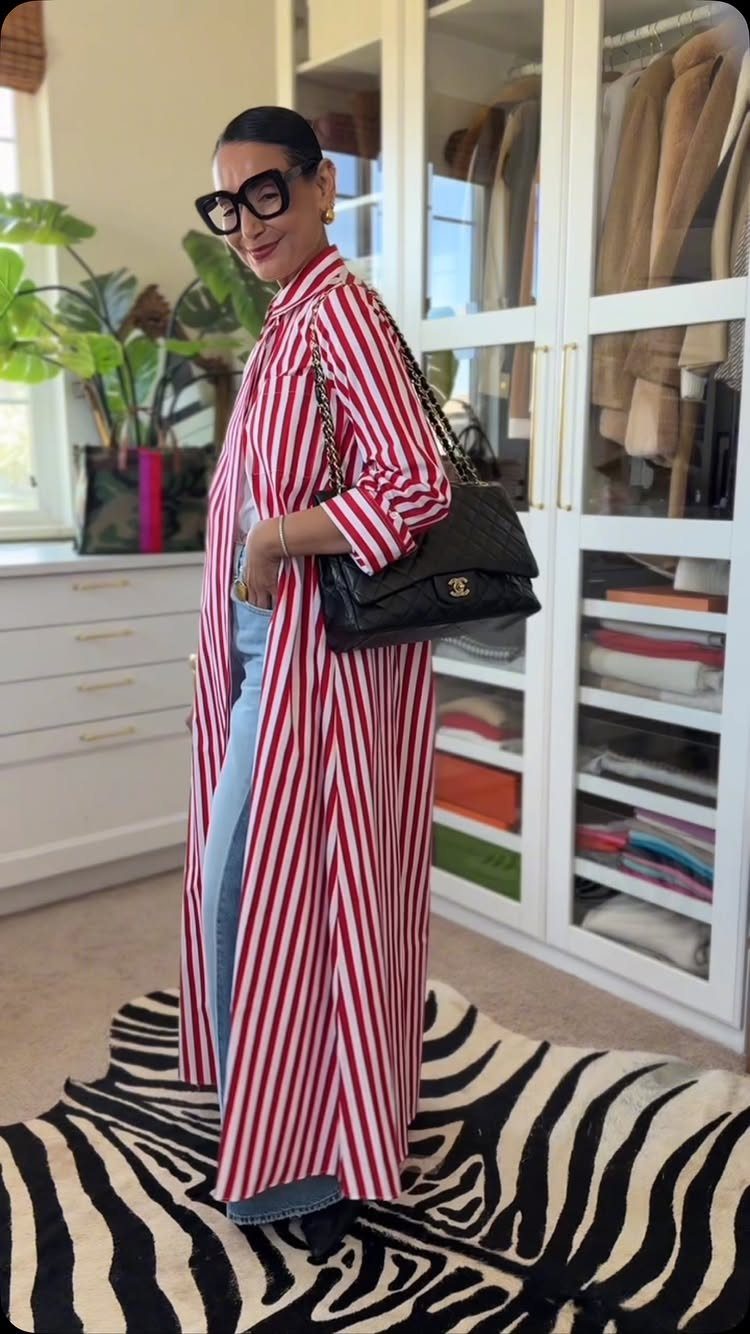
A long striped button-down tunic shirt worn over classic blue denim jeans is casual without looking sloppy. The red-and-white stripe brings in color and keeps the outfit from sitting in the usual navy-and-denim zone.
The tunic length covers the hip and thigh, which some readers prefer, and the stripes run vertically so they don’t add width.
Jeans in a straight or slim cut balance the volume of the shirt. A black bag and glasses keep the accessories simple and let the stripe do the talking.
7. Monochrome Jumpsuit and Cape
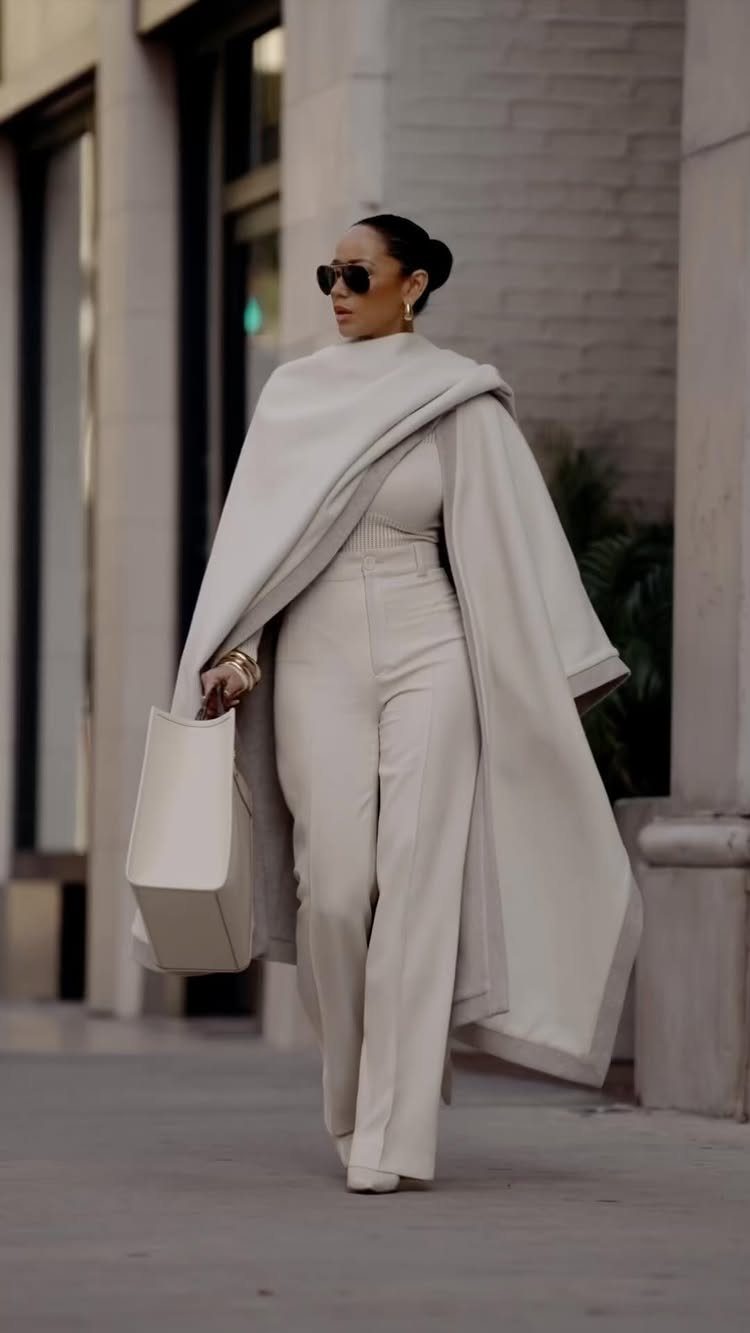
A jumpsuit in one color eliminates the need to match separates, and the cape adds coverage and movement without the weight of a coat. Cream stays light enough to carry you through most of fall before heavier layers are necessary.
The wide leg of the jumpsuit balances the volume of the cape.
Sunglasses and a tote in the same tone keep the monochrome consistent. This works best when the fabric has enough body to hold its shape, otherwise the cape and jumpsuit compete and the silhouette goes soft.
8. Flare Leg Jeans
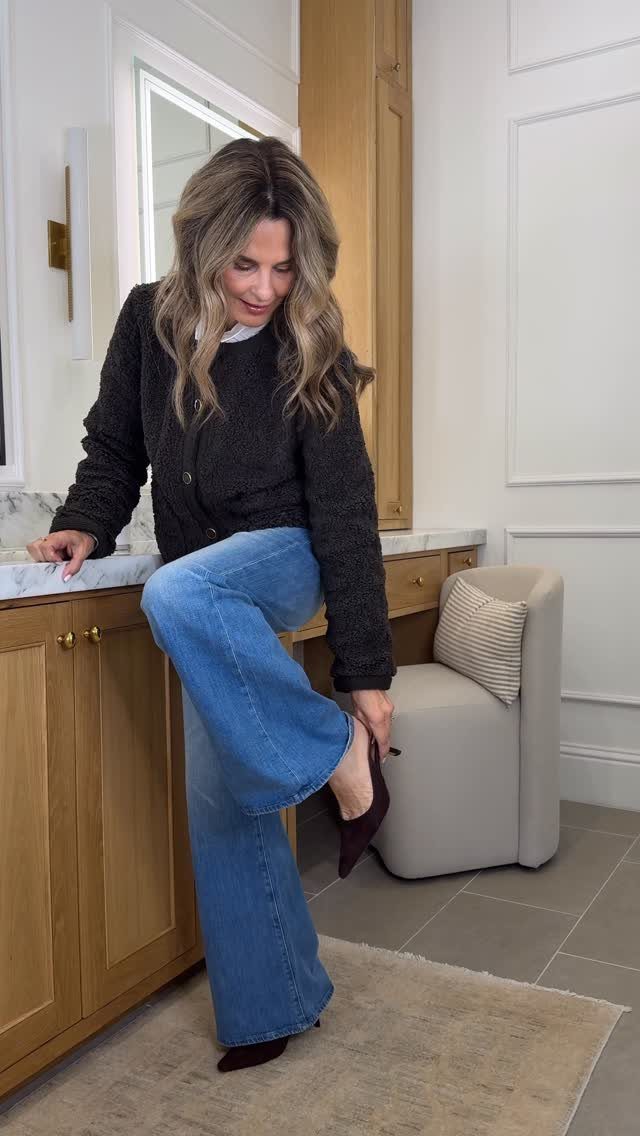
Flare leg jeans balance the hips and create a longer leg line, which is why they suit most body types. The cut sits fitted through the thigh and opens below the knee, so the proportions stay controlled.
A dark cardigan keeps the focus on the jeans and adds a layer without bulk.
Heels extend the leg line further, but the flare itself is doing most of the work. If the jeans drag on the ground, hem them to just cover the top of your shoe.
Invest in Quality Basics
A wardrobe built on quality basics means fewer decisions and more outfits that actually work.
Start with pieces in black, navy, grey, camel, white, and denim. These colors pair with each other and with nearly everything else you already own.
The difference between a basic and a good basic is how it holds up.
Soft knits, ponte knit, corduroy, quality denim, and cotton blends wear better and look better longer than their cheaper counterparts. You’ll reach for them more often because they feel better on.
Texture adds interest where pattern might overwhelm. Pair textures that push against each other: thick cable knit with smooth denim, a blouse that catches light against flat wool trousers, or soft fabric under structured leather.
The right accessories do the rest: a bag that holds its shape, a watch you actually like, a scarf you’ve had for years, or a piece of jewelry that isn’t just filling space.
Prioritize Fit
Fit matters more than any other detail.
The fit should follow your shape, not cling to it or float around it. Too tight and the fabric pulls, too loose and the silhouette disappears.
Tailoring fixes what off-the-rack sizing cannot.
A hem taken up, a waist taken in, or sleeves shortened to the right length changes how the whole outfit reads. Most alterations cost less than buying a new piece, and the difference shows immediately.
When you try something on, move in it.
Sit down, raise your arms, walk a few steps. If it shifts or pulls in ways that bother you in the fitting room, it will bother you every time you wear it.
Layering Techniques
Layering gives you more outfits from what you already own and keeps you comfortable when the temperature swings.
Twofer tops mimic layers in one piece, which saves weight when you want the look but not the extra fabric.
A tank top from summer layers under a cardigan or blazer and extends its usefulness into fall. Leave a button-down open over a plain tee and undo the top 2 buttons for something that looks relaxed but still chosen.
Tie-belt cardigans add shape and warmth to a simple tee without adding stiffness.
Plus, layering can add flattering dimension and shape to your figure. “Layering is a perfect way to stay warm this fall and really style a look,” Del Russo says.
Frequently Asked Questions
What are some good fall dresses for women over 50?
The belt cinches the waist, the solid color keeps it simple, and the shirt dress silhouette handles cooler mornings without any layering strategy.
Brown or camel reads warmer than black for daytime, and the collar and buttons keep it from looking too casual.
The midi length covers your legs when the temperature drops, long sleeves keep you warm, and the style transitions from errands to dinner depending on your shoes.
What are the main autumn fashion trends?
Plaid blazers, flare leg jeans, and monochrome jumpsuits are showing up often this fall.
Plaid brings visual interest to a neutral base, flare legs create proportion if you carry weight through the middle, and a single-color jumpsuit means you’re dressed in 2 minutes. Quality basics in neutral colors matter more than chasing every trend.
What is the 70/30 wardrobe rule?
The rule suggests building a wardrobe from 70% basics and 30% trend pieces. Neutrals like black, navy, grey, camel, and white work with each other and with the accent pieces already hanging in your closet.
The remaining 30% is where you bring in pattern, seasonal color, or a silhouette that won’t last beyond a year or two.