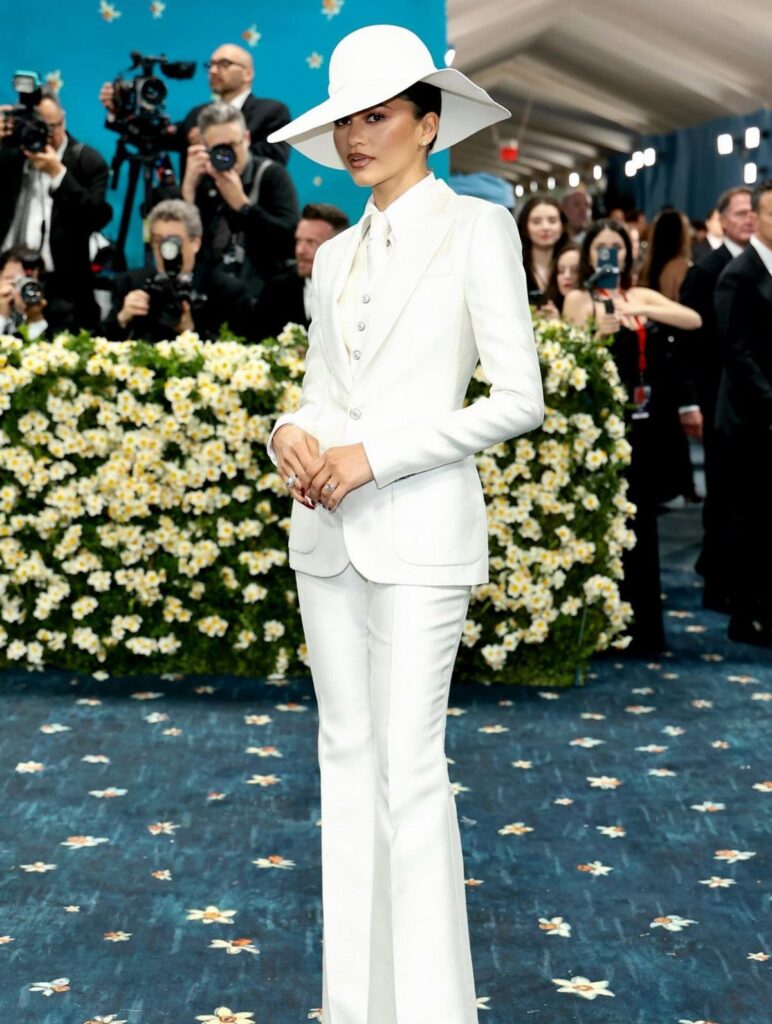
A Met Gala outfit can mean a white tailored suit with a wide-brimmed hat, a ruffled black gown with a floral headpiece, or a strapless cream satin mermaid gown, and the choice depends on whether the theme calls for a direct reference or a sculptural silhouette.
Mermaid gowns in cream satin suit hourglass or pear figures, while slip dresses in navy with lace trim work on column shapes.
1. White Tailored Suit with Wide-brim Hat
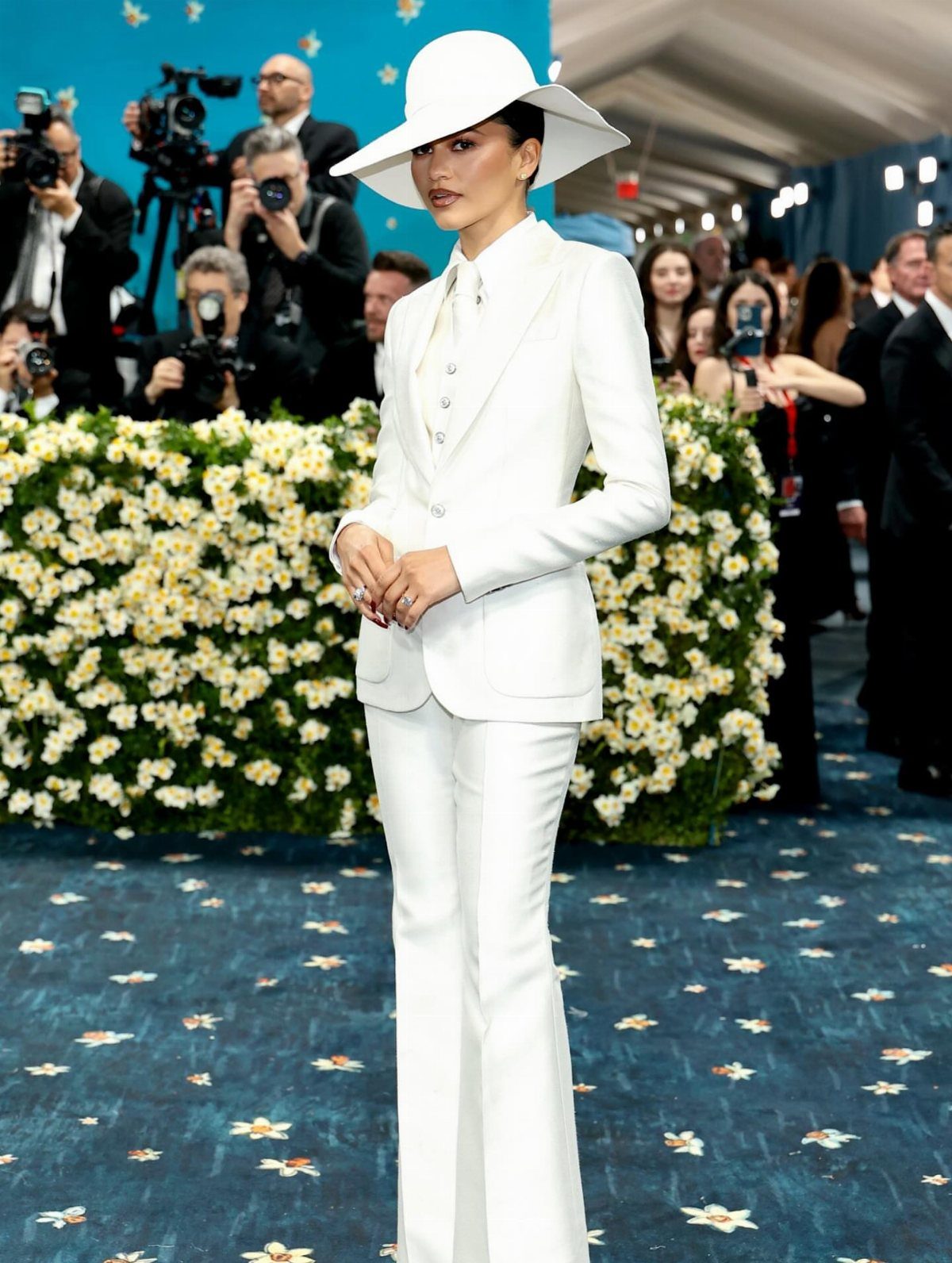
A white tailored blazer and wide-leg trousers turn formal dress codes into something you can actually move in.
The silhouette stays crisp through a structured shoulder line and a high waist on the trousers, which lengthens the leg without a heel.
The wide-brimmed hat moves it into event territory.
Match the brim width to your shoulder span: too narrow reads casual, too wide competes with the suit’s clean lines. White on white keeps the focus on fit, so tailoring matters more here than it would with a printed gown.
2. Ruffled Black Gown with Floral Headpiece
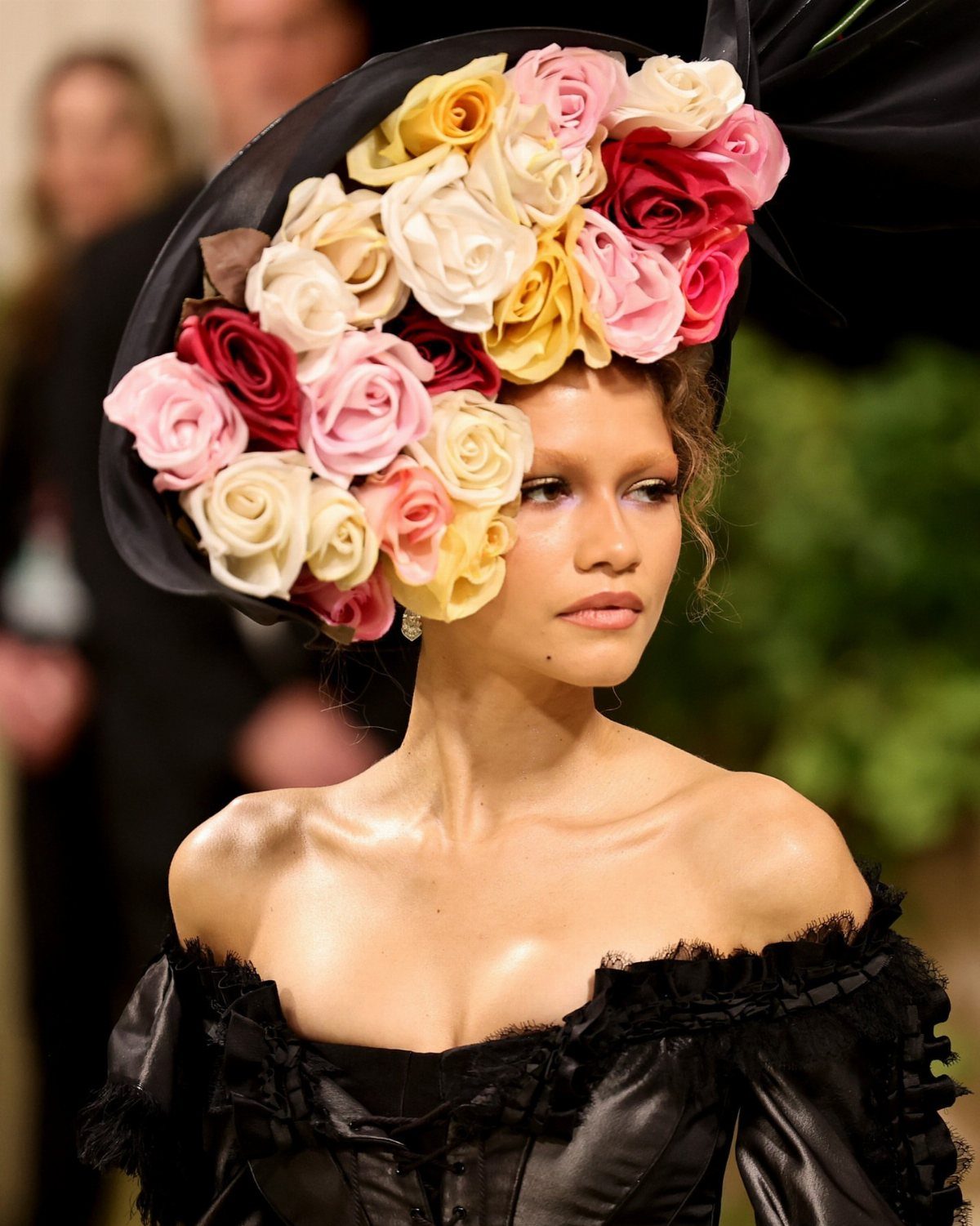
Off-the-shoulder ruffles soften a black gown without losing its formality, and the hat becomes the statement piece when it is covered in oversized fabric roses in fuchsia, coral, and yellow.
The contrast between the dress’s simplicity and the headpiece’s color density makes the outfit work.
Black dresses in your closet can take this direction.
Look for one with a structured neckline, fitted bodice, or tiered skirt that gives the silhouette shape before you add anything. Then build or buy a floral-covered hat that brings the color the dress does not.
3. Embroidered Neutral Gown with Architectural Headpiece
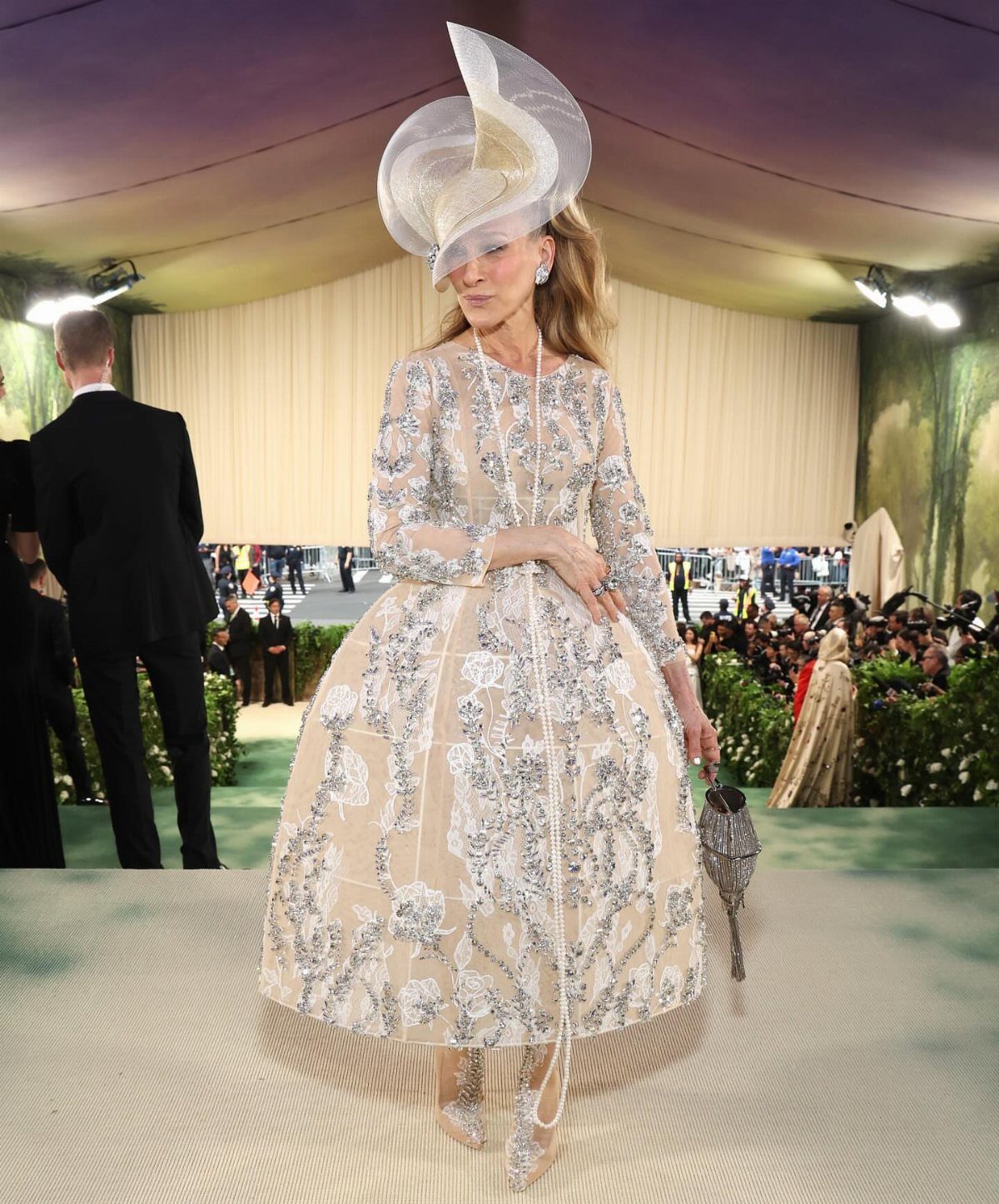
A floor-length gown with tonal floral embroidery in beige and cream gets its impact from the headpiece: a tall, sculptural white fascinator that sits forward on the head and fans out like folded paper.
The gown’s embroidery is dense but subtle, so the headpiece can be bold without the two fighting for attention.
This pairing works when the dress already has detail but stays in one color family.
The headpiece shape matters more than its size. Architectural fascinators in stiff materials like buckram or sinamay hold their form through an event, while soft tulle or feathers shift and flatten.
4. Strapless Cream Satin Mermaid Gown
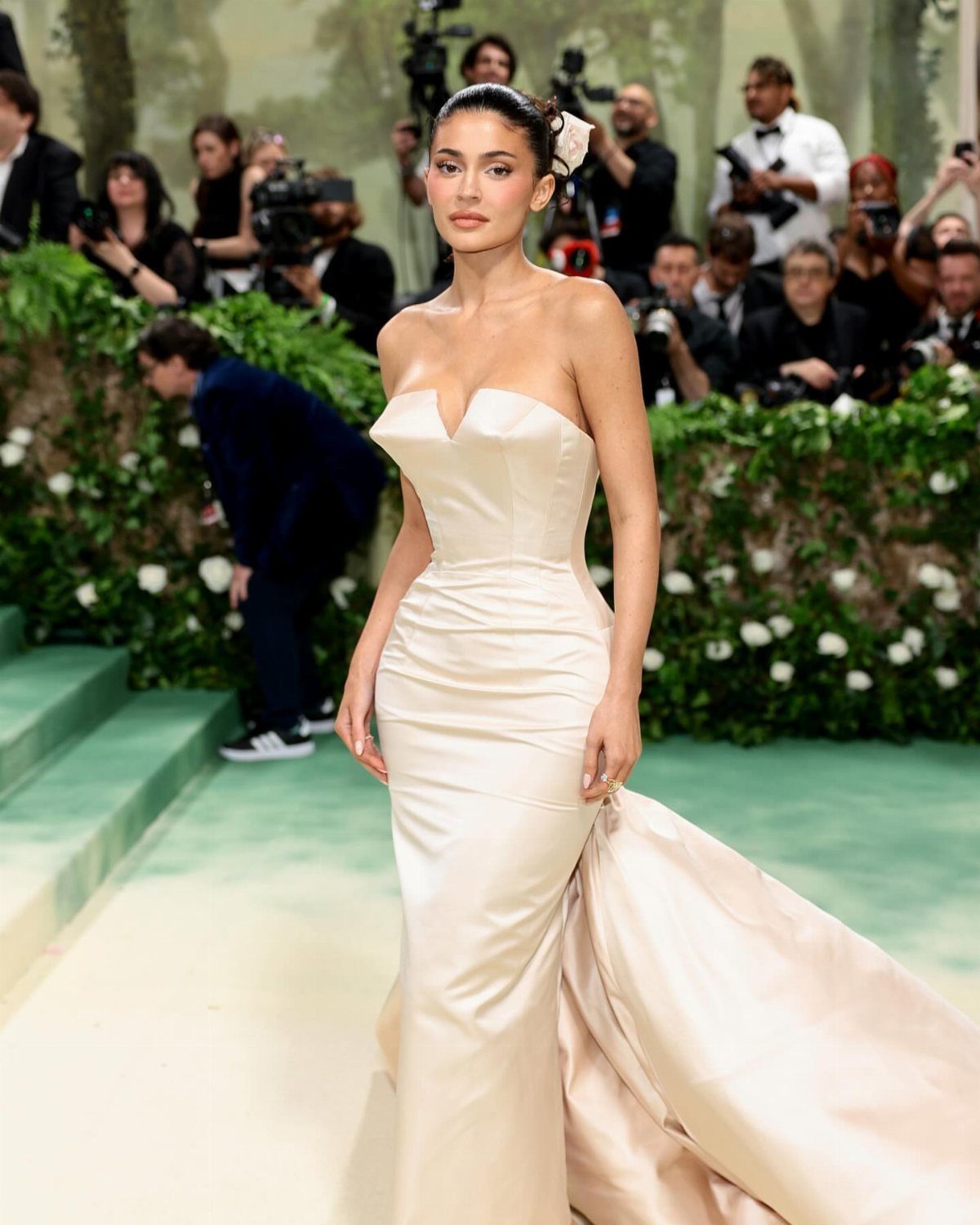
A strapless mermaid gown in cream satin is minimal in color and detail, but the fit does all the work.
The bodice hugs through the ribs and hips, then flares sharply at the knees into a train that trails behind. Satin catches light differently than matte fabrics, so the silhouette reads clearly even from a distance.
This shape suits an hourglass or pear figure.
Structured boning in the bodice keeps the fit smooth without shapewear bunching at the waistline. If you have a fitted gown, look for one with a train you can bustle or pin up after photos.
5. Red Latex and Tulle Ball Gown
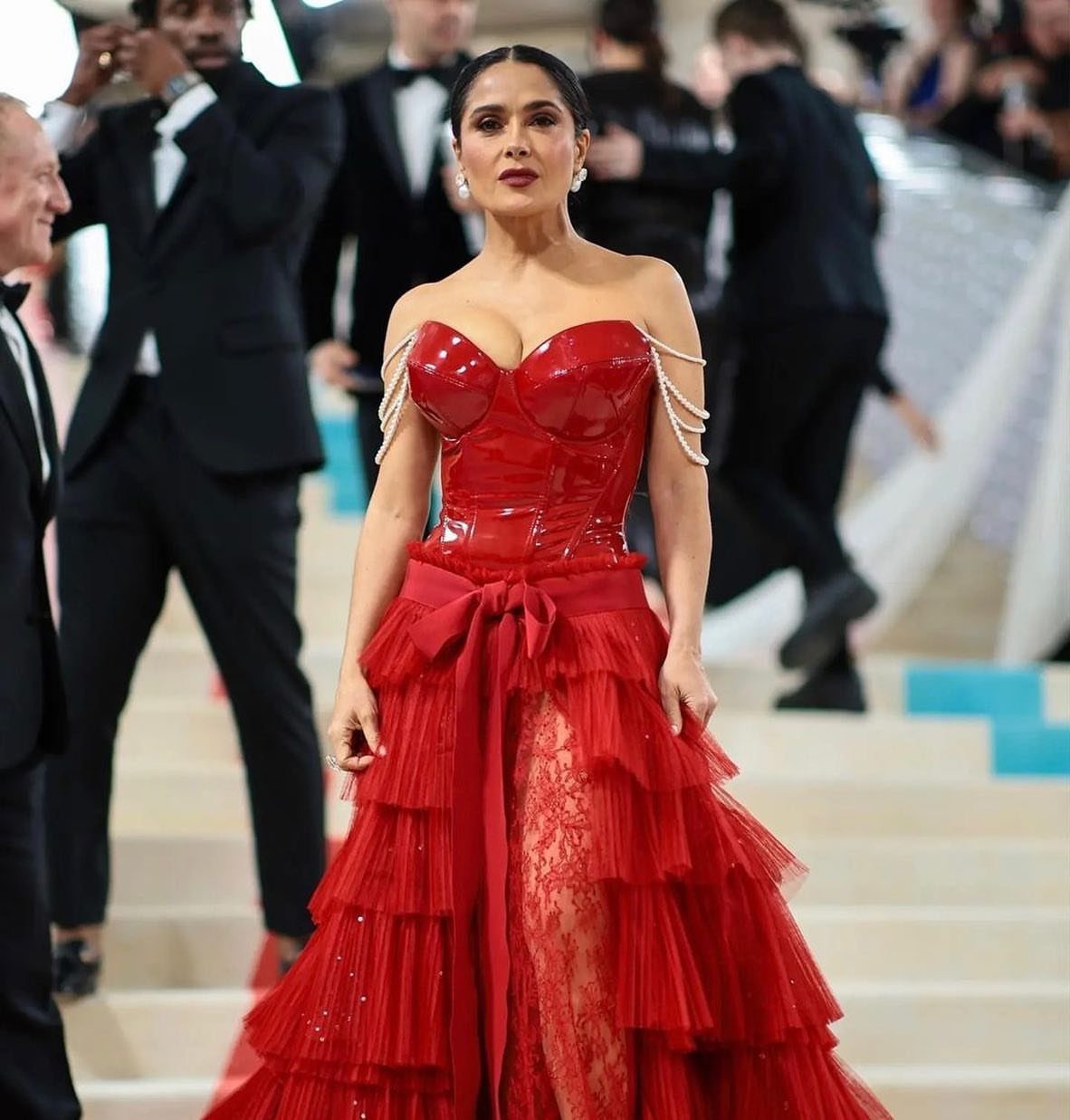
A fitted latex bodice paired with a tiered tulle skirt combines 2 textures that do not usually share a garment.
The latex is strapless and molded to the torso in glossy red, while the skirt flares out in stacked layers of sheer tulle in the same shade. The contrast between the 2 materials gives the dress its structure.
Latex fits tightly and does not breathe, so this is not a gown for long events or warm venues.
Tulle, however, moves easily and stays lightweight even when layered. If you want this silhouette without latex, a structured satin or taffeta bodice gives a similar shape with more comfort.
6. Shimmering Pink Draped Gown with Sequins
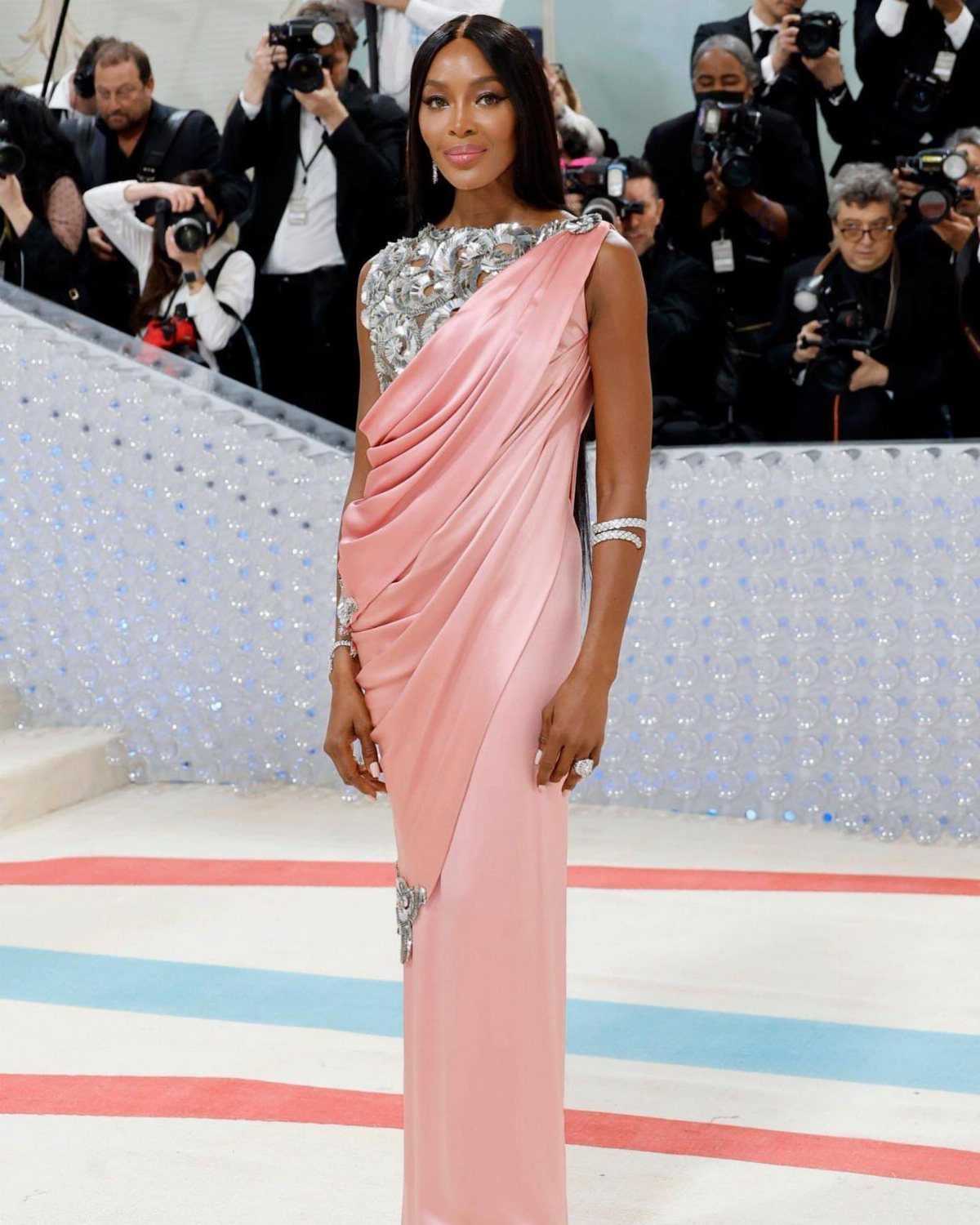
A draped pink gown with a silver sequined bodice splits the dress into 2 visual halves.
The bodice is fitted and fully covered in small sequins that catch light, while the skirt drapes loosely from the waist in soft pink fabric that pools at the floor.
The sequins add weight to the top half, which balances the fluid movement of the skirt.
Draping works best on fabrics with some weight: charmeuse, crepe, or jersey.
Lightweight chiffon will not hold the folds in place. If you are working with a gown in your closet, look for one with a defined waist where the two sections meet, so the transition between texture and drape stays clean.
7. Voluminous Floral Appliqué Ball Gown
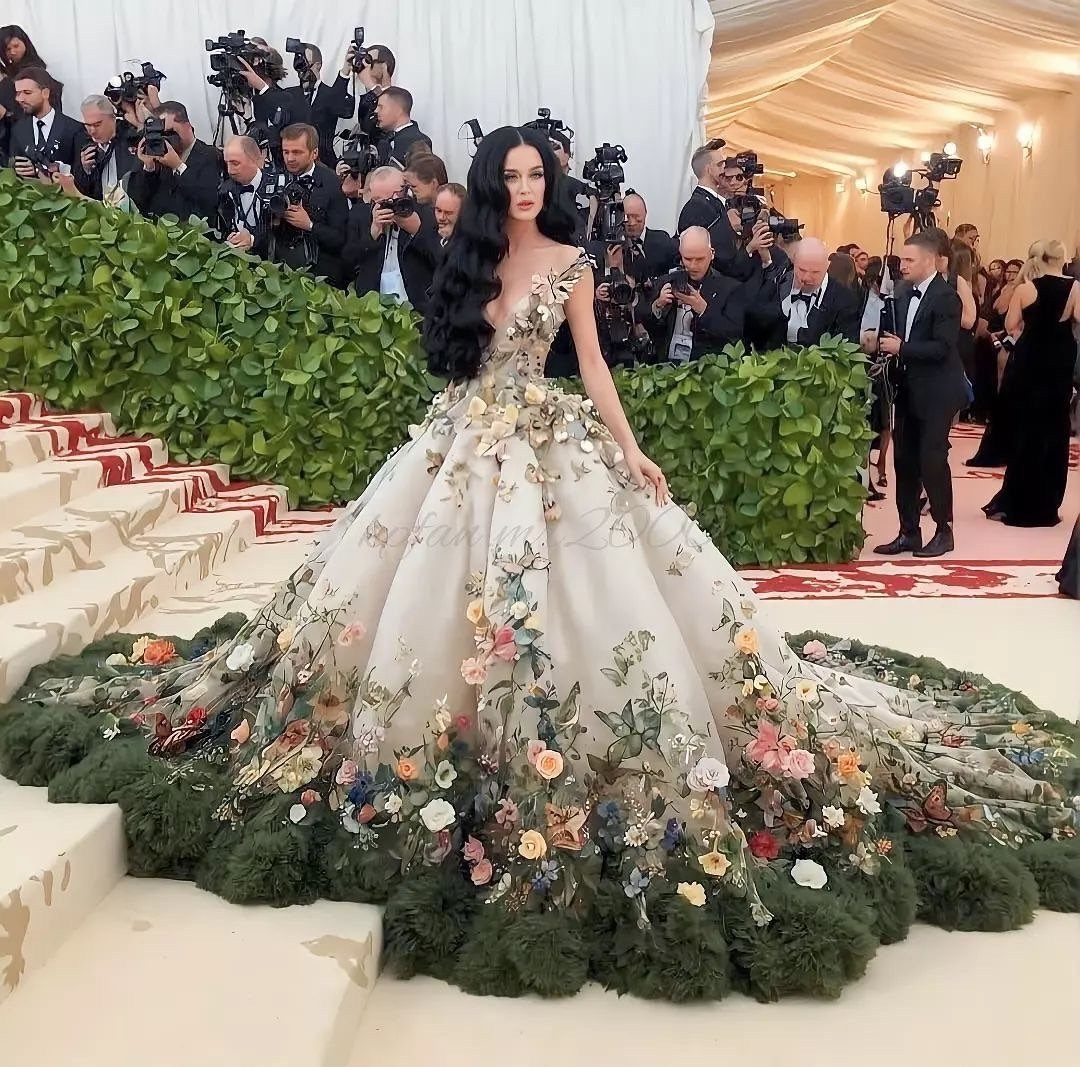
A ball gown covered in 3D floral appliqués uses texture to build volume instead of relying on stiff underlayers.
The flowers sit on top of the fabric in cream, pink, and yellow, casting shadows that give the dress depth. The hem gets extra detail with botanical embroidery or pressed petals that continue the floral theme down to the floor.
This works when the gown itself has a full skirt that can support the weight of the appliqués.
Lightweight tulle or organza will not hold up under dense decoration. Look for a base gown with a fitted bodice and a structured skirt, then add or commission appliqué work if the dress does not already have it.
8. Classical Art Print Ball Gown
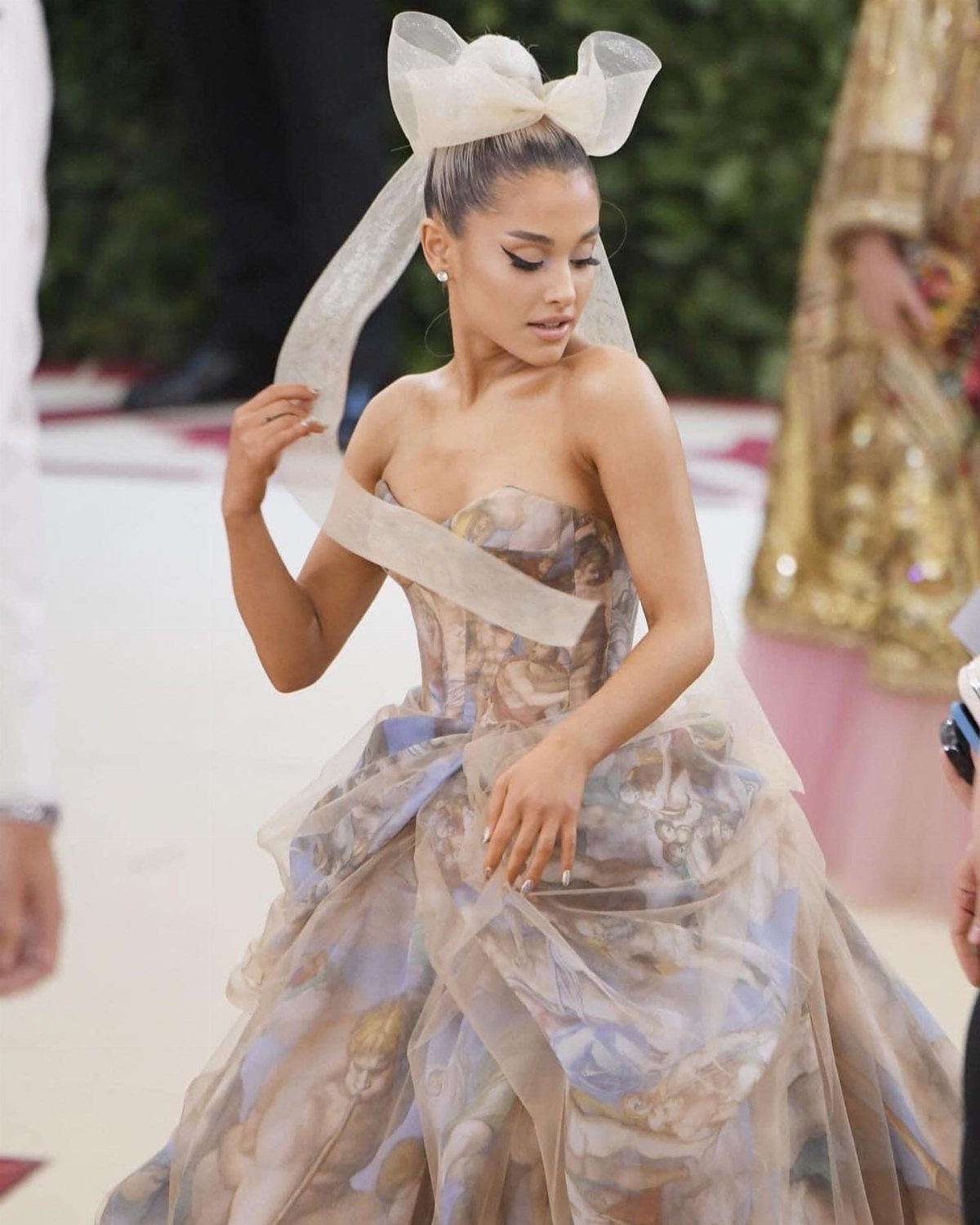
A ball gown printed with classical artwork turns the skirt into a gallery wall.
The print is dense, covering the entire skirt in paintings of figures, landscapes, or mythological scenes, usually reproduced from Renaissance or Baroque works. The bodice stays plain and strapless, so the print has room to read.
Pair it with a large bow headpiece in a color pulled from the print.
The bow sits at the crown or back of the head and should be oversized to balance the volume of the skirt. Sheer tulle or organza bows hold their shape better than satin, which collapses after an hour.
9. Navy Blue Lace-trimmed Slip Dress
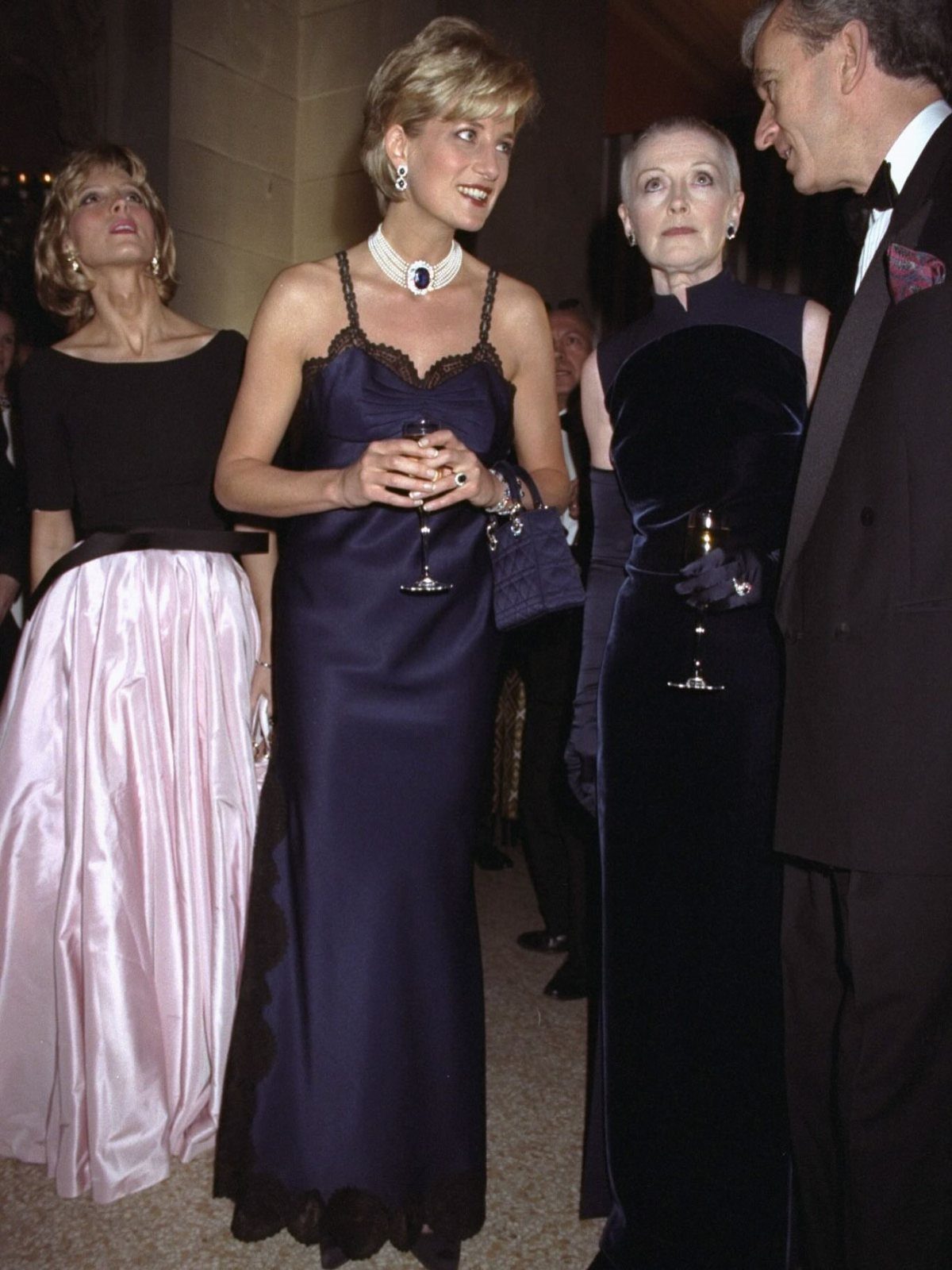
A navy satin slip dress edged in black lace is formal without the structure of a ball gown.
The lace runs along the neckline and hem, framing the dress in a darker tone that sharpens the silhouette. Satin drapes close to the body, so this shape suits a column or hourglass figure.
The statement comes from the jewelry. A sapphire and pearl choker sits high on the neck and draws attention upward, which balances the simplicity of the dress.
Navy works with cool-toned stones like sapphire, aquamarine, or platinum-set diamonds. Skip the bracelet and keep the wrist bare so the choker stays the focus.
10. Pink Tulle Gown with Halo
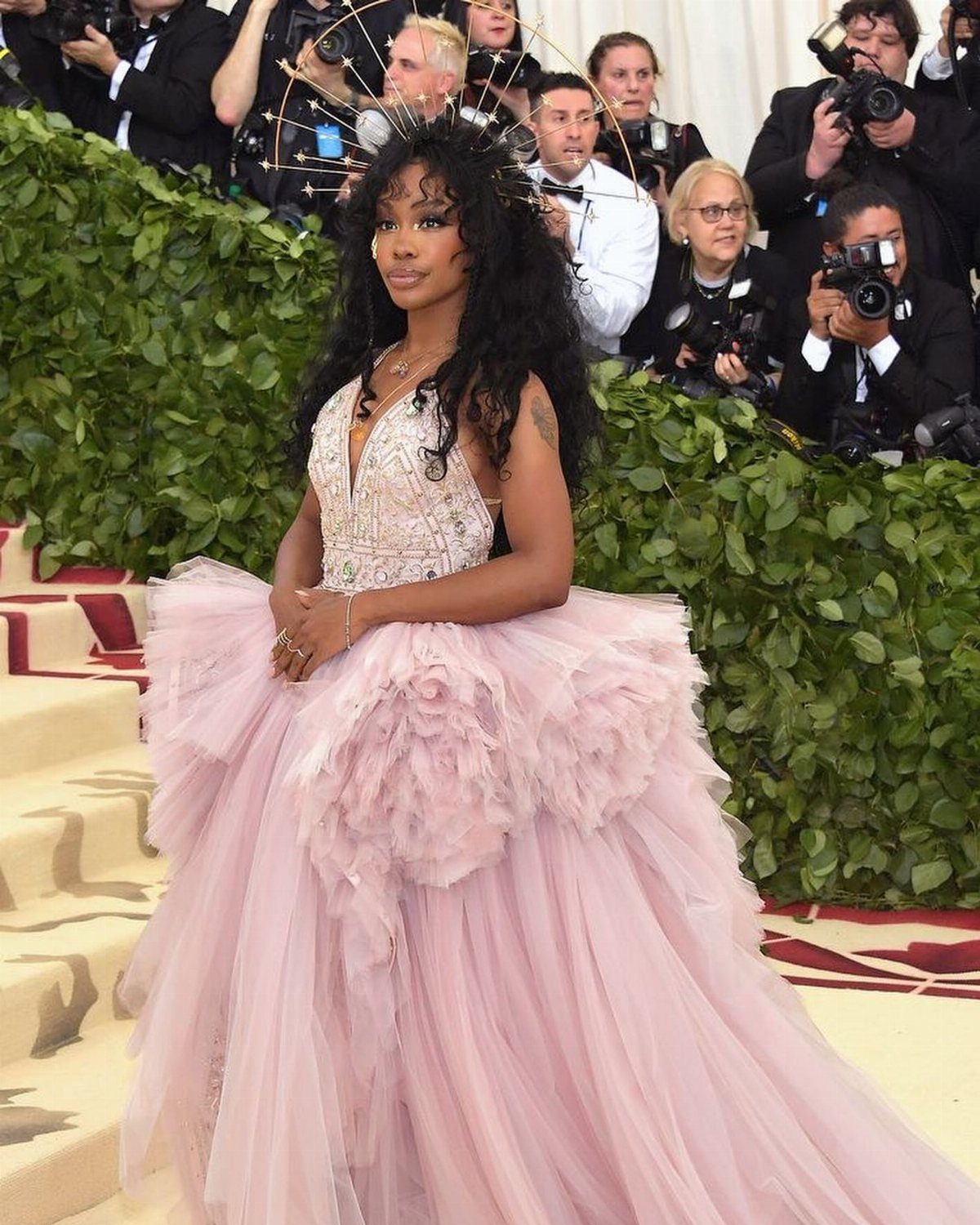
Layered pink tulle gives this gown its volume, with tiers that start at the waist and extend into a full skirt.
The bodice is fitted and covered in beading or sequins, which adds weight to the top half and keeps the proportions balanced. The halo headpiece radiates out from the head in gold spokes, creating a circular frame around the face.
Halos work best on hair worn down or in a low bun, so the headpiece can sit flat and secure.
Look for one with a comb or wire base that anchors to the crown. Gold halos suit warm skin tones and pink fabric, while silver reads cooler and pairs better with blue or lavender.
Met Gala Themes
The event’s annual theme gives attendees a starting point, but the interpretation is where the outfit happens.
Heavenly Bodies sent people toward religious iconography: halos, crosses, papal robes. Camp: Notes on Fashion asked for exaggeration, irony, and theatricality, which meant different things depending on who was dressing.
A theme sets the mood, not the silhouette.
Some years call for historical references, others for conceptual ideas like "time" or "gilded glamour." Read the theme closely before you build the outfit.
If it names an era, look at the decade’s actual garments, not just the Hollywood version. If it names a concept, find 3 images that capture it and build from those.
Themes repeat certain ideas. Religion, American fashion, and art movements come up often enough that you can plan ahead if you follow the event.
Fashion Impact
Gigi Hadid’s 2024 Thom Browne look was sculptural, with exaggerated proportions and a silhouette that read as architecture. Browne’s tailoring blurred the line between garment and art, and the outfit was presented rather than just worn.
Rihanna’s Guo Pei cape, Blake Lively’s Versace gown, and Sarah Jessica Parker in McQueen have become reference points long after the event. These outfits influence what shows up in editorial spreads and what designers return to in later collections.
To pull from these moments, study the construction.
Rihanna’s cape had a train that required handlers. Met Gala outfits are not casual pieces, and recreating them means understanding the base garment before you add the detail that makes it memorable.
Event Significance
The Met Gala is a fundraiser for the Costume Institute, held on the first Monday in May. Actors, singers, models, influencers, and athletes attend, with Anna Wintour picking co-chairs each year to shape the event.
The 2025 gala on May 5 celebrated Black dandyism and menswear.
The theme shapes the dress code, but the fundraising purpose is why the event exists. Tickets are not sold publicly, and attendance is by invitation.
If you are building an outfit inspired by the event, the theme and the venue matter.
The Metropolitan Museum of Art has a grand staircase, marble floors, and high ceilings, so silhouettes need to hold up at a distance and in motion. A dress that photographs well at home may not read clearly in that space.
The Met Gala 2022 red carpet is where a truly unforgettable night begins for attendees and onlookers alike. Met Gala fashion embodies a style all its own as it follows a unique theme that honors the corresponding exhibition within the museum.
Frequently Asked Questions
What are some of the most memorable looks ever worn at the Met Gala?
Rihanna’s Guo Pei cape arrived with three attendants to carry the train, Blake Lively wore Versace that shifted from copper to teal depending on the light, and Gigi Hadid’s 2024 Thom Browne piece looked more like sculpture than clothing.
Their impact showed up months later in magazine shoots and runway shows that borrowed the construction techniques and the idea that a gown could function as installation art.
What is an appropriate dress for a gala?
A floor-length gown in a structured silhouette works for formal galas, whether that is a fitted mermaid shape, a ball gown with volume, or a draped column dress.
A space with vaulted ceilings and wide marble staircases calls for proportions that hold their shape when you are standing 30 feet away or climbing steps.
Choose a dress with either strong tailoring or statement details like embroidery, appliqués, or dramatic headpieces to match the formality of the event.