
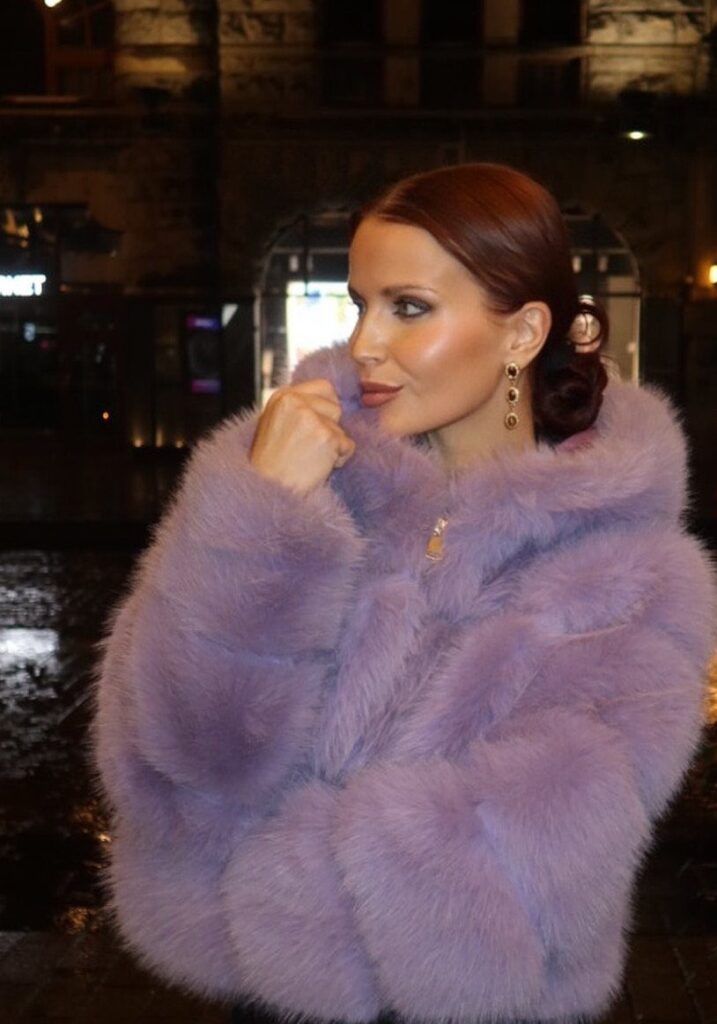
A purple coat anchors the boldest version of this look, while a purple bag or satin button-down keeps the color secondary when your outfit or occasion can’t support a full statement piece.
Double-breasted wool coats add structure through December and January, and ribbed knit dresses work when tights or thermal leggings go underneath.
1. Purple Coat
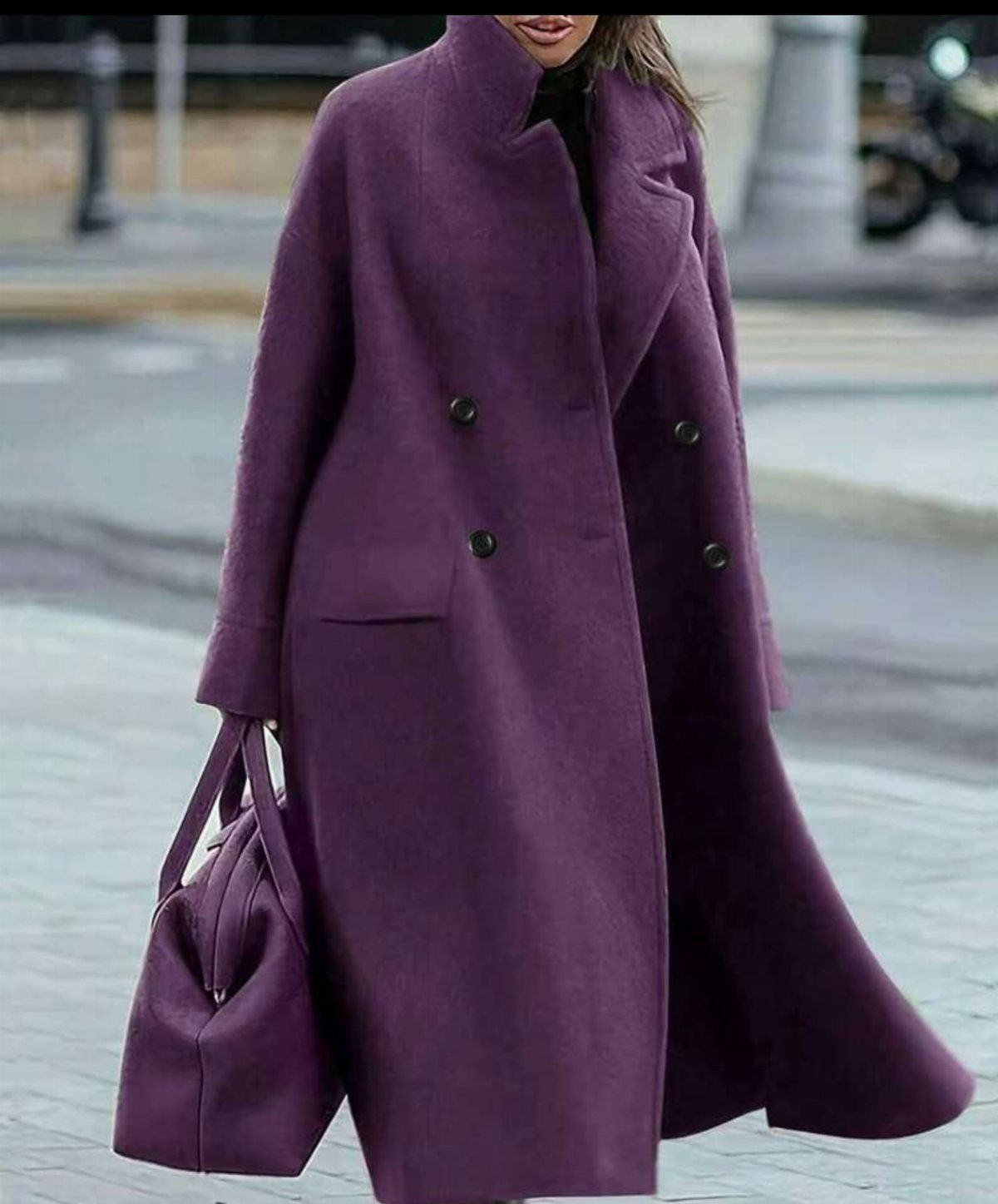
A long purple wool coat is the fastest route to a standout winter look. Double-breasted cuts add structure, and the length keeps you warm through December and January without layering bulky pieces underneath.
A coat this bold does most of the work on its own.
Underneath, neutral pieces let the color hold the frame: black trousers, grey knit, cream turtleneck. The purple stays crisp, and the whole outfit reads as intentional rather than busy.
2. Purple Knit Sweater
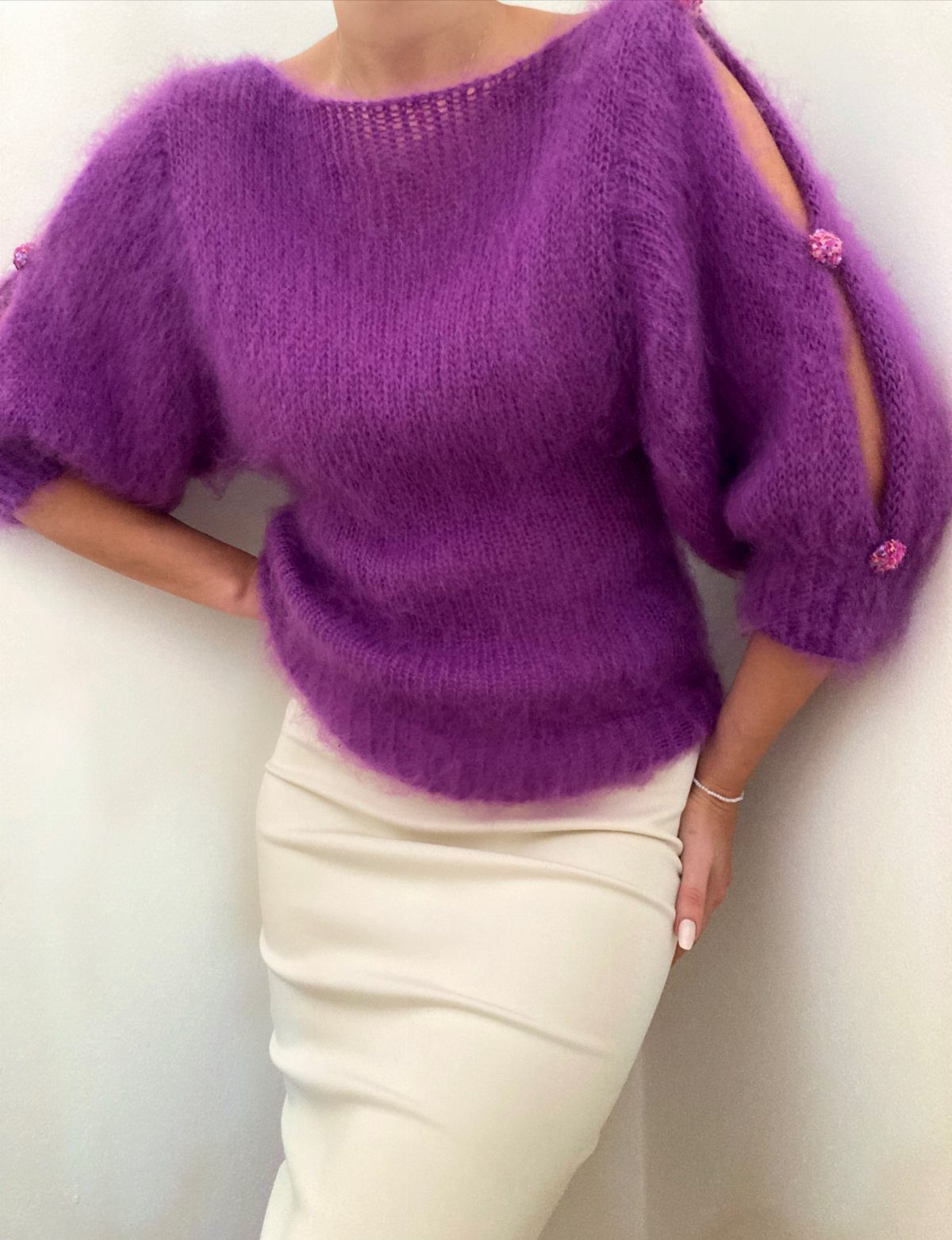
Purple knit sweaters soften winter dressing without losing edge. A fuzzy texture adds dimension, and cut-outs at the shoulder keep the silhouette interesting when you’re tired of plain crewnecks.
Pair it with a cream or ivory skirt to let the purple sit at the center of the outfit.
The contrast keeps things light, and the neutral base works across body types. Tuck the sweater loosely if the waistline needs definition, or leave it untucked for a relaxed drape.
3. Purple Pants
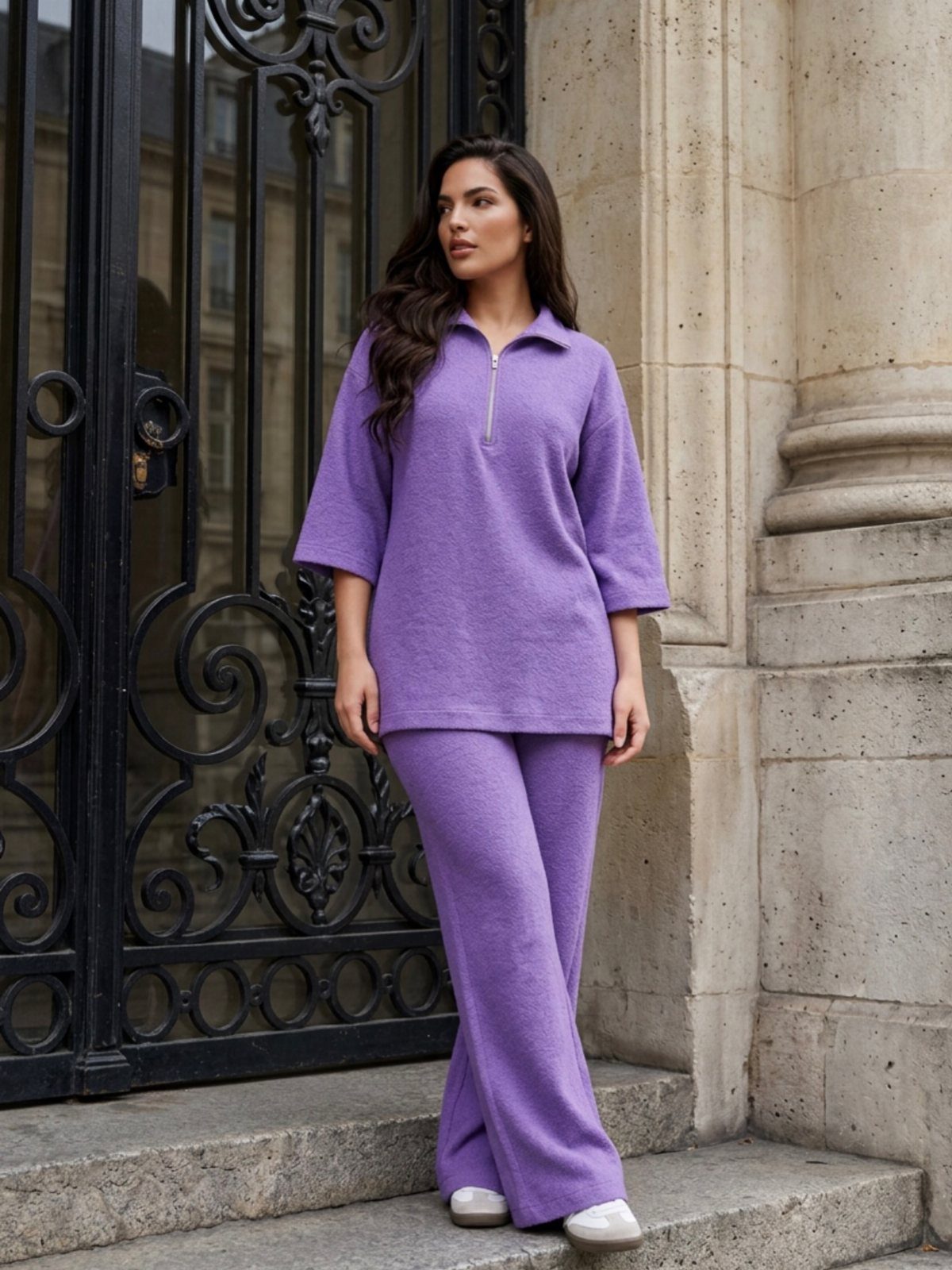
Purple pants shift the color to the bottom half, which balances an outfit when your coat or jacket is already doing heavy lifting. Wide-leg cuts in fleece or wool knit keep you warm without the bulk of denim.
Match the pants to a purple zip-up for a coordinated look, or pair them with black, charcoal or cream on top. The wide leg suits most body types and moves easily, which matters when you’re layering thermal leggings underneath.
4. Purple Bags
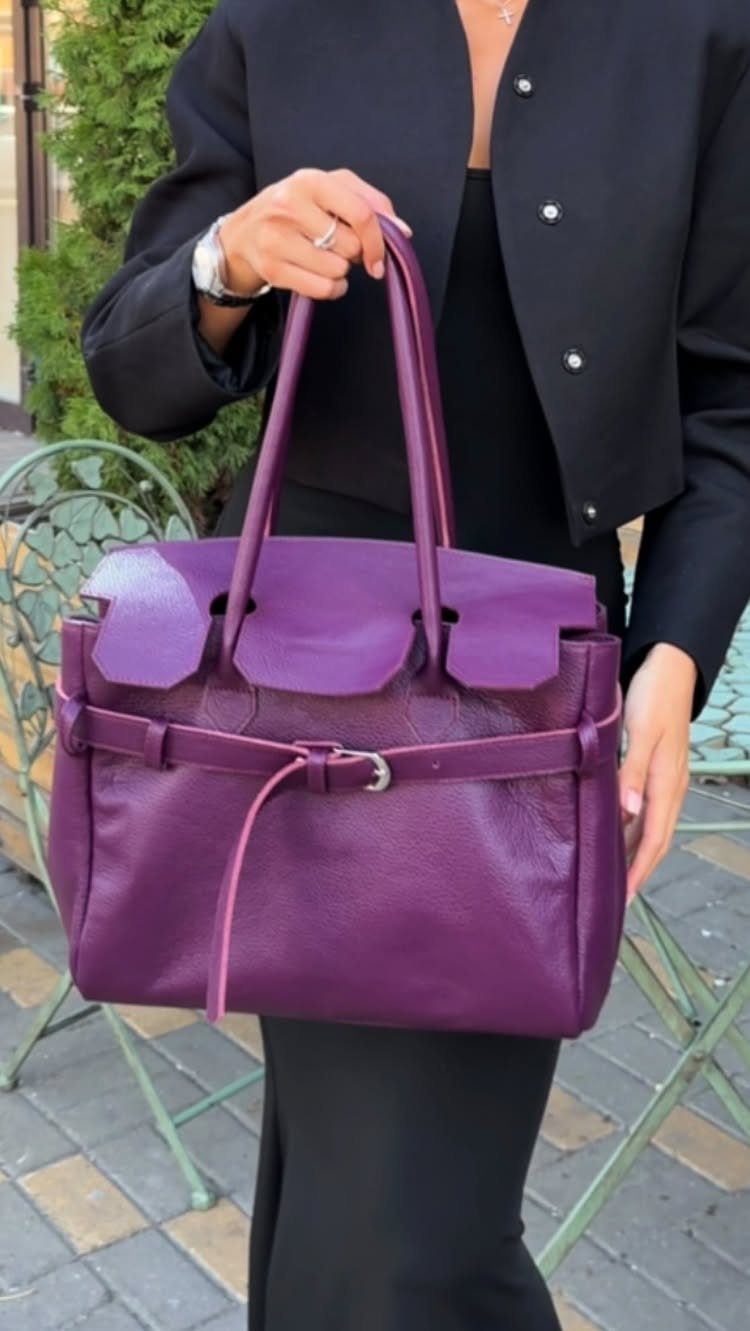
A purple bag brings the color in without committing your whole outfit to it.
Leather holds up better in winter weather than suede or fabric, and a structured shape keeps the bag from collapsing under the weight of gloves, scarves and a water bottle.
Scale the bag to your frame.
A large tote works when you’re carrying a laptop or gym clothes, but it can overwhelm a petite build. If that’s the case, a crossbody or a smaller shoulder bag in the same shade does the job.
5. Purple with Black
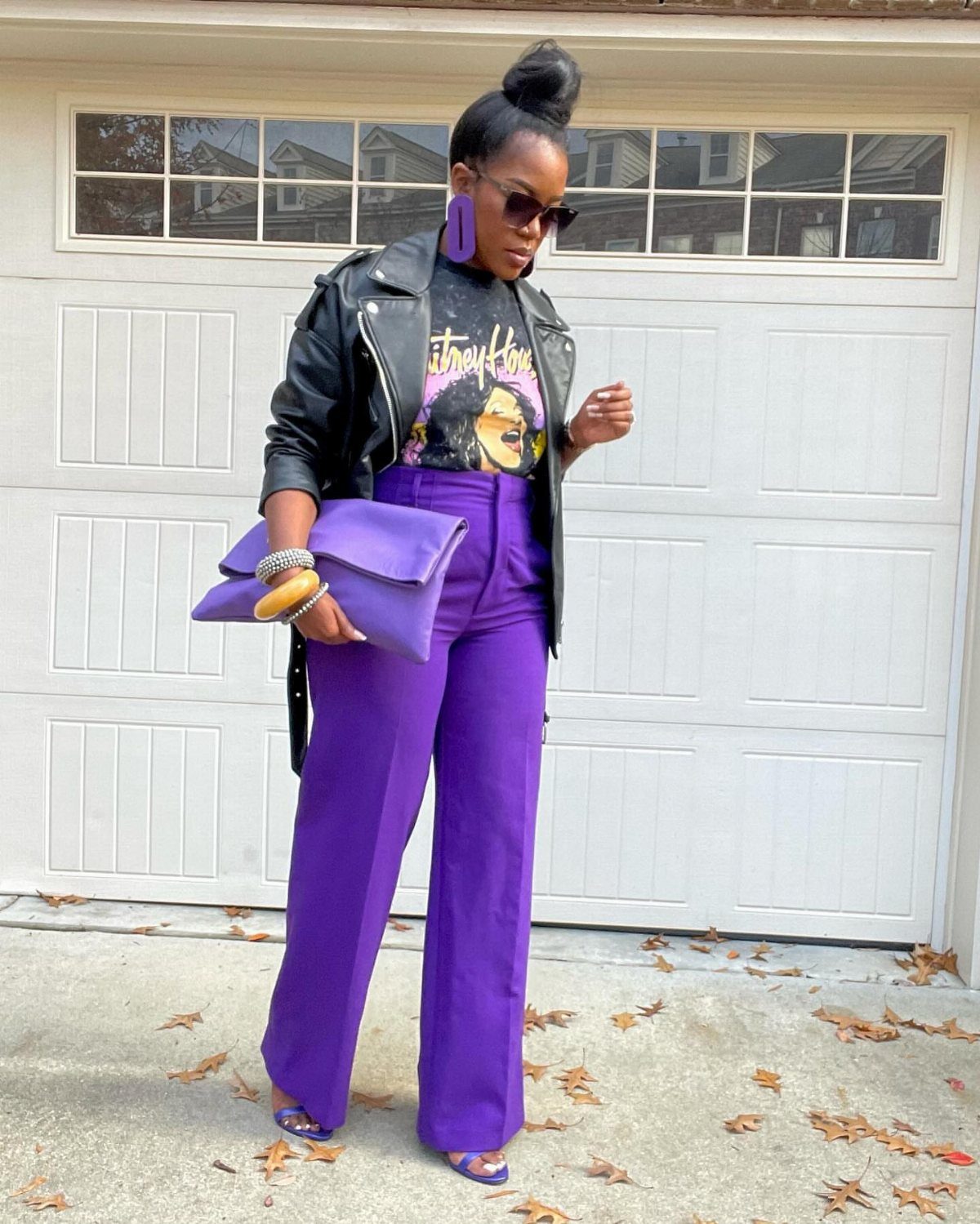
Purple and black is the combination that works when you want color but need the outfit to stay sharp.
Black grounds the purple and keeps it from reading as costume or theme, which can happen when lighter colors crowd the frame.
Start with purple pants and add a black leather jacket.
The leather brings texture, and the jacket structure balances the flow of wide-leg trousers. A graphic tee underneath keeps the look casual, or swap it for a black turtleneck when the occasion calls for polish.
6. Purple Satin Button-down Outfit
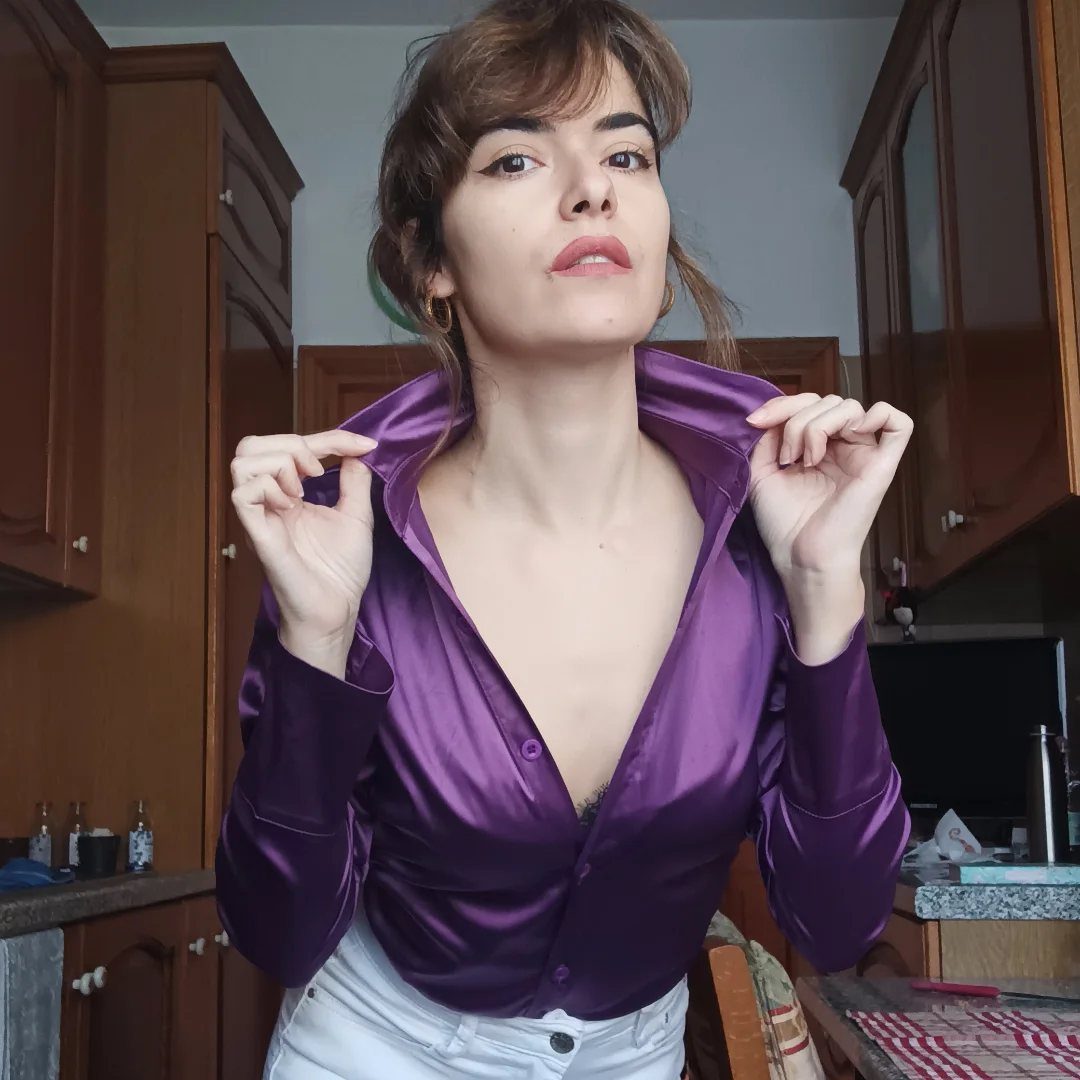
A purple satin button-down offers shine without sparkle, which suits daytime winter events where velvet or sequins would be too much. Satin reflects light, so the color shifts as you move, and the fabric drapes cleanly over most body types.
White pants keep the outfit crisp and let the satin hold focus. The contrast is high but not harsh, and the pairing works for lunch meetings, gallery openings or any occasion that sits between casual and formal.
Tuck the shirt in to define the waistline, and add a slim belt if the fit needs anchoring.
7. Purple Knit Sweater Dress
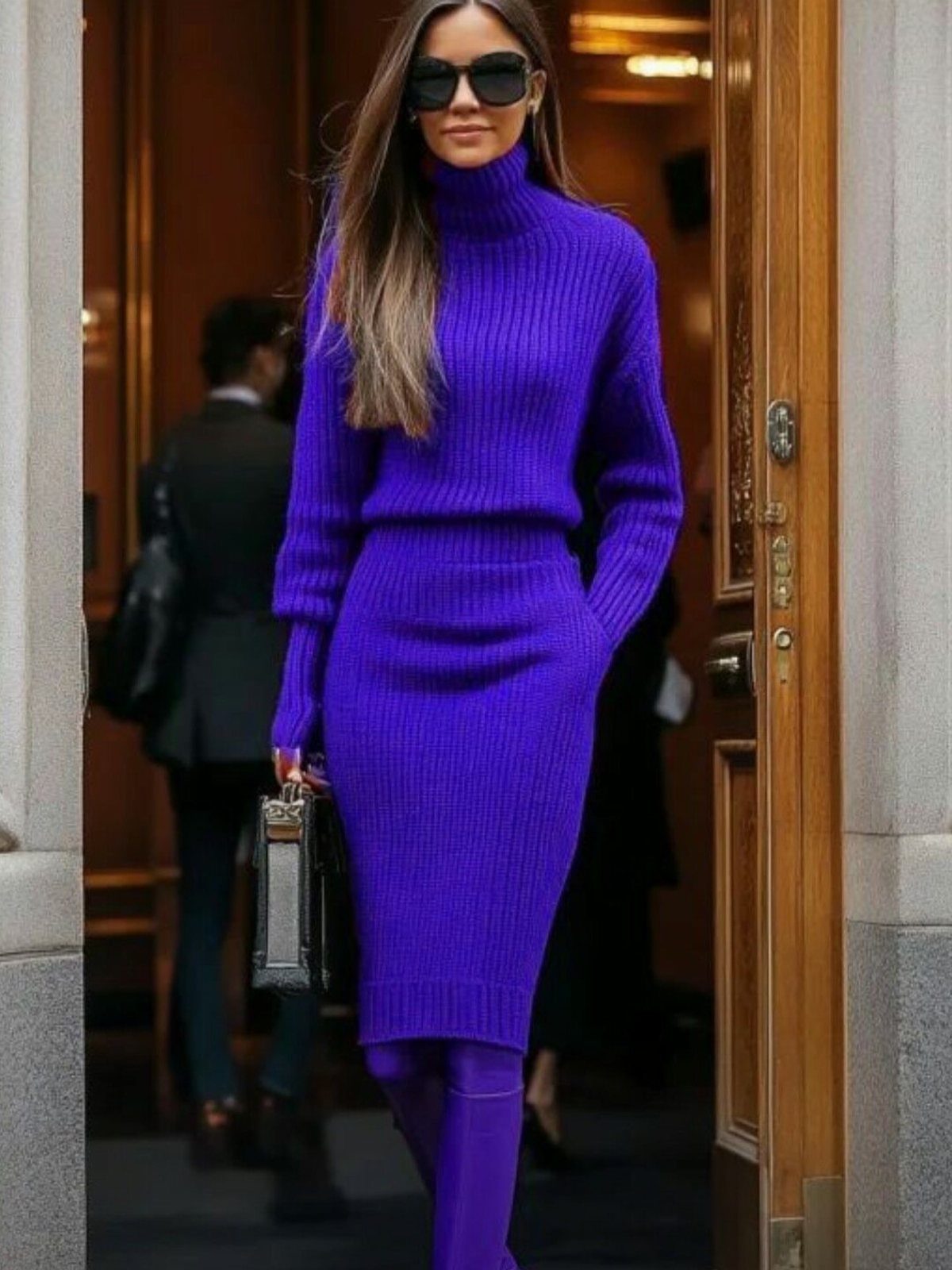
A purple knit sweater dress in a ribbed turtleneck cut keeps you warm through February without the bulk of separates. The ribbing adds texture, and the length works when tights or thermal leggings go underneath.
Matching the boots to the dress creates a monochrome look that lengthens the leg line, which suits petite and average builds.
If you’d rather break it up, black or grey boots work just as well and keep the outfit from reading too matchy.
8. Purple Coat with Yellow Outfit
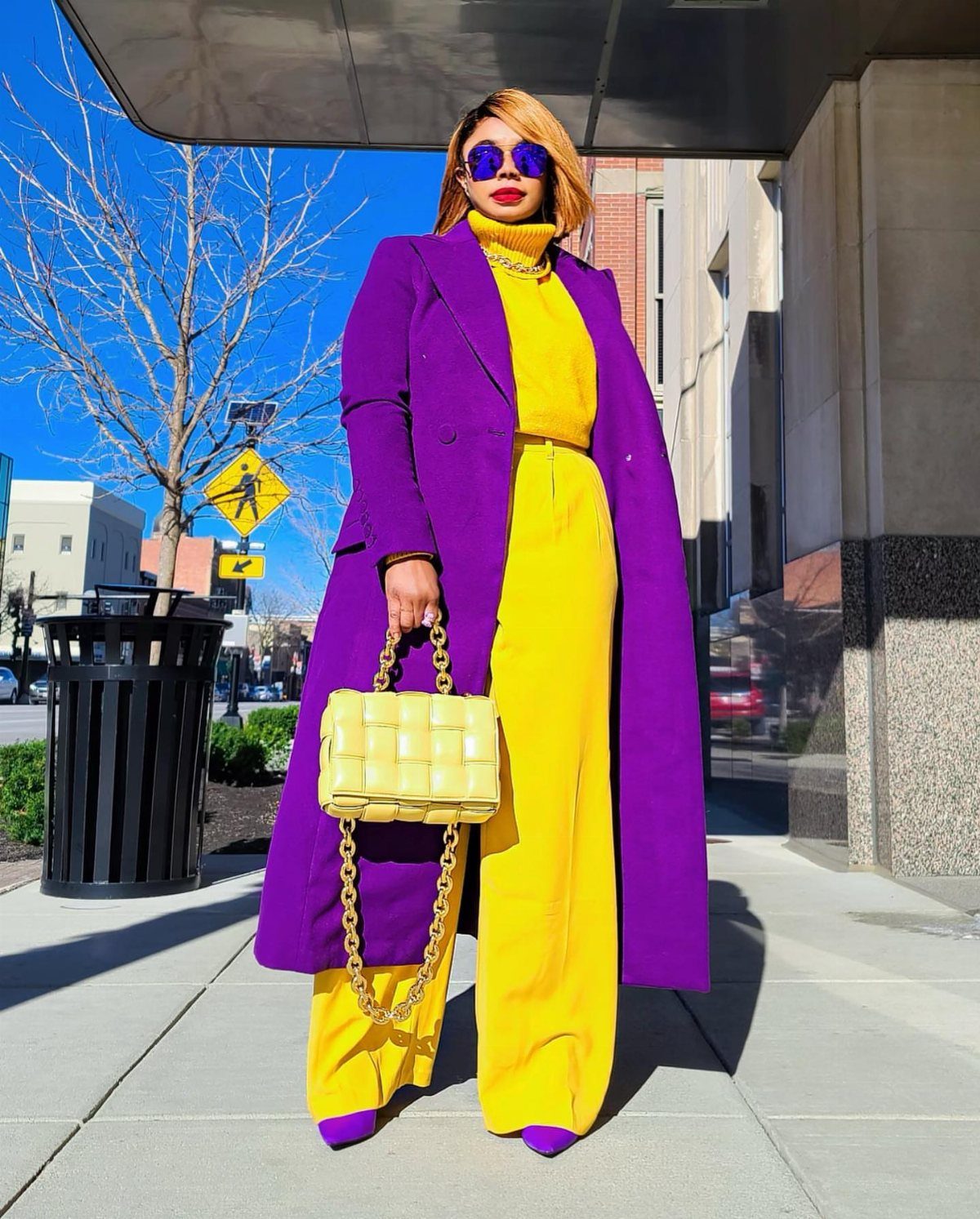
Purple and yellow is the high-contrast pairing that works when you want both colors to hold equal weight. The yellow brightens winter dressing without pastels, and the purple keeps it from looking like spring arrived early.
A long purple coat over a yellow turtleneck and wide-leg trousers balances the boldness.
The coat anchors the outfit, and the yellow underneath stays visible at the neckline and hemline. A yellow bag ties it together, though a neutral bag would work if you want one less color decision.
9. Purple Monochrome Sweatsuit
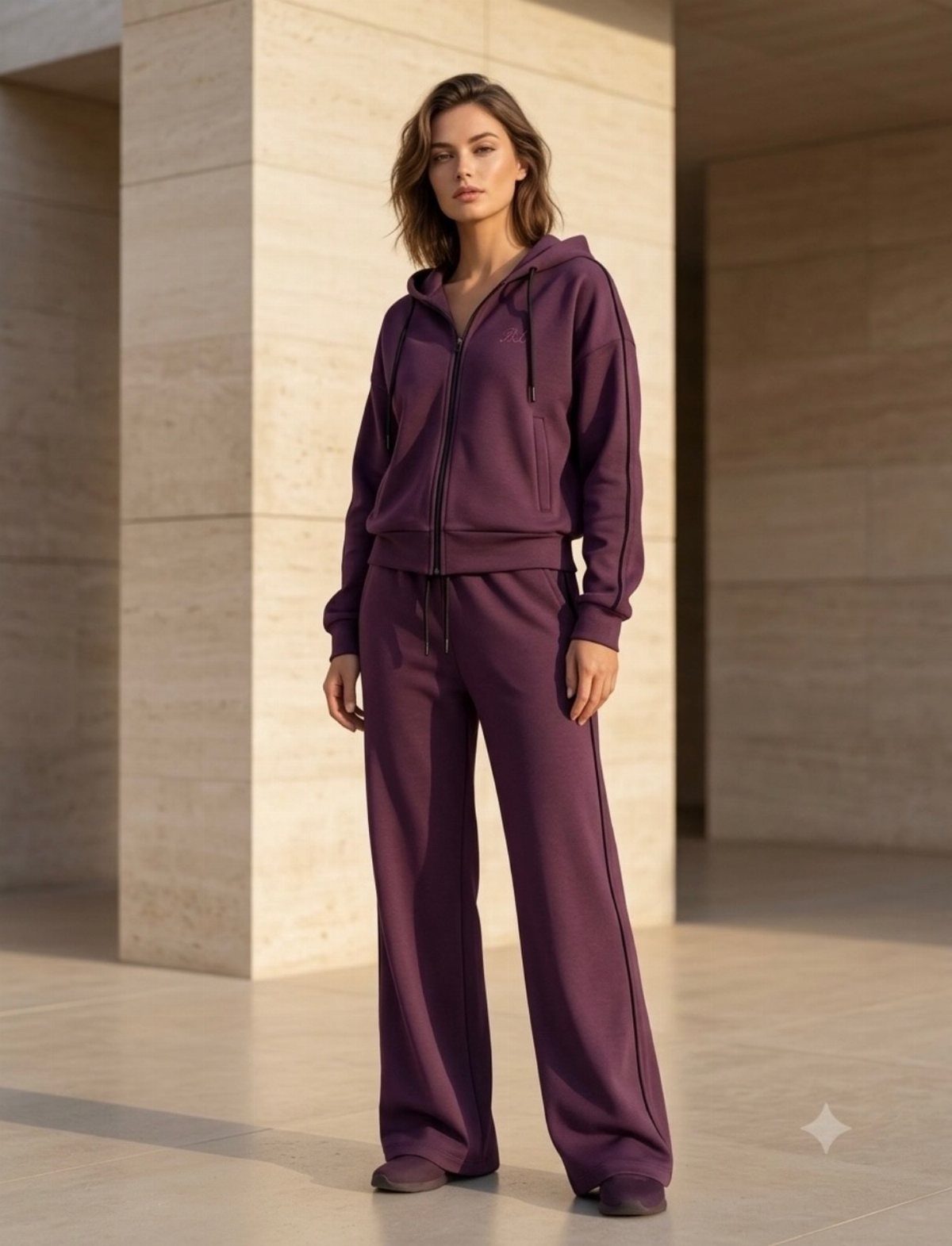
A purple monochrome sweatsuit trades polish for comfort, which suits errands, travel days or any outing where you’d rather not think about fit.
The wide-leg cut keeps it from looking too athletic, and a zip-up hoodie layers over thermals when the temperature drops.
Pair it with white sneakers to break up the purple, or go full monochrome with purple shoes if you prefer the streamlined look.
How to Wear Purple
Lighter purples like lavender and lilac suit cool undertones and fair to medium skin, while deeper shades like plum and eggplant work across most skin tones and carry more weight in an outfit.
If you’re petite, keep purple above the waist or in accessories. A purple coat or sweater draws the eye up, while purple pants can shorten the leg line unless you match your shoes to them.
For taller or curvier builds, purple on the bottom half balances proportions, especially in wide-leg cuts that skim rather than cling.
Purple pairs cleanly with black, grey, white and cream.
For more contrast, try mustard, gold or rust. Avoid pairing purple with red or pink unless one of them is very muted, since the two can compete for attention.
Frequently Asked Questions
What are some good purple outfits for women?
A long wool coat in plum or deep purple works for most winter occasions, or try a purple knit sweater with cream separates for something softer.
Purple trousers in a relaxed wide-leg fit keep the proportions right when you’ve already layered texture or pattern on top, and a smaller piece like a purple handbag lets you test the shade before wearing it head to toe.
What colors go well with purple in winter?
Neutrals like black, grey, white and cream stay out of purple’s way and keep the outfit from splitting focus.
Warm tones like mustard, gold or rust add contrast without clashing. Red and pink usually fight purple for dominance unless one shade is toned down enough to fade into the background.
Does purple look good on everyone?
Lavender and lilac tend to flatter cooler undertones and lighter complexions, while plum, eggplant and grape work across a wider range.