
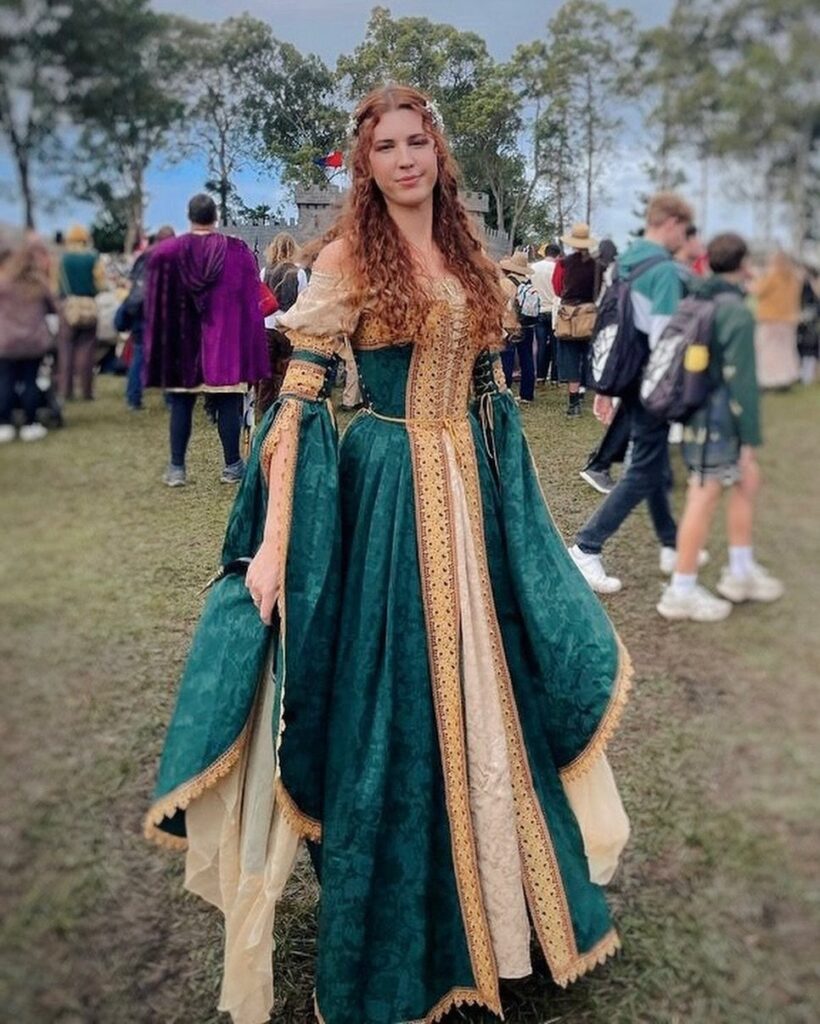
A peasant dress with an apron lands on the opposite end of the spectrum from a full royal gown in satin or brocade, and a fairy outfit in soft pastels reads entirely different from a pirate look or a witch costume in dark, layered fabrics.
How much attention you want to draw and which character feels right decide which direction fits.
1. Peasant Look Outfits
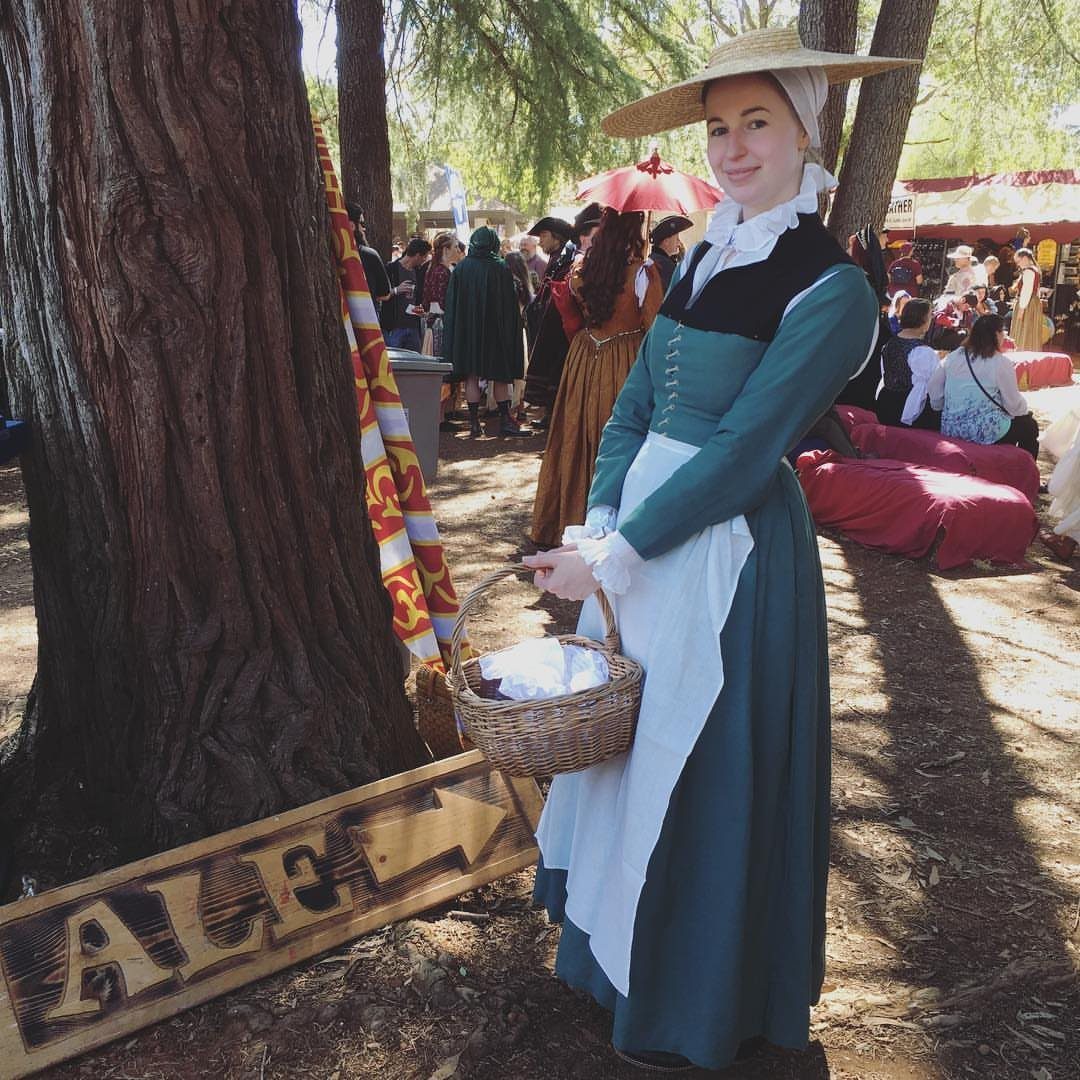
The peasant look centers on a simple dress, apron, and practical accessories that ground you in the working-class side of the faire.
A chemise or tunic-style dress in jewel tones or neutrals gives you the base, and a white or cream apron ties over it to complete the silhouette.
The whole outfit reads as lived-in and functional, which makes it comfortable for walking all day and easy to pull together from pieces you might already own or find secondhand.
2. Authentic Renaissance Clothing in Muted Earth Tones
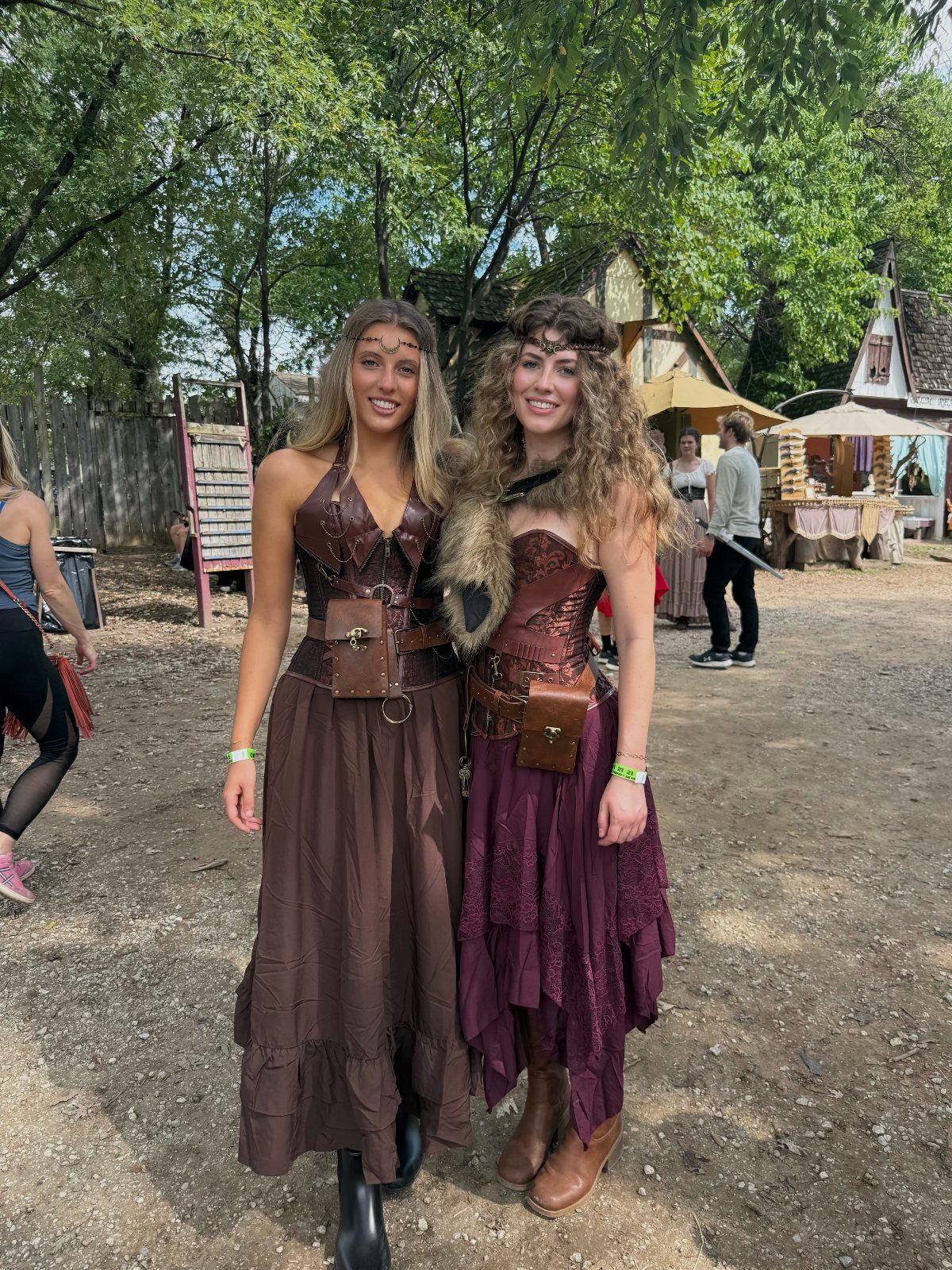
Muted earth tones like brown, rust, and deep burgundy anchor this look in period accuracy without the fantasy embellishments.
A corset or bodice worn over a linen chemise or blouse gives structure, and a long skirt in a coordinating shade finishes the silhouette.
Keep accessories practical: a leather belt, a small pouch, and boots that can handle dirt paths.
The palette itself does most of the work here, so fabric texture matters more than ornament. Natural fibers like linen and wool read as more authentic than synthetics.
3. Medieval Long Sleeve Dresses
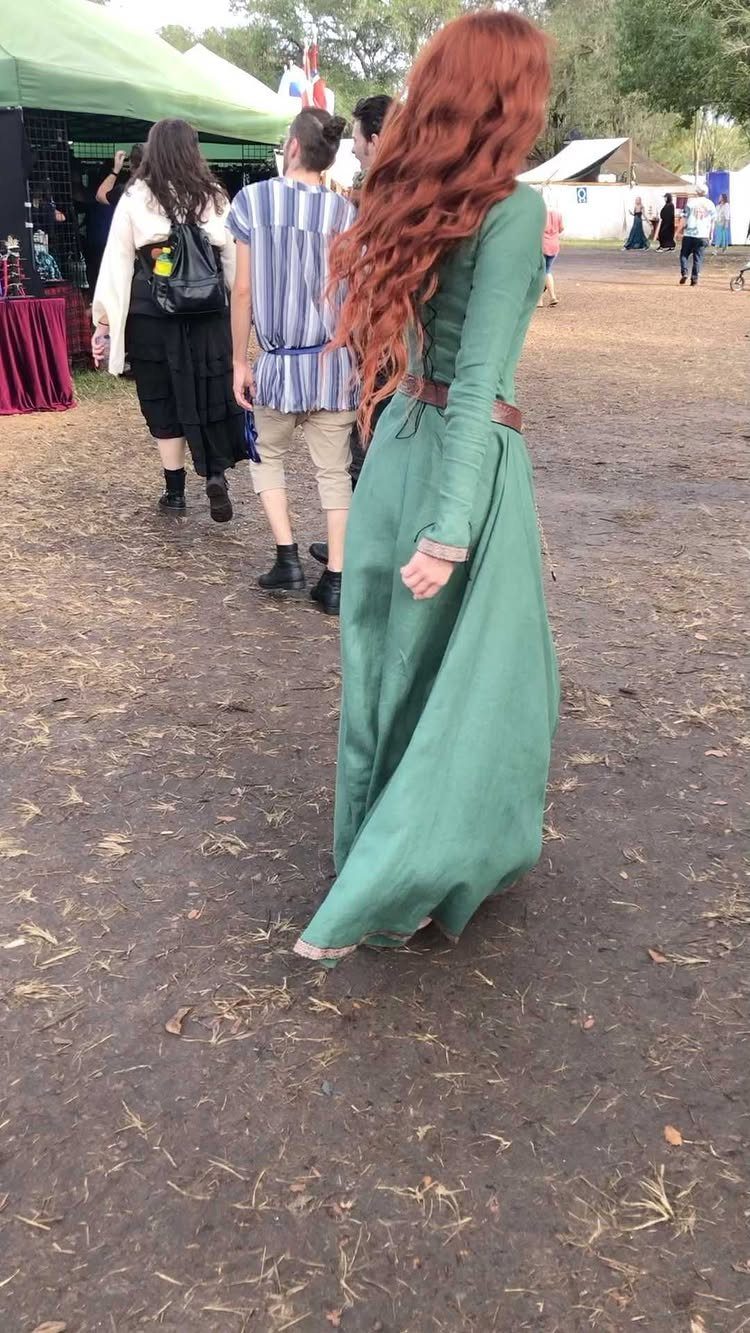
Long sleeves and floor-length skirts define the medieval dress silhouette, which works well in cooler weather or for a more covered look.
Choose a dress in a solid color with fitted sleeves and a natural waistline, then add a belt to define your shape.
Green, burgundy, and navy are common choices that photograph well and suit most skin tones. The length keeps you warm and adds formality, but check the hemline before you go: dragging fabric through dirt gets heavy fast.
4. Witch Costume
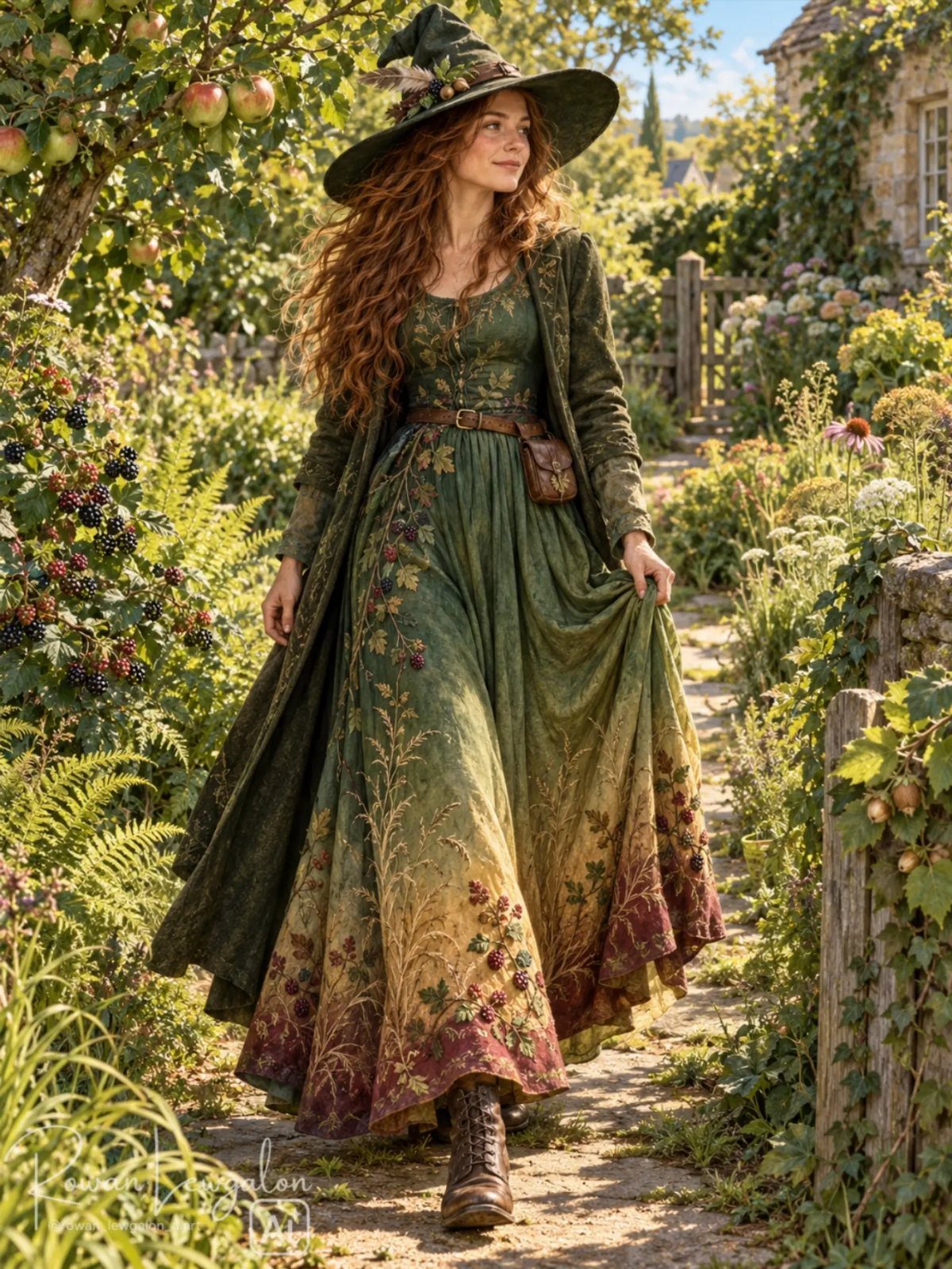
A witch costume layers a long coat or cloak over a flowing dress, then tops it with a pointed hat for instant recognition.
Choose rich colors like forest green, plum, or black, and add texture with velvet, brocade, or lace where you can.
Keep the silhouette loose and dramatic. A fitted bodice under a loose coat or a belt at the waist prevents the whole thing from looking shapeless.
Carry a pouch or small satchel instead of a modern bag, and lean into the theatrical side: this costume invites drama.
5. Fairy Outfits
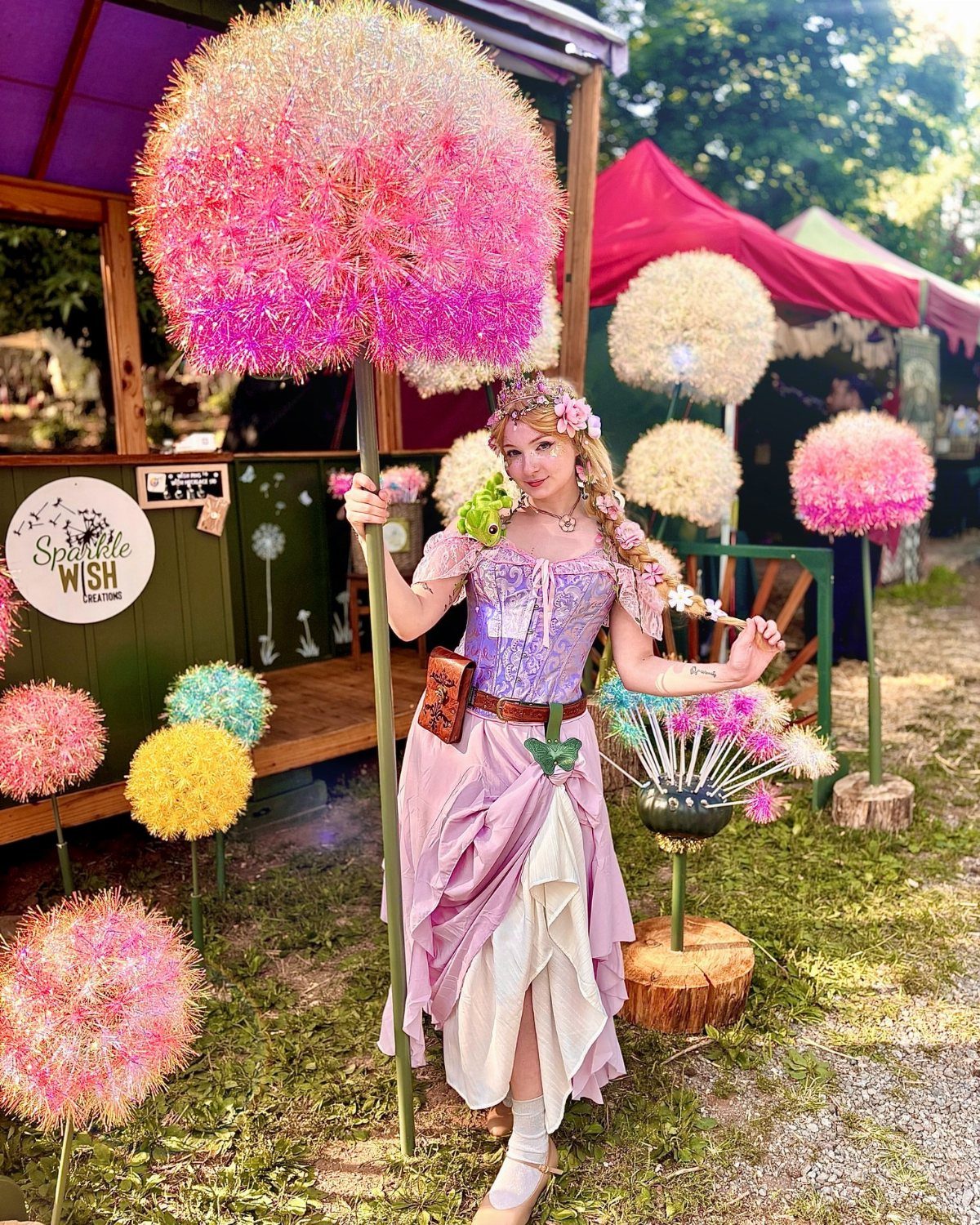
Fairy outfits lean into bright pastels, layers of tulle, and florals that set you apart from the period-accurate crowd. A flower crown anchors the look, and a layered skirt or dress with sheer overlays gives movement when you walk.
Wings are optional but add to the fantasy.
Keep the color palette soft: lavender, pink, mint, and peach all photograph well and suit the whimsical tone. This outfit works best when you’re fine standing out and want something playful rather than historically grounded.
6. Warrior Outfits
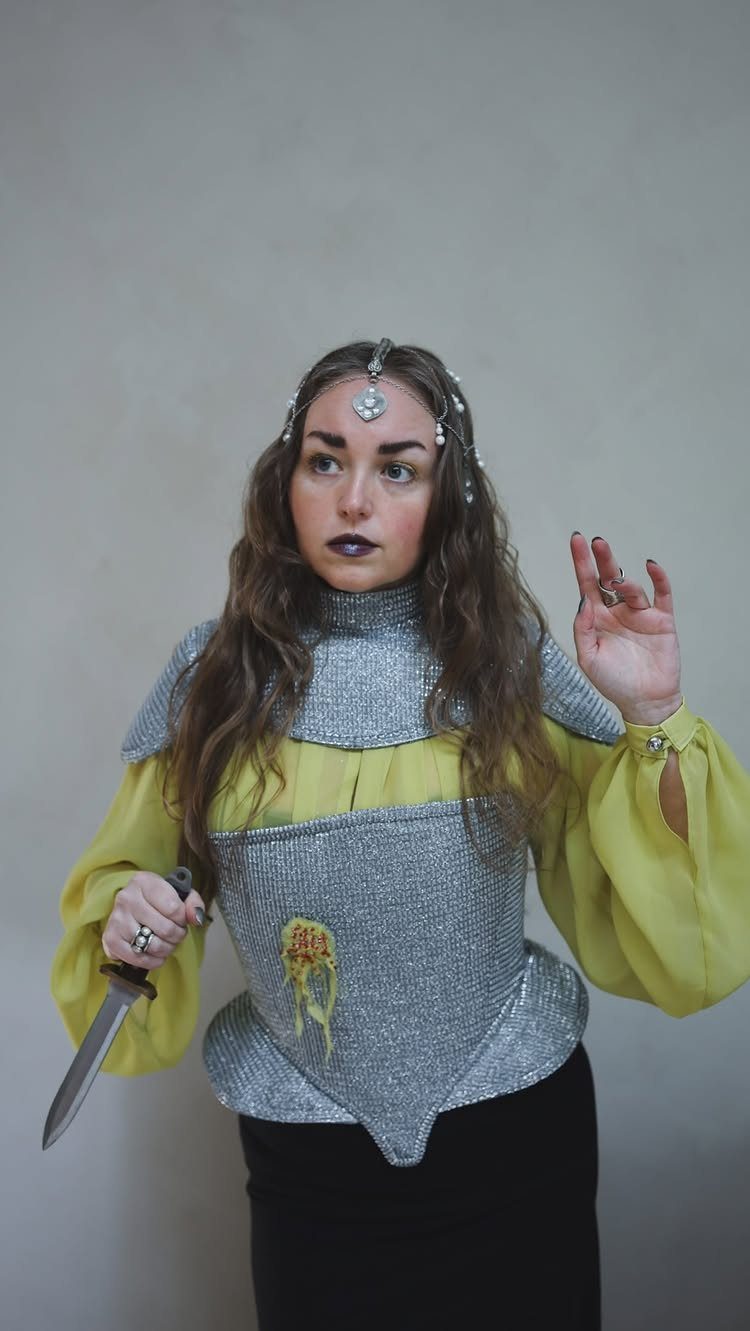
Chainmail or a metallic armor piece layered over a tunic or blouse turns the outfit toward combat-ready rather than courtly.
Pair it with a dark skirt or pants, add a belt with pouches, and carry a prop weapon if the faire allows it.
The armor reads as functional, so keep the rest of the outfit streamlined: boots, minimal jewelry, and a headpiece or leather bracer if you want more detail.
This look suits anyone who prefers mobility over long skirts and wants to skip the princess route.
7. Princess or Queen
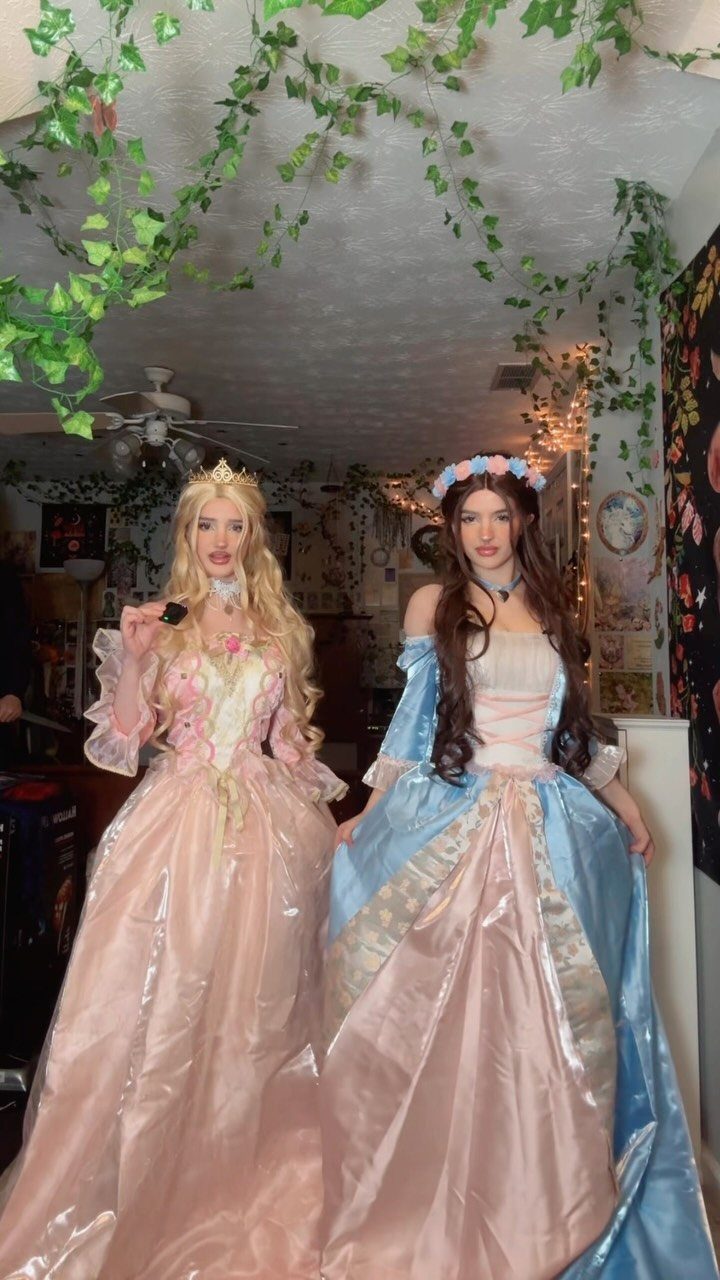
A full-length gown in rich jewel tones or pastels, paired with a tiara or ornate headpiece, puts you in the royal court.
The dress should have volume: bell sleeves, a fitted bodice, or layered skirts all add to the regal silhouette.
Look for fabrics with sheen or texture, like satin, velvet, or brocade.
Gold jewelry and a statement necklace lift the formality. This outfit photographs well but requires the most attention to fit, since a gown that drags or bunches breaks the illusion faster than a simpler costume.
8. Pirate Outfits
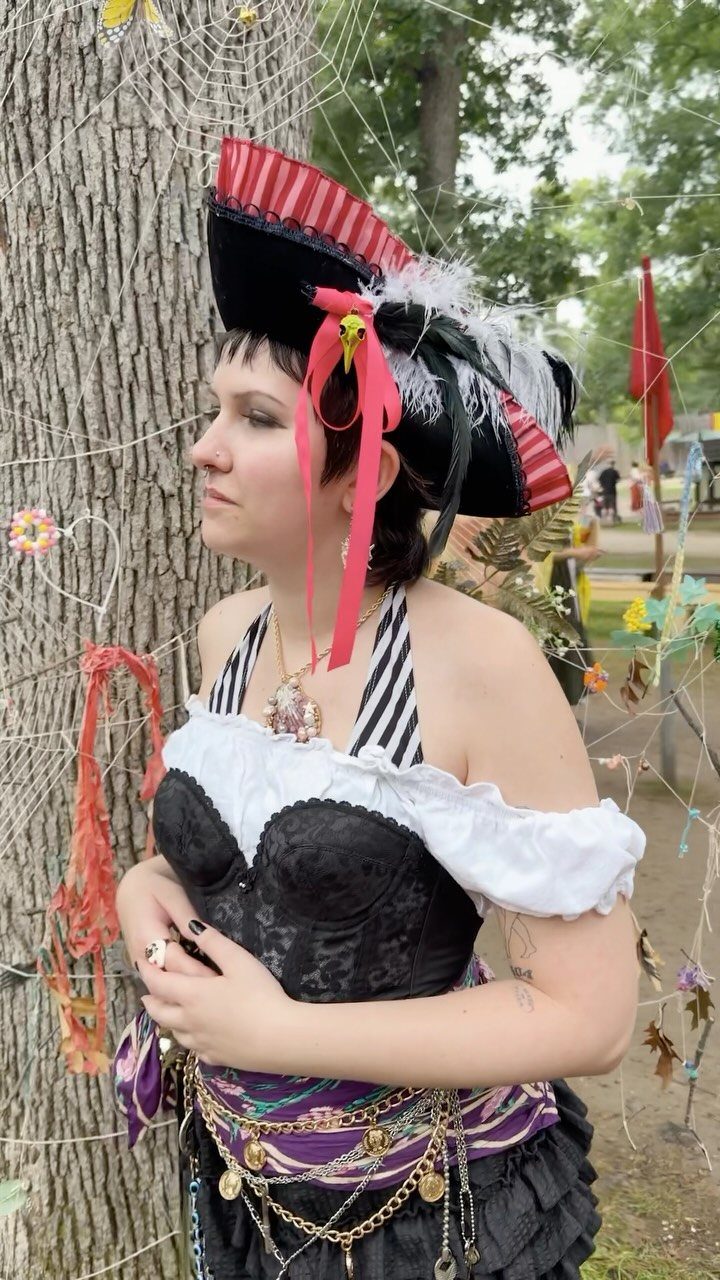
A corset or vest layered over a white peasant blouse, paired with a tricorne hat and a belt loaded with coins or pouches, gives you the pirate silhouette without needing full costume gear.
Add dark pants or a skirt, boots, and jewelry that looks stolen rather than bought.
The hat does most of the work here, so prioritize that over complicated layers.
A bandana or headscarf works if you skip the tricorne. Keep the look rough around the edges: this costume suits anyone who wants recognizable without precious.
Choosing Fabrics
Linen breathes better than most fabrics and holds up through long days outdoors, which makes it the best choice for chemises, underdresses, and anything worn close to your skin.
Cotton works for skirts and aprons when linen is hard to find or too expensive.
Wool adds warmth for cooler months but can get heavy if you’re walking all day. Save it for outer layers like cloaks or fitted bodices.
Synthetics like polyester don’t drape the same way and tend to trap heat, which becomes uncomfortable by midday. They also photograph differently under natural light, reading shinier and flatter than natural fibers.
If you’re buying secondhand or pulling from what you already own, check the fabric tag before you commit. A cotton-linen blend will perform better than full polyester, even if the color is right.
Color Choices
Rust, ochre, olive, and deep burgundy appear across multiple social classes and photograph well in outdoor light. Brown in any shade works as a neutral base that pairs easily with brighter accents.
Deeper colors like plum, forest green, and navy signal wealth or rank, so they suit royal or merchant-class costumes. Jewel tones add richness without reading as modern.
Pastels belong to fantasy characters like fairies, where historical accuracy isn’t the goal. They stand out in a crowd, which works if that’s what you want.
Black was expensive to dye historically, but it’s common at faires now and reads as witchy or pirate depending on how you style it. Avoid neon or overly saturated colors unless your costume is intentionally theatrical.
Accessorizing Outfits
A leather belt worn at the natural waist or hips gives structure to loose dresses and provides a place to hang a pouch.
The pouch itself replaces a modern bag and should be large enough for your phone, wallet, and sunscreen.
Headwear finishes most looks: a simple circlet for royalty, a flower crown for fairies, a tricorne for pirates. Even a plain scarf tied at the back works for peasant outfits when you want something on your head.
Gold-toned pieces suit royal costumes, while leather cords and wooden beads fit peasant or warrior looks better.
Boots matter more than most people plan for. Choose something you can walk in all day, preferably in leather or a look-alike that won’t fall apart on dirt paths.
Frequently Asked Questions
What do women wear to the Renaissance Festival?
A chemise or tunic-style dress forms the base, often paired with a corset or bodice, apron, and skirt in jewel tones or earth tones.
Natural fabrics like linen and cotton work best for comfort and authenticity. Accessories like leather belts, pouches, boots, and headwear finish the outfit depending on whether you’re going for peasant, royal, pirate, or fantasy looks.
What not to wear to a Ren Faire?
Skip neon and overly saturated colors, which pull you out of the period setting and photograph poorly.
Synthetics like polyester trap heat and drape wrong compared to natural fibers. Modern bags and shoes break the look faster than most people expect, so swap them for pouches and boots that suit the costume.