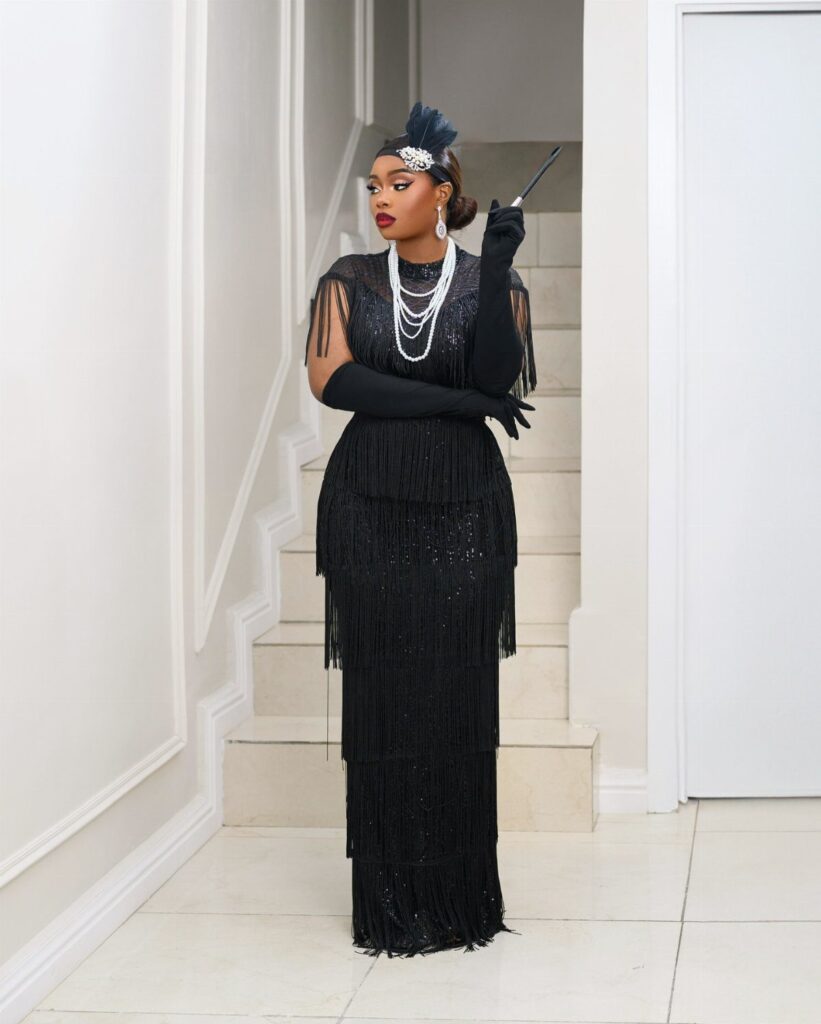
A drop-waist dress in sequins or beads sits at the core of Gatsby style, but you can go minimal with a shift and a beaded belt at the hips or commit fully to a floor-length sequined gown and long satin gloves.
The longest pearl strand should fall past your waist to match 1920s proportions, and the headpiece you pick sets the tone for the whole look.
1. Flapper Dress
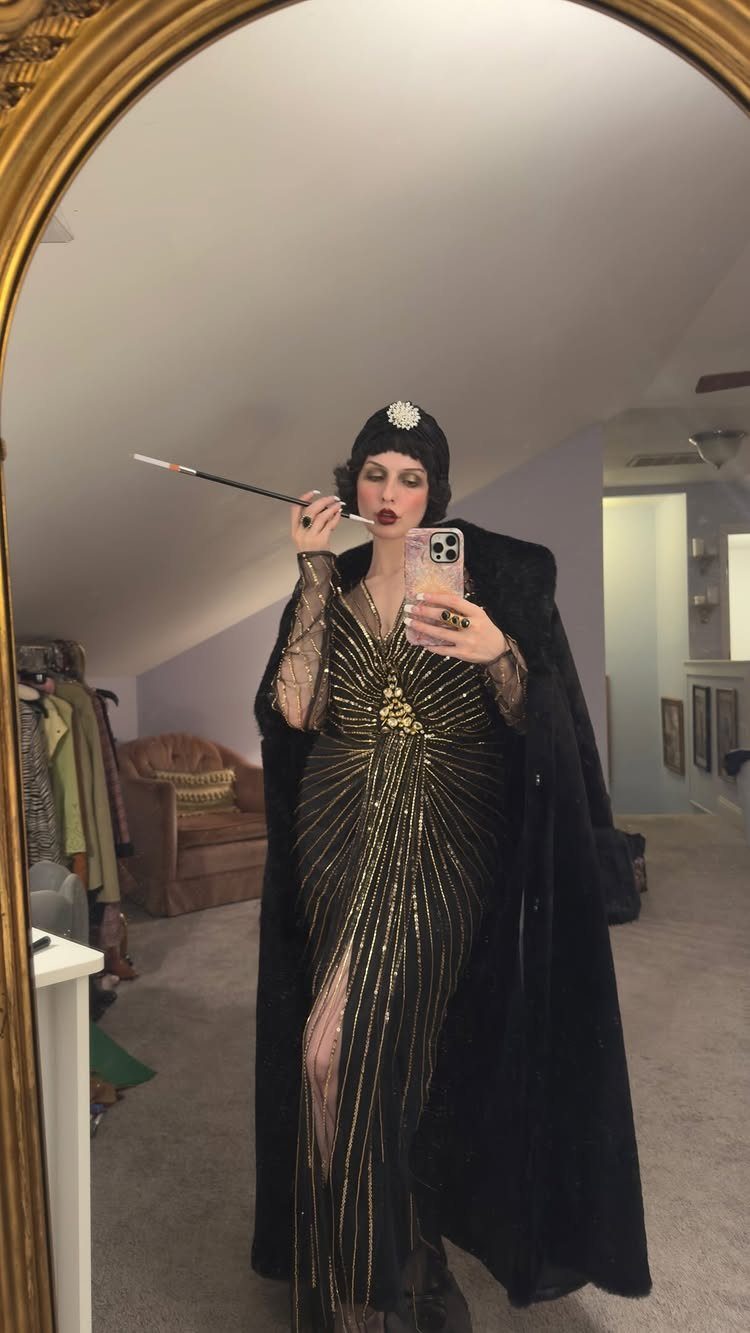
A drop-waist dress covered in sequins or beads, cut straight through the body and hitting just below the knee, is the silhouette most people picture when they think of Gatsby style.
The black and gold combination here reads formal enough for an evening party without looking like a Halloween costume. A simple shift dress gains period detail with fringe trim or a beaded belt placed at the hips.
Pair it with a headband and a strand of pearls, and the outfit is complete.
2. Roaring 20s Pearls
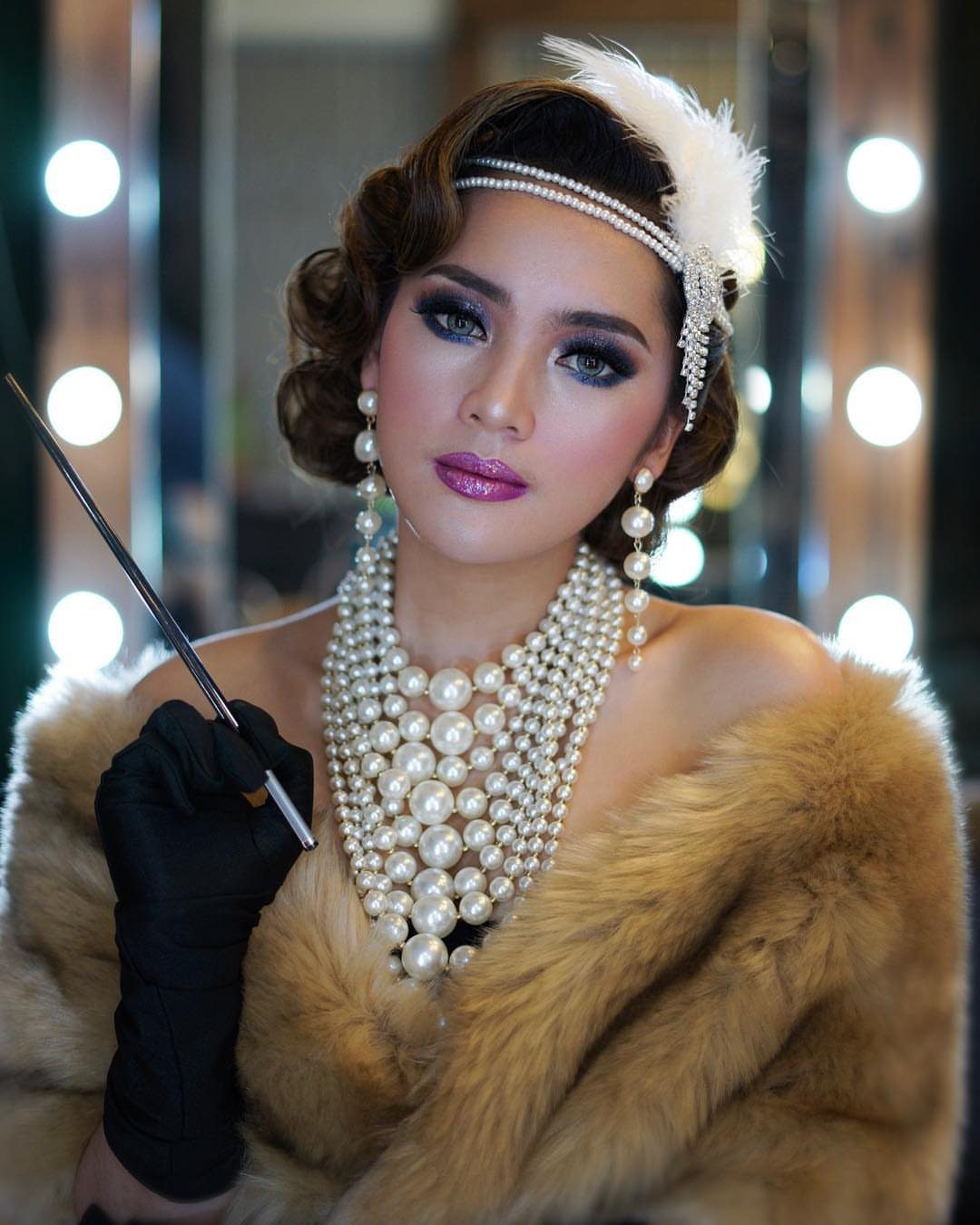
Layering multiple strands of pearls in different lengths is one of the fastest ways to anchor a 1920s outfit. The longest strand here falls past the waist, which matches the proportions women actually wore in the era.
Mix real pearls with faux to bring the cost down. I like pairing smaller beads closer to the neck with one chunky strand that swings when you move.
If you only have one necklace, wrap it twice or knot it at chest height. That alone shifts the silhouette from modern to period.
3. Headpieces
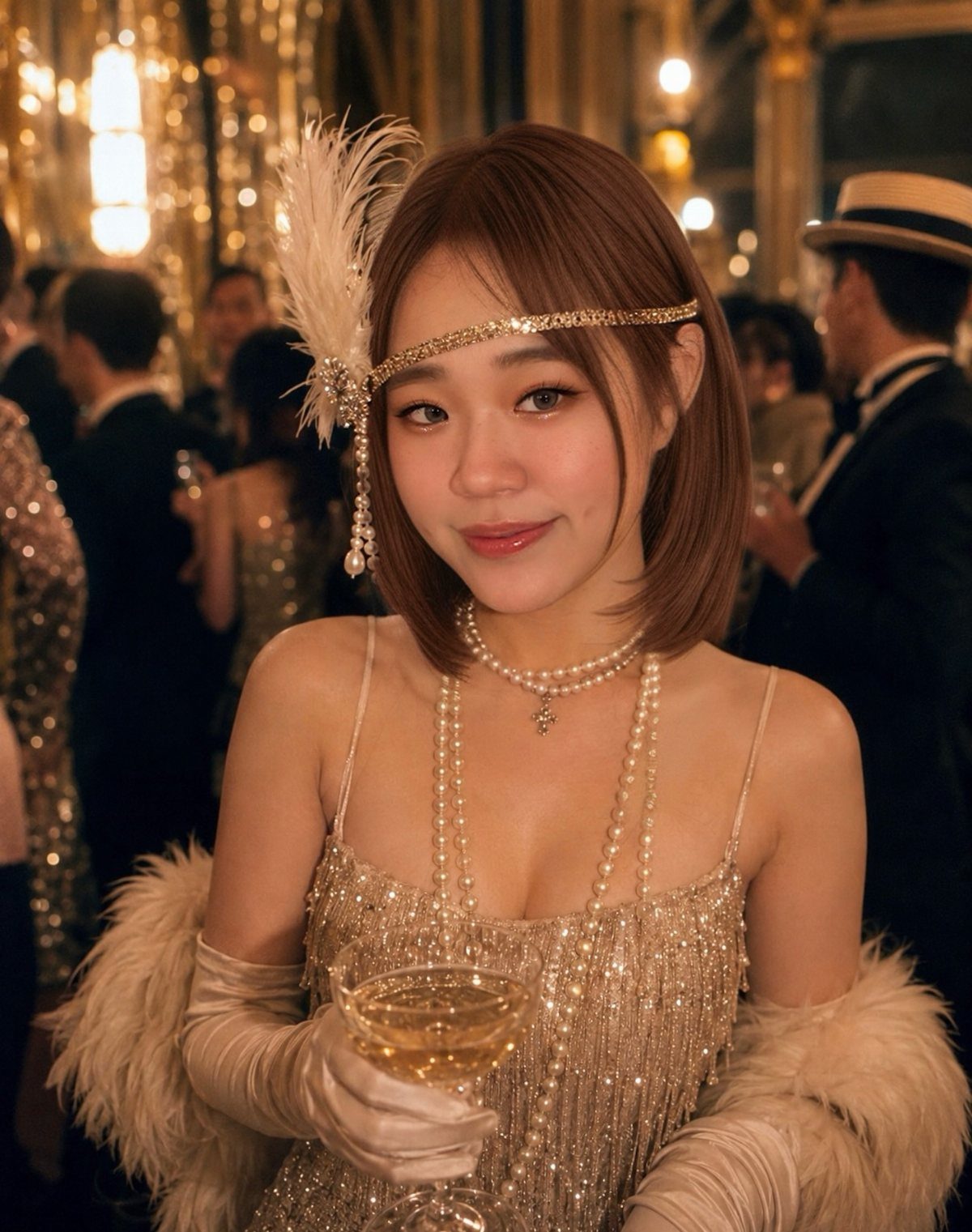
A beaded band worn low across the forehead, often with a feather or jeweled brooch at the side, finishes a Gatsby outfit in a way that nothing else does.
Gold beading pulls the headpiece and dress together, or use a contrasting color when the rest of the outfit stays plain. Feathers in black, white or jewel tones all suit the style.
If a headband feels too costume-heavy for your event, try a jeweled hair comb or a velvet ribbon worn the same way. You still get the period detail without committing to the full flapper look.
4. Faux Fur Stole Layering
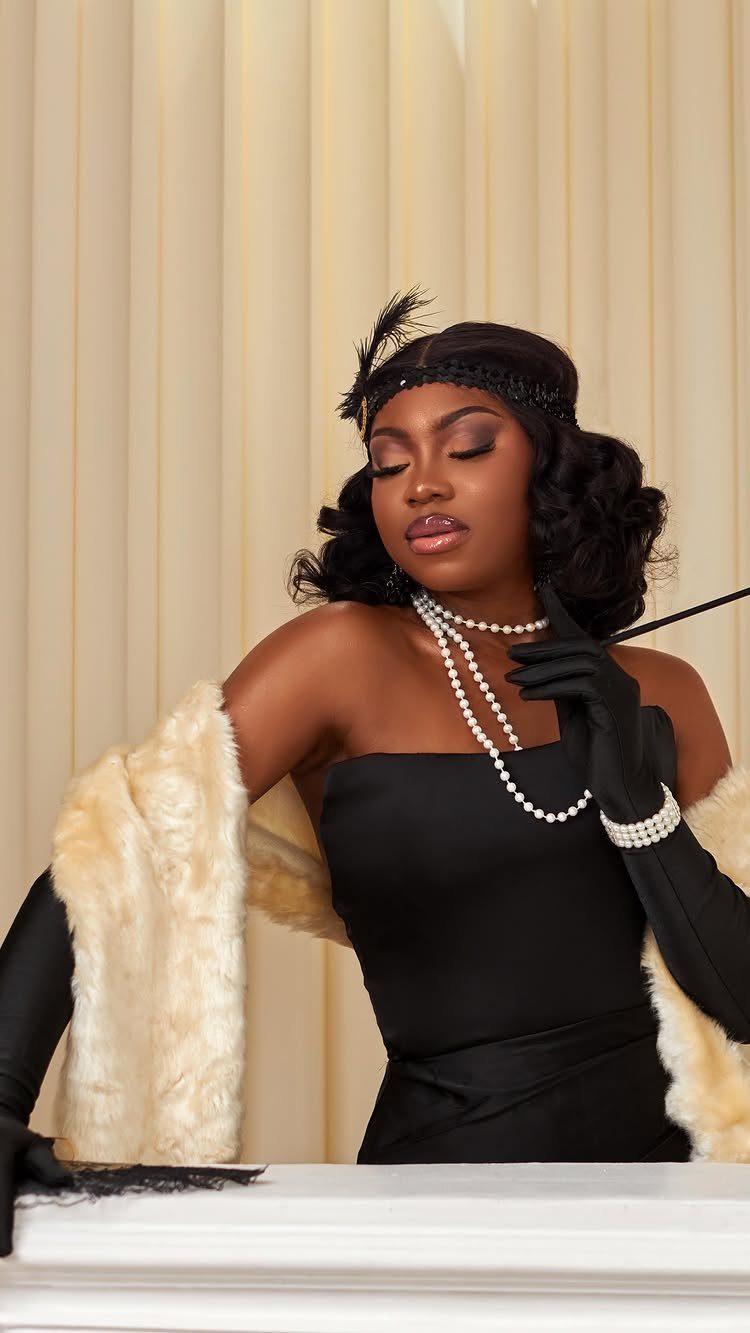
Draping a faux fur stole over your shoulders adds instant vintage glamour and solves the problem of what to wear over a sleeveless or strapless dress in cooler weather.
White or champagne fur would work just as well if your dress is darker.
Look for stoles with a satin lining and a hook clasp at the front so they stay in place when you move. Vintage stores often carry them for less than buying new.
5. Sequined Evening Gown
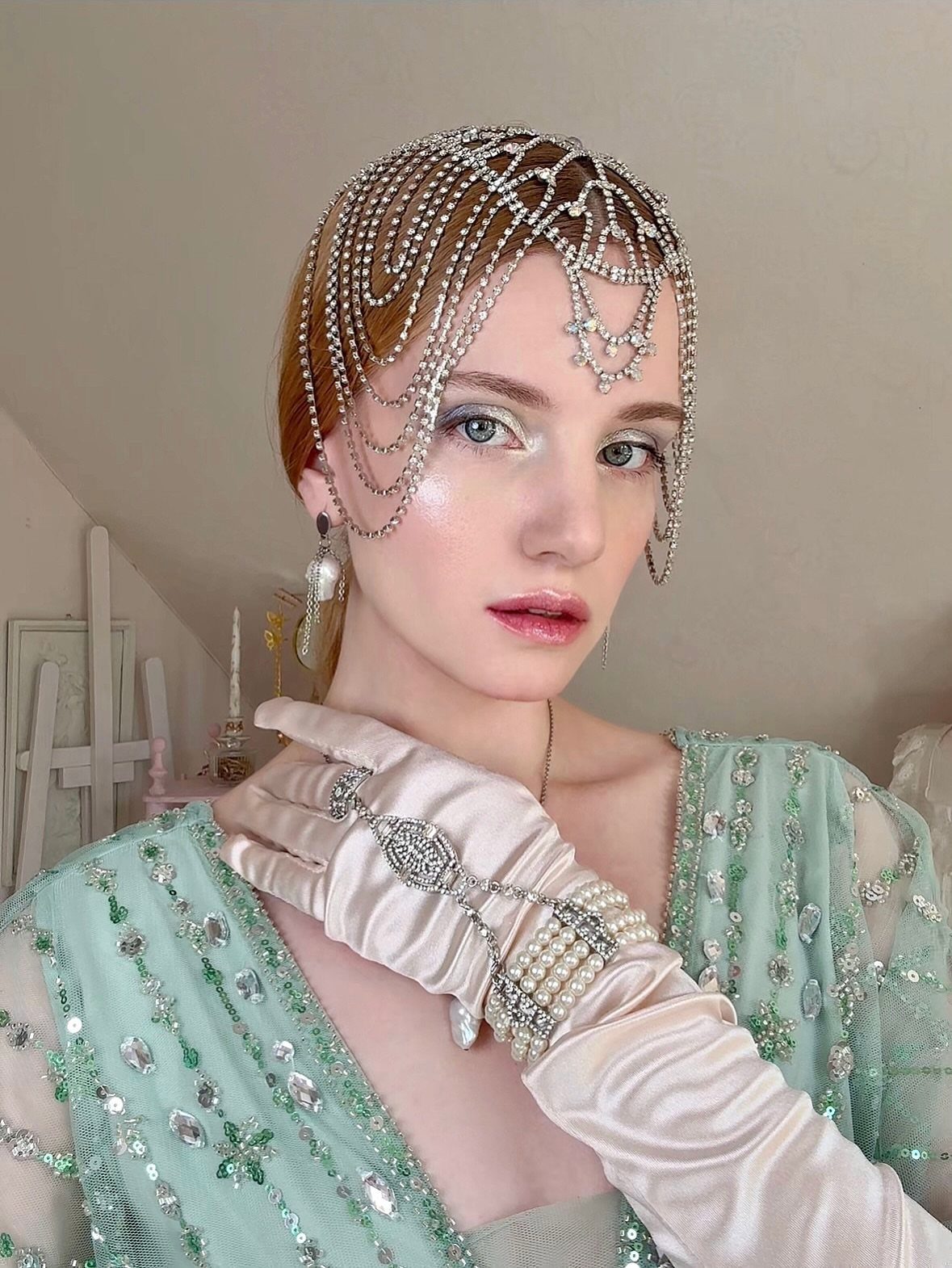
A floor-length gown covered in sequins takes the flapper silhouette into formal territory. The mint green here feels fresh next to the usual black or gold, and the beaded headpiece picks up the same color family.
Long satin gloves add elegance and cover your arms if the dress is sleeveless. I prefer gloves in a matching or neutral tone rather than introducing a new color.
If you’re wearing a gown this ornate, keep your shoes simple. The dress is doing all the work.
6. Satin Midi Dress and Shrug
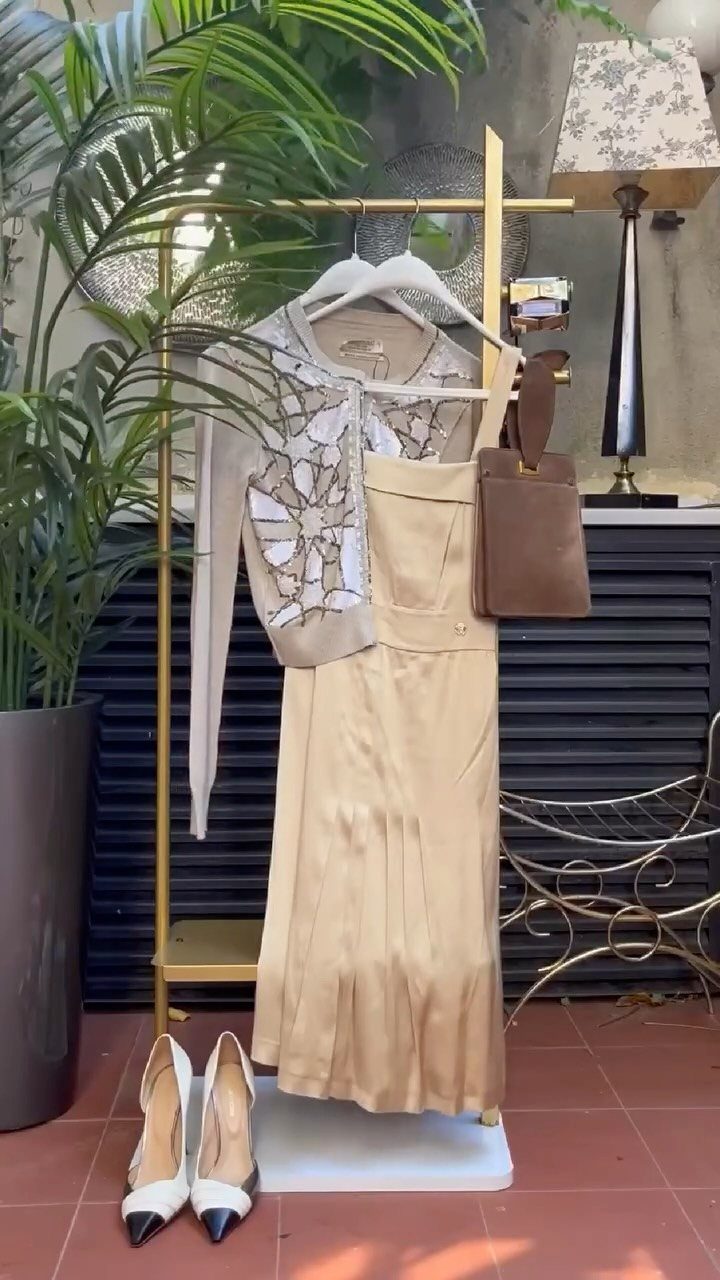
A slip dress in champagne or blush satin pairs well with a beaded shrug layered over it. The shrug here is white lace with intricate beading, which adds texture without hiding the dress underneath.
This combination works well if you want a Gatsby look that feels a bit more covered or modest. The slip dress can be worn again on its own, and the shrug layers over other pieces later.
Pointed heels in a neutral tone keep the look streamlined. If you’re buying just one pair of shoes for a themed event, nude or champagne goes with almost every dress color.
7. Wide-Brim Hat and Opera Gloves
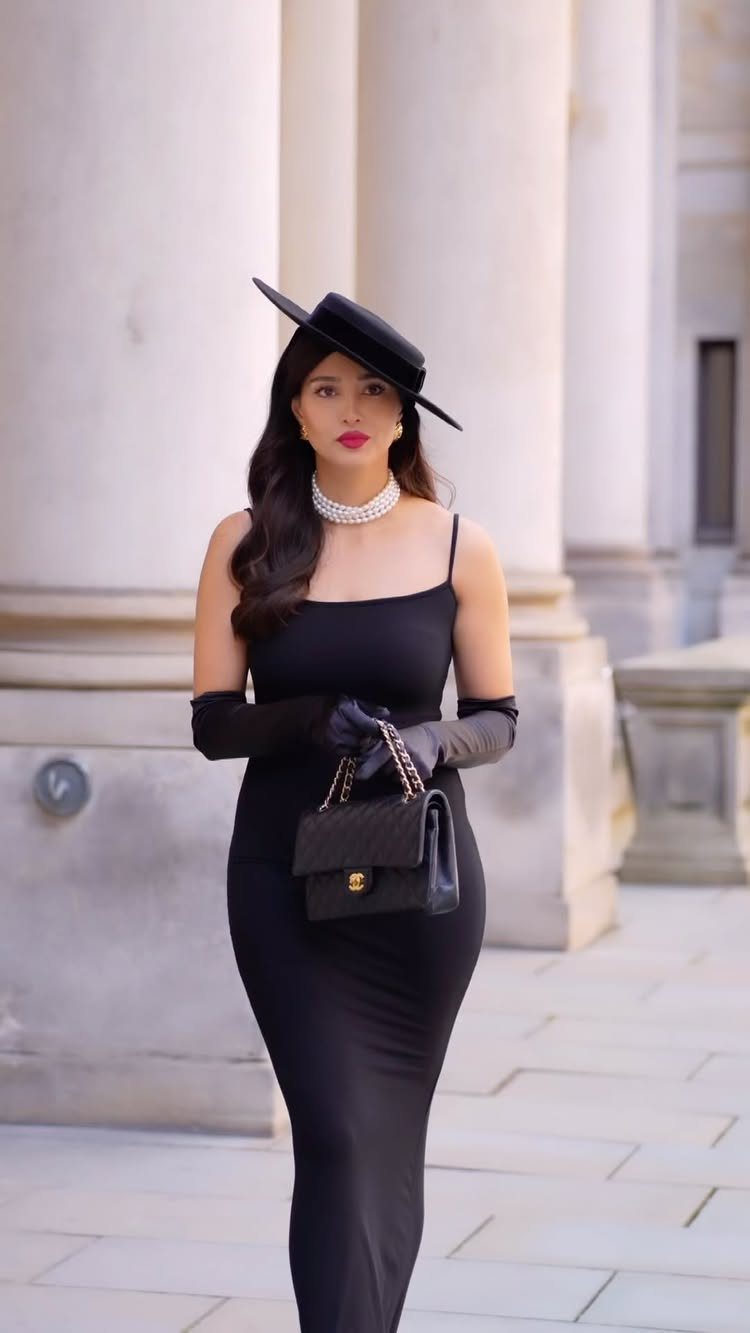
A wide-brimmed hat shifts a simple sleeveless dress into something that reads as vintage without relying on sequins or fringe. The brim here frames the face and balances the volume of the gloves.
Opera gloves in black match the dress and add formality. If your gloves are satin, they’ll photograph better than matte fabric.
A single strand of pearls keeps the neckline simple when the hat is already doing most of the styling work. This combination works well for outdoor Gatsby events where a headband might feel too costume-heavy.
8. Fringed Beaded Shawl
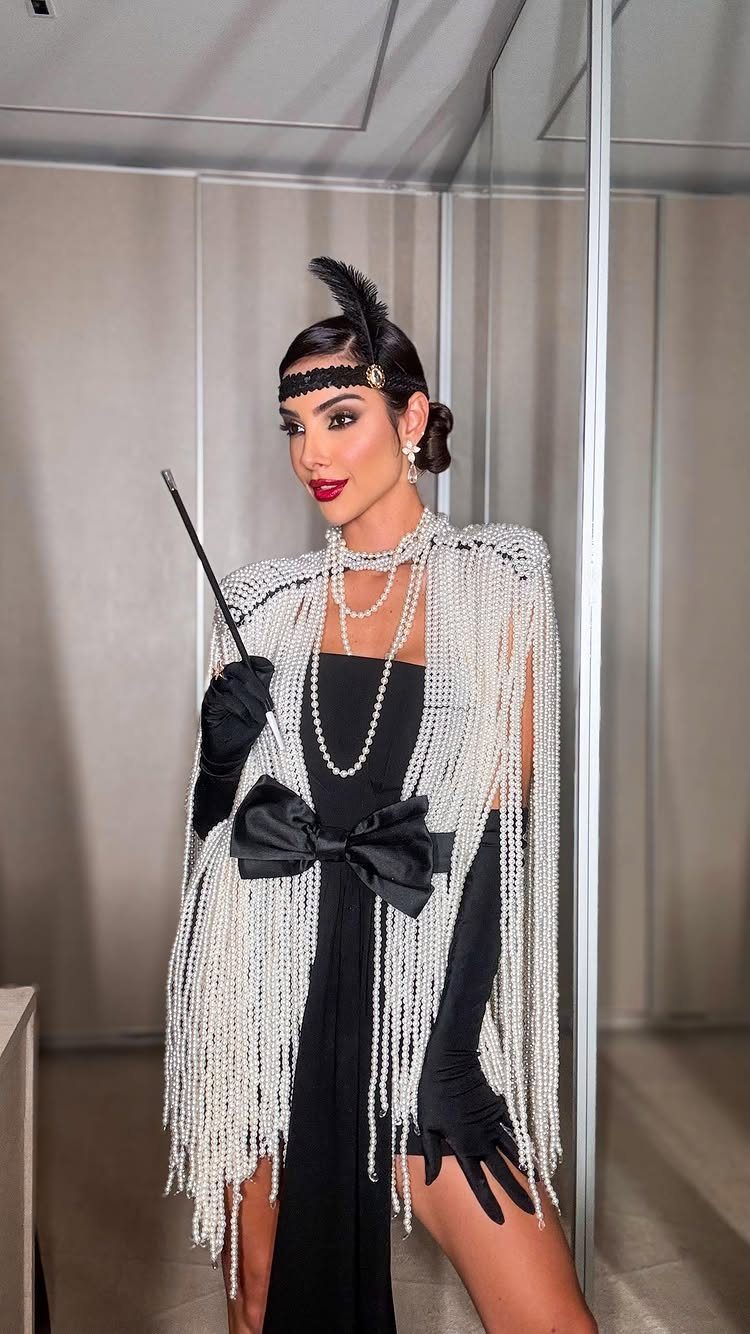
A beaded shawl with long fringe adds movement to a plain dress and gives you something to do with your hands at a party. The silver beading here catches light without competing with the black base.
Drape it loosely over your shoulders or let it hang from your elbows. The fringe should fall past your hips for the proportions to read as 1920s rather than modern.
Black gloves and a feathered headband pull the look together. If you’re buying just one beaded piece for a Gatsby outfit, a fringed shawl works over more dresses than a beaded dress does.
9. Strapless Gown with Opera Gloves
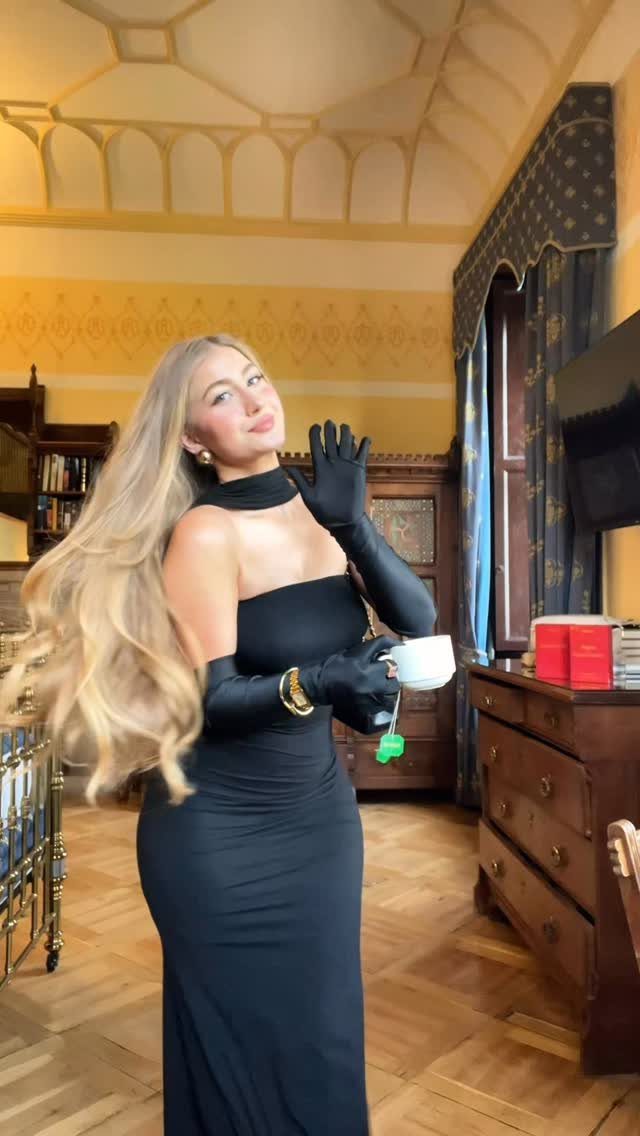
A strapless gown in black paired with opera gloves offers the formality of an evening silhouette without the beading or fringe that can feel too costume. The choker adds period detail at the neckline.
Gloves in the same color as the dress keep the silhouette unbroken from shoulder to floor. If your gown has any embellishment, plain gloves let the dress stand out.
The gown can be worn again without accessories, which makes it a better long-term purchase.
10. Sequined Fringe Two-Piece Set
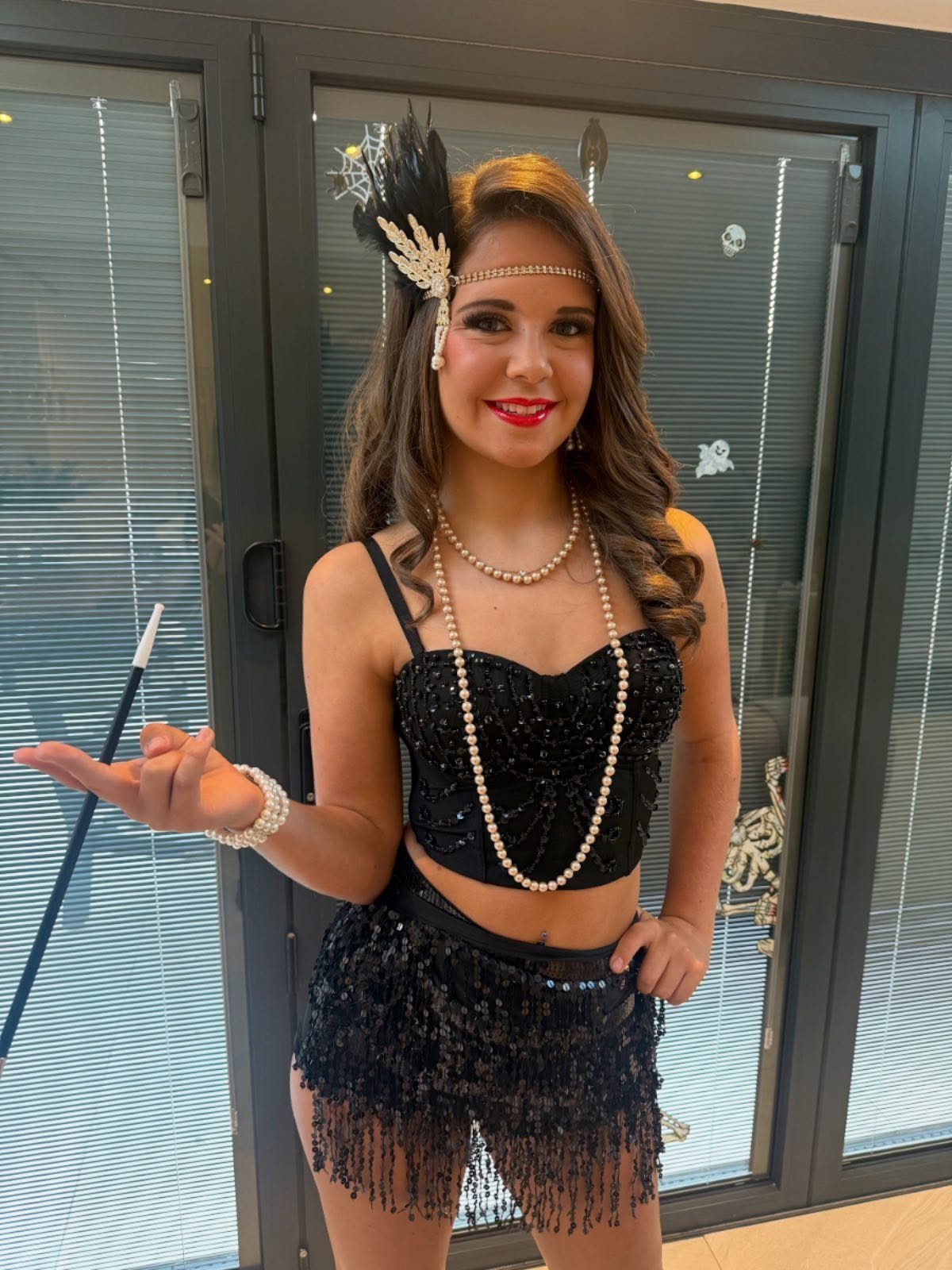
A two-piece set with a sequined crop top and fringed skirt gives you the beading and movement of a flapper dress with more flexibility.
The top here can be worn with other high-waisted skirts later, and the skirt pairs with a plain blouse.
Fringe on the skirt moves when you walk, which suits dancing better than a straight column dress. Keep the fringe black if the sequins are black so the texture shows without adding another color.
A cigarette holder and pearls complete the effect. If you’re buying separates instead of a dress, choose a skirt that sits low on the hips to keep the proportions right.
Gatsby Dress Code
The dress code for a Gatsby party sits squarely in formal territory, though most invitations never spell that out. When the card says nothing more than the theme, cocktail attire is the safest call.
White, gold, light blue and champagne show up most often, usually with nude or blush worked into the beading or trim.
The silhouette is tubular, cut to flatten rather than cinch, with sequins, glitter and fringe adding texture to the straight line.
Avoid anything that reads as a cheap costume.
A modern club dress with no period detail looks out of place, and plastic accessories break the illusion faster than wearing the wrong hemline. The goal is glamour rooted in the era, not a Halloween approximation.
Mixing Modern with Vintage
Not every woman at a 1920s party dressed like a flapper.
Classic evening gowns in velvet or silk, cut with long sleeves and dropped waistlines, appeared just as often at formal events. Sequins, appliqué and pleats added detail without fringe.
A modern dress can pass in a Gatsby setting if you add one or two period details.
The colors of the era skewed more muted than what we wear now. Sticking to toned-down shades keeps a modern piece from standing out as wrong.
Accessorizing
Choose one standout accessory and let the rest recede. A heavily beaded dress pairs better with simple jewelry, while a plain dress leaves room for an ornate headpiece or layered pearls.
Lean toward Art Deco geometry rather than anything that looks like party store stock.
The beading should follow a geometric pattern, the fringe should sit along a hem or sleeve edge, and the color should hold to black, gold, silver or champagne.
A dress that ends above the knee still looks formal if the shoes are right and the hair and makeup stay refined.
The balance comes from treating the whole outfit with the same level of finish, not from lengthening the skirt.